400 Year Japan - The Netherlands

The history of exchange between Japan and the Netherlands started when the Rotterdam ship "de Liefde" drifted ashore in Japan in 1600. From the end of the 16th to the beginning of the 17th
century, during the "Warring States" period, Japanese culture was
strongly influenced by Portugal and Spain.
The Year 2009 marked the 400th Anniversary of Trade Relations between Japan and the Netherlands, commemorating the long-standing friendship between the two countries. These commercial relations date back to 1609, when Tokugawa Ieyasu issued an official trade permit to the Netherlands.
From the outset, trade between the Netherlands and Japan had an economic impact in its own right. The effect was also felt in many creative fields, from architecture, as reflected in the Dutch-style houses on Dejima Island, to art, as in Van Gogh's Japanese-inspired paintings and even in the language.
 In 1639, the Tokugawa Shogunate prohibited the Portuguese from visiting Japan
and restricted official trade to the Netherlands.
In 1641, the Dutch Factory of the VOC was relocated from Hirado to Deshima in Nagasaki and trade between Japan and the Netherlands entered a new stage. At the time, the Netherlands was the only country to introduce Western culture to Japan. During the Edo period, Western culture was introduced to Japan almost exclusively through the Dutch VOC Factory in Nagasaki.
In 1639, the Tokugawa Shogunate prohibited the Portuguese from visiting Japan
and restricted official trade to the Netherlands.
In 1641, the Dutch Factory of the VOC was relocated from Hirado to Deshima in Nagasaki and trade between Japan and the Netherlands entered a new stage. At the time, the Netherlands was the only country to introduce Western culture to Japan. During the Edo period, Western culture was introduced to Japan almost exclusively through the Dutch VOC Factory in Nagasaki.
The celebration of the 400-year cultural and economic exchange between Japan and the Netherlands has inspired us to create some web pages and offerings featuring a number of beautiful, rare, and essential items, with an emphasis on this unique relationship between the two countries.
From the 17th century, Japanese noble scholars adopted Western knowledge of cannons, medical science, and natural science, especially natural history.
In 1720, Tokugawa Yoshimune eased restrictions on imports of Western books, except those related to Christianity. This easing of restrictions greatly assisted studies prevailing in Japan of medical science, astronomy and the solar calendar. With the increased import of lower-quality books, prints, paintings, and glass pictures, some painters and members of the wealthy class in Japan came to accept the Western artistic rationale concerning composition and expression, which emphasized texture and three-dimensional effects.
Japanese artists learned Western techniques independently, mainly from illustrations or prints in Dutch books. Shiba Kokan (1747-1818), a Western-style painter representing the Edo period, created the first Japanese etchings based on illustrations in a Dutch everyday encyclopedia, the Dictiotiare Oncyclopedia, edited by Noel Chomel (1633-1712). Kokan obtained prints from the Amsterdam copper printer Jan Luiken from his popular work "Spiegel van Het Menselyk Bedryf," and he produced the first real oil paintings in Japan based on this work. He named these oil paintings "Ranga" (Dutch paintings).
 The optical mirror or Zograscope and the optical prints imported from the Netherlands stimulated Japanese painters who
applied Western vision to express landscapes. This Western vision also inspired the landscape woodblock prints of Hokusai and Hiroshige.
The optical mirror or Zograscope and the optical prints imported from the Netherlands stimulated Japanese painters who
applied Western vision to express landscapes. This Western vision also inspired the landscape woodblock prints of Hokusai and Hiroshige.
Dutch art played a significant role in cultivating an understanding of Western rationality, while Dutch maps gave the Japanese a new perspective on the world at the end of the 19th century, as modern civilization was being absorbed in earnest.
 The first Dutch approach to Japan
was an ambitious expedition of five ships under the command of
Jacques Mahu. They left Rotterdam in June 1598, and after crossing
the Atlantic, coasting Brazil and Argentina, entered the Straits of
Magellan on April 6, 1599. Because of vicious winter storms, it
took nearly five months to reach the Pacific side. Finally, in April of 1600, a single remaining ship, 'de Liefde', commanded by Captain Jacob Jansz van Quaeckernack and piloted by the Englishman Will Adams, made landfall near Usuki in the province of Bungo on the Island of Kyushu. Not surprisingly, these new visitors were not welcomed by the entrenched Portuguese who made every effort to turn
the Japanese authorities against the Protestant interlopers. Despite these efforts, Adams eventually became a well-accepted advisor to Shogun Tokugawa Ieyasu, while some five years later, van Quaeckemack was allowed to leave Japan for Southeast Asia with the Shogun's full blessing and carrying an offer of trading privileges for the Dutch.
The first Dutch approach to Japan
was an ambitious expedition of five ships under the command of
Jacques Mahu. They left Rotterdam in June 1598, and after crossing
the Atlantic, coasting Brazil and Argentina, entered the Straits of
Magellan on April 6, 1599. Because of vicious winter storms, it
took nearly five months to reach the Pacific side. Finally, in April of 1600, a single remaining ship, 'de Liefde', commanded by Captain Jacob Jansz van Quaeckernack and piloted by the Englishman Will Adams, made landfall near Usuki in the province of Bungo on the Island of Kyushu. Not surprisingly, these new visitors were not welcomed by the entrenched Portuguese who made every effort to turn
the Japanese authorities against the Protestant interlopers. Despite these efforts, Adams eventually became a well-accepted advisor to Shogun Tokugawa Ieyasu, while some five years later, van Quaeckemack was allowed to leave Japan for Southeast Asia with the Shogun's full blessing and carrying an offer of trading privileges for the Dutch.In 1609, the Dutch East India Company arrived with two ships, commanded by Nicholas Puyck, who had been detached from a 13-ship fleet that had left Amsterdam in December 1607. Puyck's ships, 'Roode Leeuw met Pijlen' and 'Griffioen', carried a modest cargo of silk, pepper, and lead. They were led directly to Hirado by two Japanese pilots. There, they received official trading privileges and encouragement to set up a factory.
 In 1634, the shogun
commanded the construction of an island in the Bay of Nagasaki on
which all the Portuguese traders could be assembled together in one
place. Legend has it that when asked what shape the island was to
take, the shogun spread out his fan in reply. The island was called
Deshima, which literally means 'projecting island'. The Portuguese
were settled as soon as the work was completed in 1636. Their
residence was, however, of short duration, as in 1639 they, along
with all other Westerners except the Dutch, were
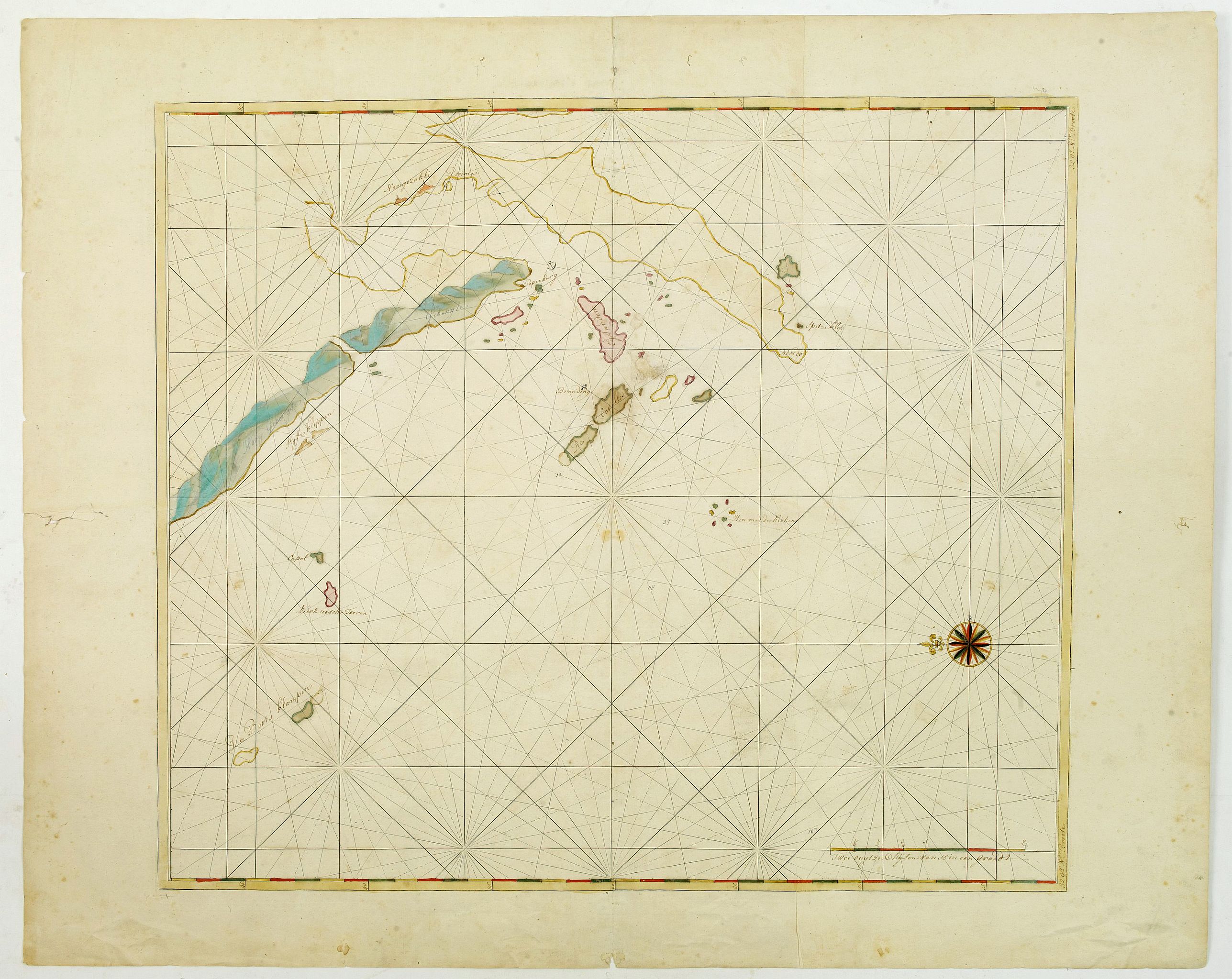
banned from Japan for good. In 1641, the Dutch were, in turn, forced to move to Deshima and remained there alongside the Chinese until Japan was opened in 1853. According to measurements taken by Engelbert Kaempfer, who arrived at Deshima in 1690, the maximum length was 263 paces and the width 82 paces,
resulting in an area of 14,876 m², comparable to that of the Dam in
Amsterdam. The island was connected to the mainland by a wooden
drawbridge (Ichi-no-Mon). A strong guardhouse was built by this bridge, which served as the entrance to the island. The second
entrance to the island was the Watergate (Ni-no-Mon), built on one of the short sides of the fan-shaped island. A fence of wooden
planks, covered over and topped with a double row of sharp stakes, completely enclosed the island.
In 1634, the shogun
commanded the construction of an island in the Bay of Nagasaki on
which all the Portuguese traders could be assembled together in one
place. Legend has it that when asked what shape the island was to
take, the shogun spread out his fan in reply. The island was called
Deshima, which literally means 'projecting island'. The Portuguese
were settled as soon as the work was completed in 1636. Their
residence was, however, of short duration, as in 1639 they, along
with all other Westerners except the Dutch, were
banned from Japan for good. In 1641, the Dutch were, in turn, forced to move to Deshima and remained there alongside the Chinese until Japan was opened in 1853. According to measurements taken by Engelbert Kaempfer, who arrived at Deshima in 1690, the maximum length was 263 paces and the width 82 paces,
resulting in an area of 14,876 m², comparable to that of the Dam in
Amsterdam. The island was connected to the mainland by a wooden
drawbridge (Ichi-no-Mon). A strong guardhouse was built by this bridge, which served as the entrance to the island. The second
entrance to the island was the Watergate (Ni-no-Mon), built on one of the short sides of the fan-shaped island. A fence of wooden
planks, covered over and topped with a double row of sharp stakes, completely enclosed the island.
In the initial stages, the life of the Dutch on Deshima was far from pleasant. They were under the constant supervision of Japanese district wardens and official spies. During the day, there were gate-keepers; at night, their duty was taken over by 'mawariban'. Particularly welcome, of course, was the arrival of Dutch ships. During the hustle of unloading and loading ships, the inhabitants of Deshima could forget their boredom and, moreover, learn the latest news from their native country and the colonies.
 Despite the enormous
costs involved in maintaining a foothold in Japan, the first
hundred years were quite profitable to the V.O.C. By the beginning of the eighteenth century
profits were steadily decreasing and the number of ships visiting
Nagasaki did not exceed one or two a year. Before the turn of the
century, the Netherlands were occupied by the French, and the
English took advantage of the situation by assuming administration of the Dutch East Indies in 1811. Thus, during the
first twenty years of the nineteenth century, trade contacts had declined steadily, then came to a complete
standstill. The 'Nederlandse Handel Maatschappij' (Netherlands Trading
Company), which had taken over all the V.O.C's interests after the
Napoleonic period, was not interested in Deshima. Therefore, the
Dutch trading post in Japan was kept on mainly for political
reasons.
Despite the enormous
costs involved in maintaining a foothold in Japan, the first
hundred years were quite profitable to the V.O.C. By the beginning of the eighteenth century
profits were steadily decreasing and the number of ships visiting
Nagasaki did not exceed one or two a year. Before the turn of the
century, the Netherlands were occupied by the French, and the
English took advantage of the situation by assuming administration of the Dutch East Indies in 1811. Thus, during the
first twenty years of the nineteenth century, trade contacts had declined steadily, then came to a complete
standstill. The 'Nederlandse Handel Maatschappij' (Netherlands Trading
Company), which had taken over all the V.O.C's interests after the
Napoleonic period, was not interested in Deshima. Therefore, the
Dutch trading post in Japan was kept on mainly for political
reasons.
Soon after the opening of Japan's doors in 1859, the western bank of the island was extended for a new landing gate, and in 1867 the outer wall was extended by about seven meters to provide for a promenade from Deshima to the Kosuge Ship Repair Dock. After 1900, Deshima was swallowed up in the expansion of Nagasaki. The Landgate and the Watergate gave way to a wide thoroughfare. The channel between the mainland and the island was widened to enable the Nakashima River to flow through it.
The island of Deshima is no longer recognizable as such. Today, plates show the boundary of the island after these extensions. In the same spot where once a Dutch warehouse was situated, there is now a wooden building in the same style. Behind this building there is a walled garden with Deshima modeled in miniature.
Nagasaki, situated in the province of Hizen on the island of Kyushu, and surrounded by hills and mountains on three sides, was one of Japan's major harbor cities during the Edo period. Nagasaki housed a number of various schools of painting. The term 'Nagasaki school' is therefore rather a geographically defined one, applicable to almost any painter active in this area.
Whatever the often slight differences among the various traditions based in Nagasaki, all schools of painting seem to have shared a high degree of realism.
Nagasaki prints and paintings depict subjects connected with the port and harbor of Nagasaki and deal chiefly with Dutch and Chinese shipping and with the interesting visitors to be seen at the Dutch and Chinese factories. They also portray birds, camels, elephants and other fauna imported into Nagasaki by the Dutch and the Chinese.
Given its special position as the exclusive base for import and export trade, its artists could hardly avoid being influenced by the Chinese and the Dutch. The Nagasaki school indeed shows a good deal of foreign influence, with some subjects evidently derived from Dutch copperplate engravings, while others, such as the Shoho World Map, were probably copied from Chinese originals of the last decade of the Ming dynasty.
Besides paper and silk, many Nagasaki artists painted in oils on glass, after the Chinese manner, and they also introduced Doro-e, or mud pictures, so called because they were done with muddy water-color pigments mixed with chalk.
The Dutch commissioned work from Nagasaki painters, wanting them to paint as much as possible in the style to which they were accustomed, i.e., using Western perspective methods, applying shadows, and working with opaque colors. The most important painter was Kawahara Keiga, in fact the first Japanese painter to remain in the service of the Dutch on Deshima for a considerable time.
A quite special
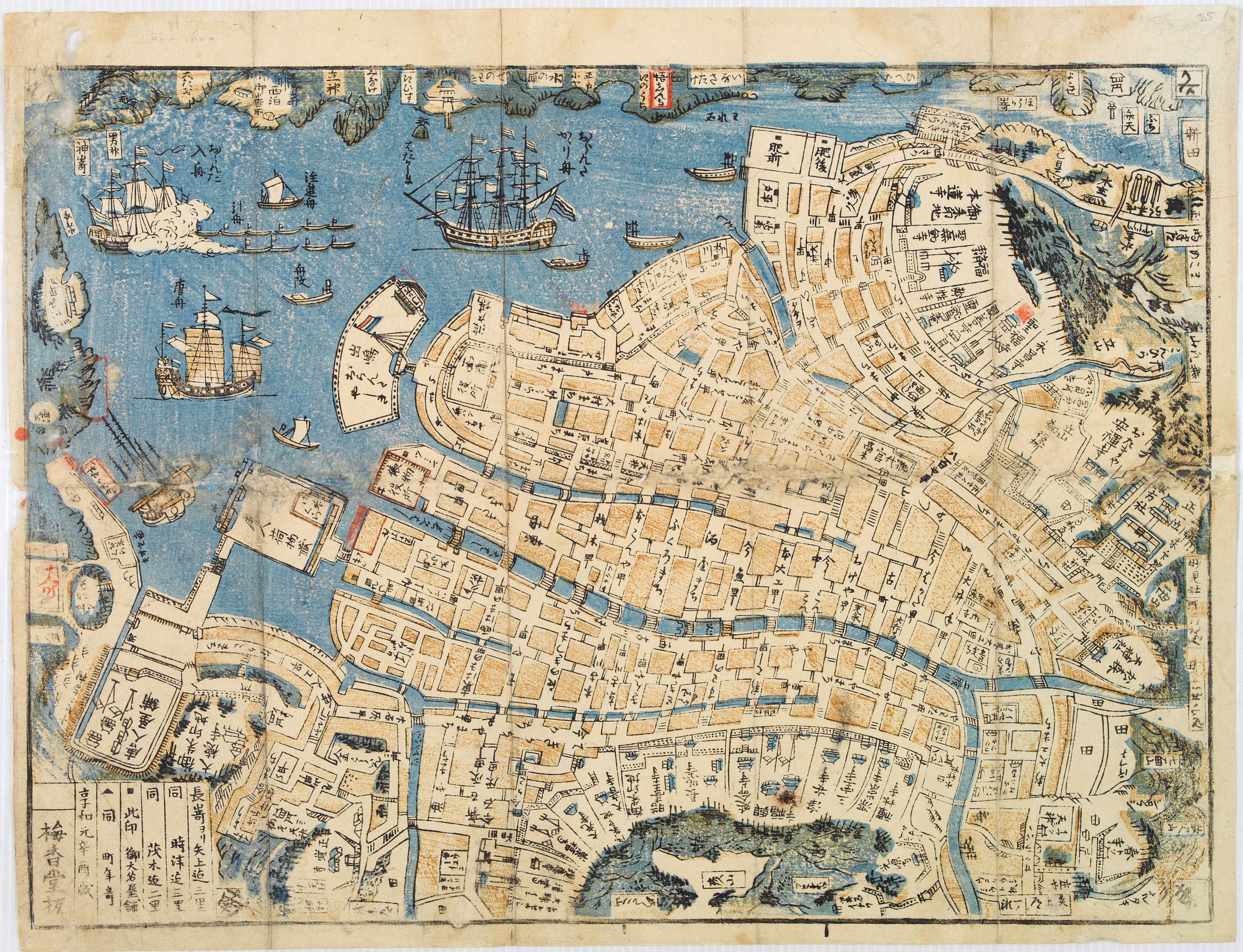
category within the Japanese prints is formed by Nagasaki woodblock
prints. Compared with Edo prints, they are rather primitive in design and technique. These prints were already
made in the 17th century; in most cases, town plans were printed. As early as the mid-18th century, the publishing firm Hiriya published the first print depicting a Dutchman.
Except for a few prints depicting Maruyama beauties and their Dutch and Chinese patrons, no Japanese subjects were depicted. In general, Nagasaki prints do not bear the artist's signature, though a few late prints are signed by Tani Ho, Kogetsukwan, Isono Bunsai and his wife Seko.
Nagasaki prints were eagerly sought by visiting businessmen, tourists, and local residents as souvenirs. They were sold cheaply at the time, so few were preserved, and very few copies exist today. It is estimated that fewer than four or five thousand copies of some three hundred designs may remain in the world.
After 1854, when foreigners also appeared in other parts of the country, the Nagasaki prints lost their importance. Their function is temporarily performed by Yokohama woodcuts, which, apart from depicting various foreigners, also chose all kinds of new technical inventions as their subject.
The oldest of the Nagasaki maps (Nagasaki-zu) was a panoramic print by the artist Chikujuken that served as a guide to the city of Nagasaki for visitors, who took it home as a stylish souvenir. They were such a useful guide for finding the foreign trading stations and the anchorages of Dutch and Chinese vessels that they continued to be published for many years. The influence of this type of panorama print can be seen in the 'Yokohama pictures' of the mid-19th century and in the bird's-eye perspectives of works such as 'A Comprehensive View of Yokosuka', which were still being published after the Meyi Restoration of 1868.
PHILIPP FRANZ BALTHASAR VON SIEBOLD
Von Siebold was born on 17th February 1796 in Würzburg, Germany, and worked for the Dutch government as a doctor in Java. In 1823, Siebold arrived in Japan with a special assignment. Apart from his appointment as the station doctor, he was to gather information on the trade with Japan, the country itself, its constitution, its political system and its products. His reputation allowed him to go beyond Deshima and to buy a house outside Nagasaki.
An opportunity to travel in Japan arose in 1826, when he accompanied a Dutch mission to the Imperial Court at Yedo (Tokyo), typically and illegally taking surveys on the way. Siebold became fluent in Japanese and was permitted to travel and observe the country, its manners and customs, the results of these travels and extensive research being embodied in his magnificent work 'Nippon, Archiv zur Beschreibung von Japan und dessen Neben- und Schutzlandern,...'.
It was to consist of nine volumes, of which eventually only seven appeared, but even these were not complete. It is clear that Siebold sought to address all aspects of Japan's nature and culture. An essential part of 'Nippon' was formed by the illustrations, which were largely taken from objects in his ethnographic collection.
We offer for sale several original prints from 'Nippon, Archiv zur Beschreibing" or "Flora Japonica" by Von Siebold.
Click here for a selection.
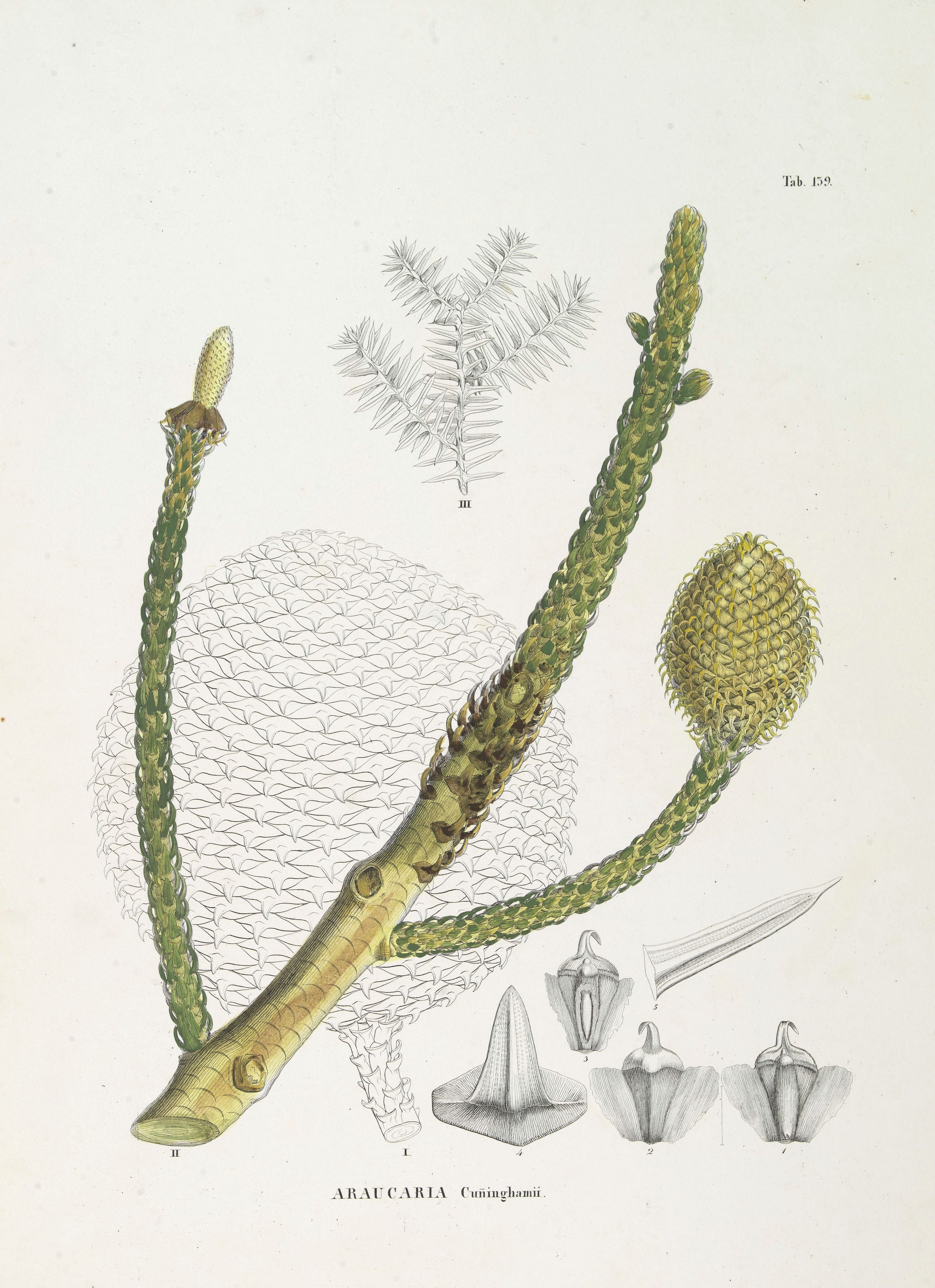
In 1835 the first installments of his 'Flora Japonica ' were finished. The 'Flora Japonica' was written in collaboration with Joseph Gerhard Zuccarini and issued in 30 parts. Only the first volume could be completed in 1841, and during Von Siebold's lifetime until 1844, only five installments of the second volume appeared. After Zuccarini's death in 1848, work on the Flora was virtually halted, though, based on Zuccarini's and Siebold's manuscripts, another five installments were edited by F.A. W. Miquel for publication in 1870.
The Paulus Swaen company has for a long time specialized in the
Japanese / Netherlands relationship in the 17th and 18th centuries,
The year 2009 marked the 400th anniversary of Trade relations between Japan and the Netherlands, and this milestone prompted us to create several web pages and a Sales catalog featuring beautiful, rare, and important items, with an emphasis on this unique relationship between the two countries.
