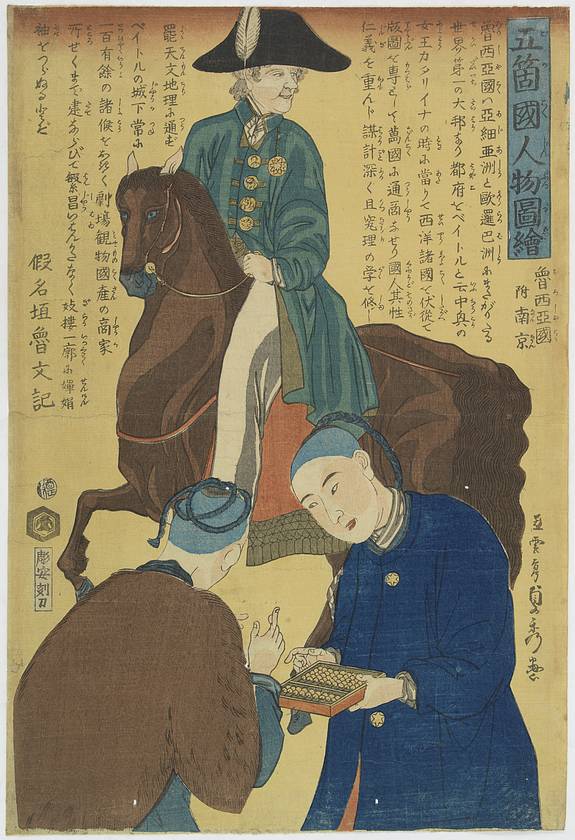
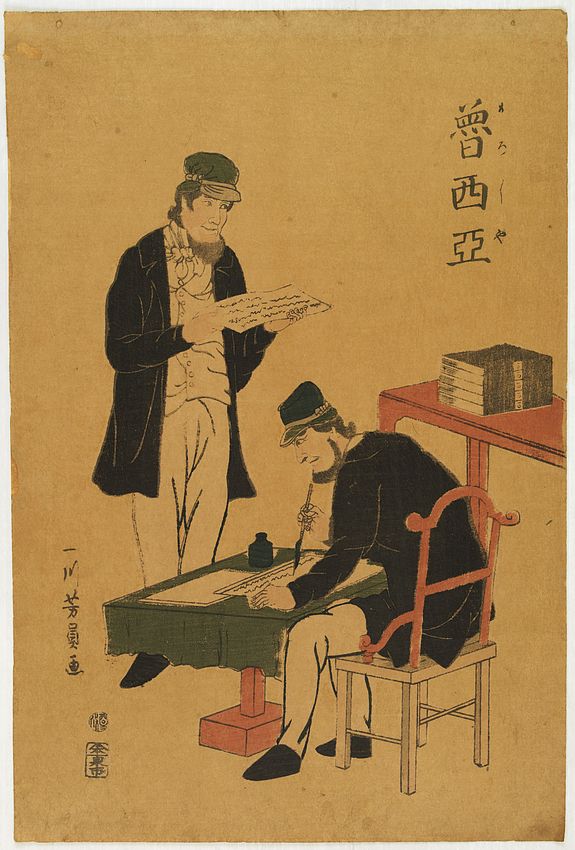
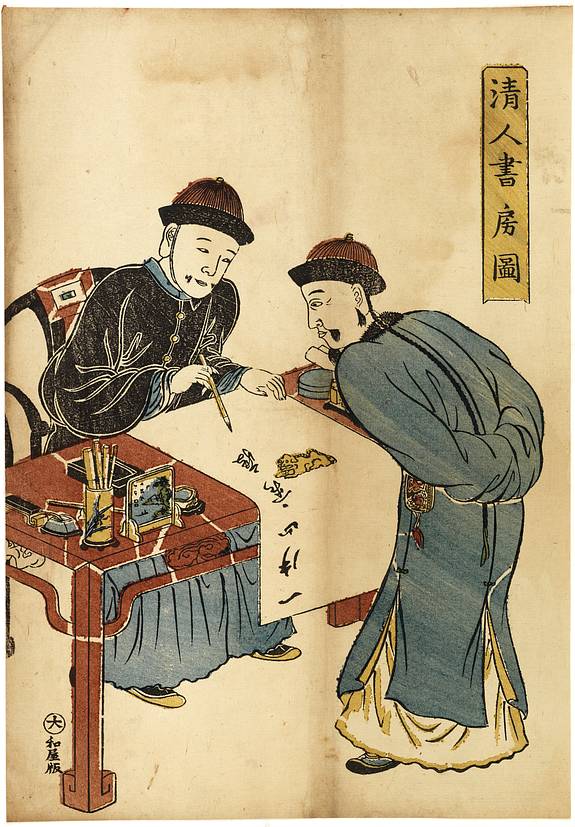
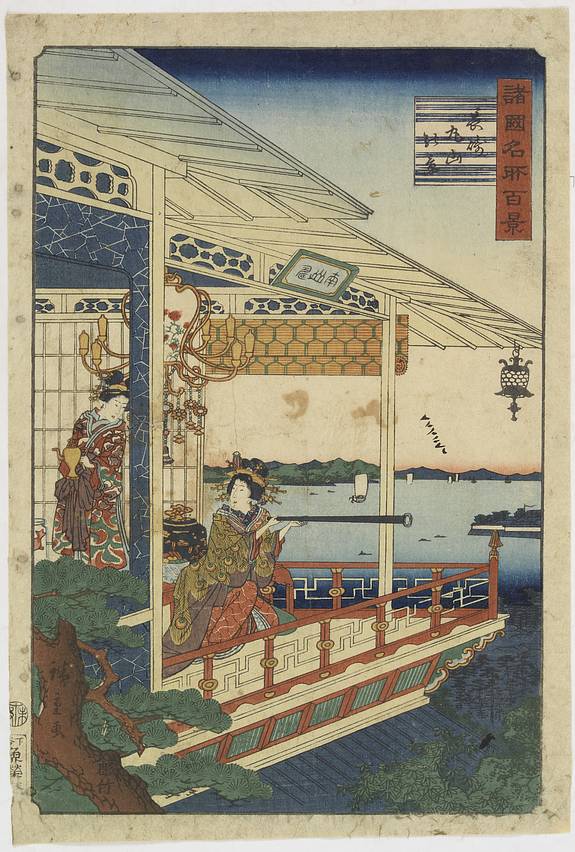
Yokohama-e
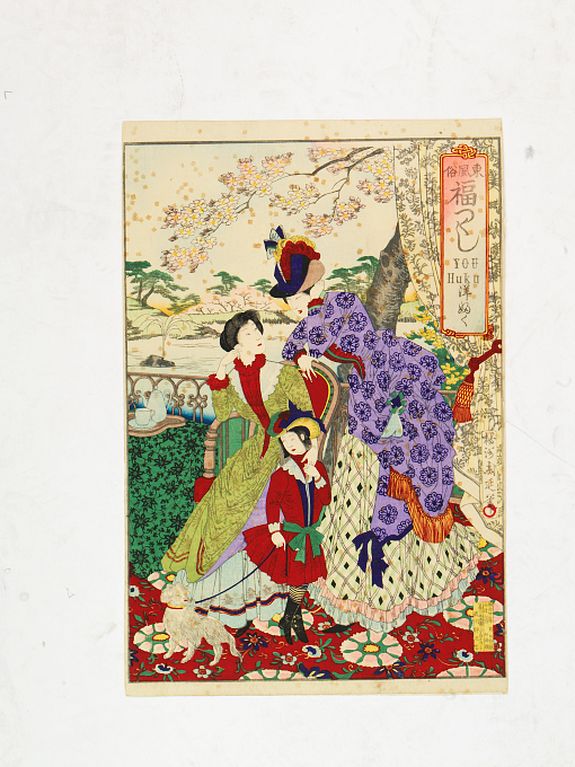
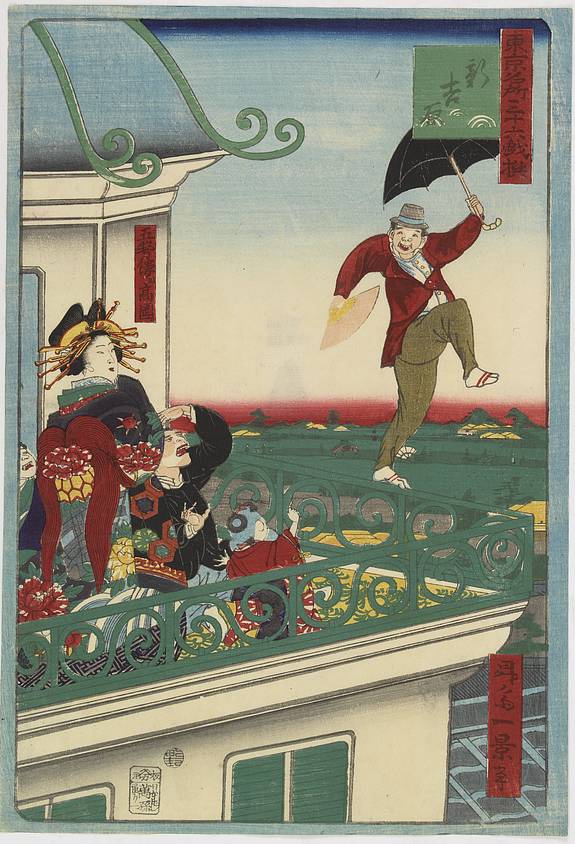
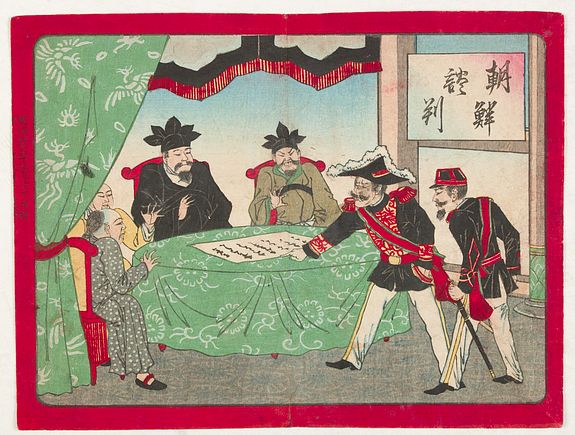
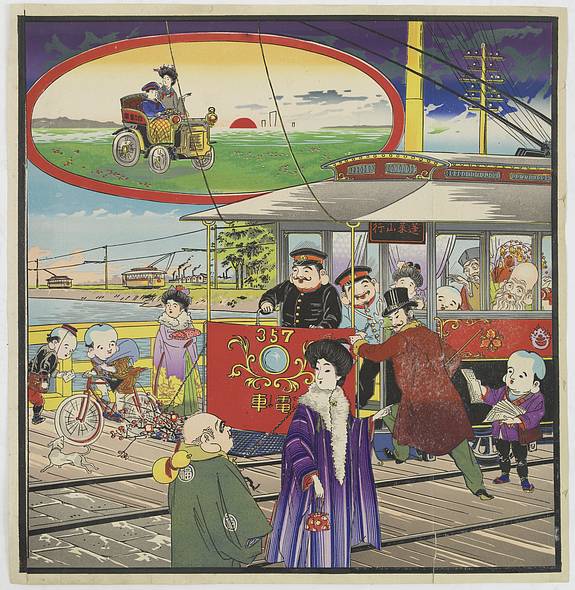
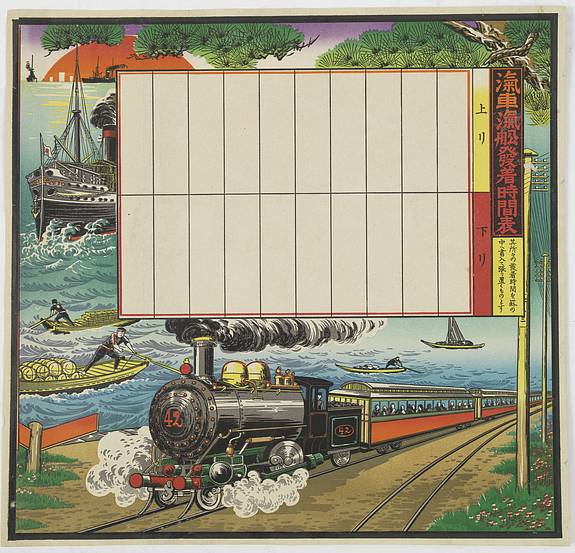
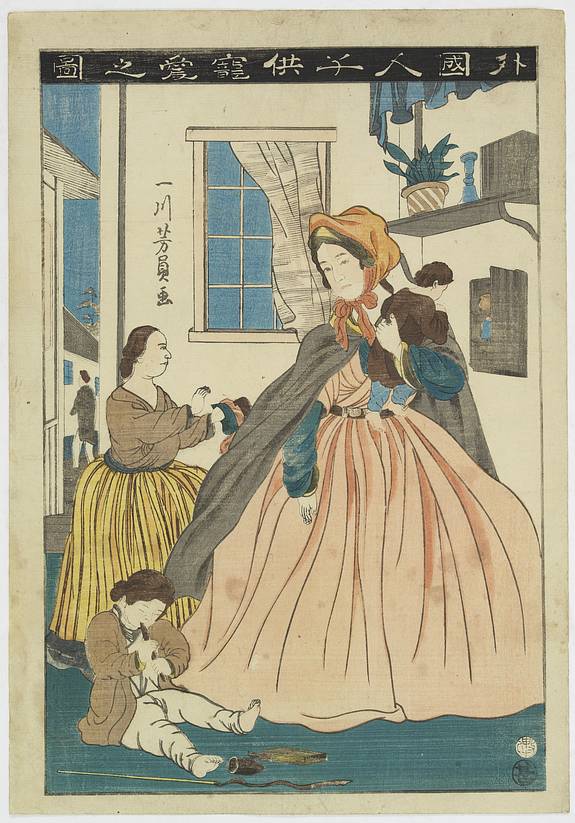
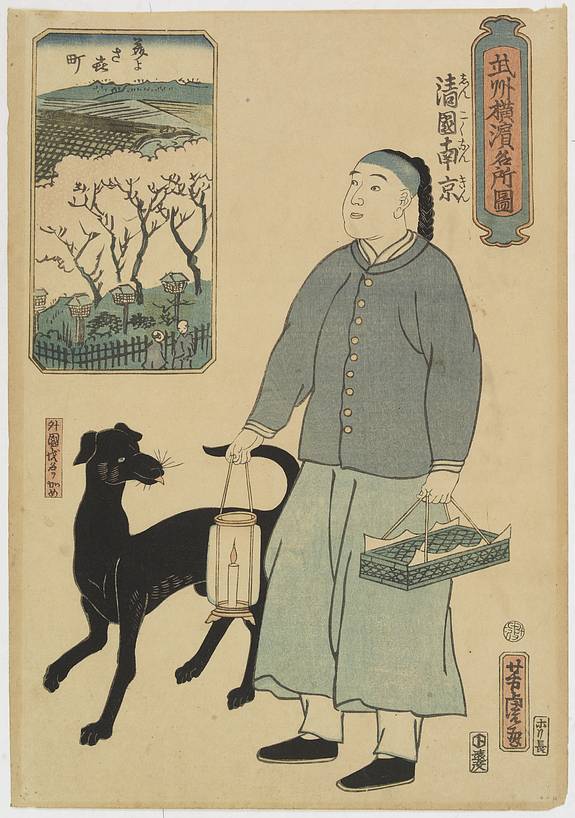
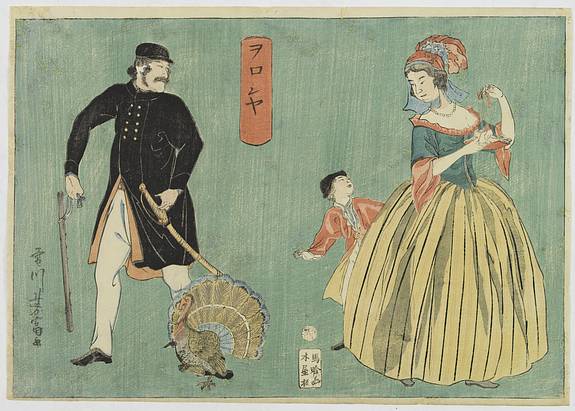
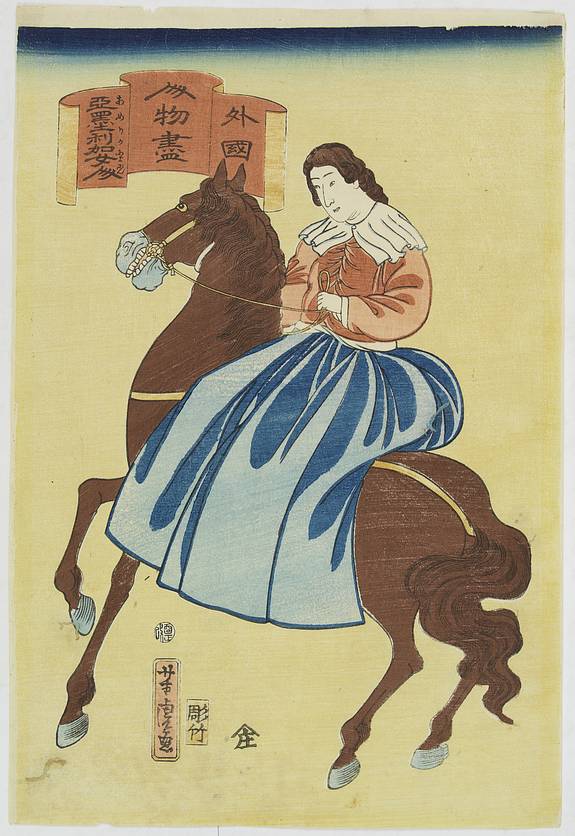
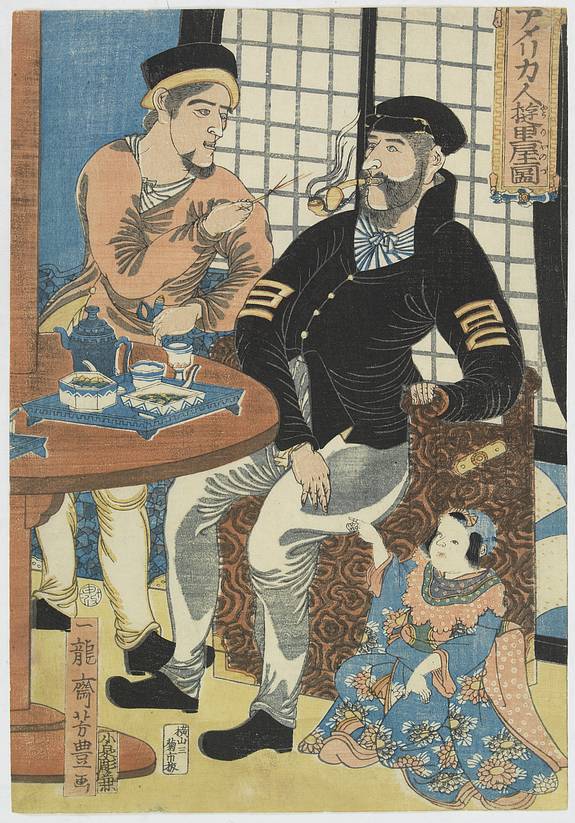
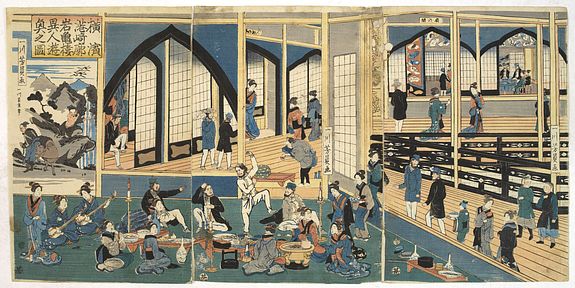
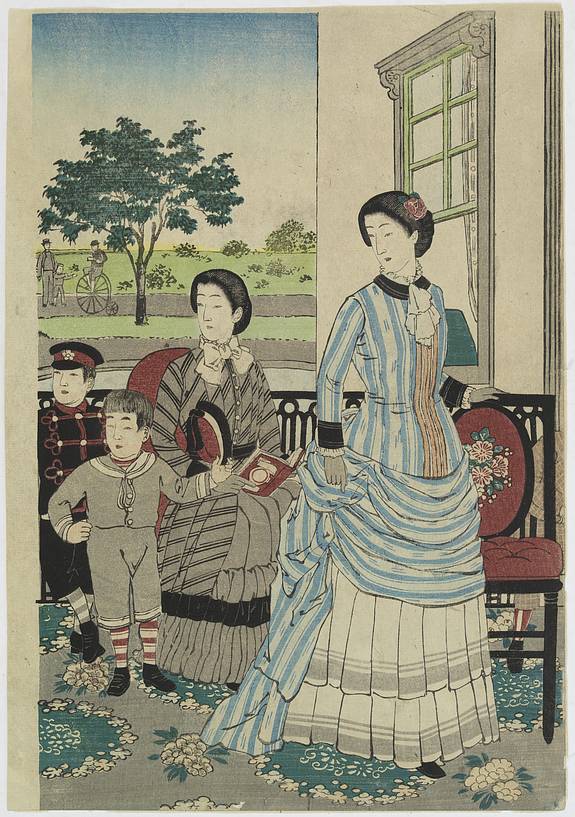
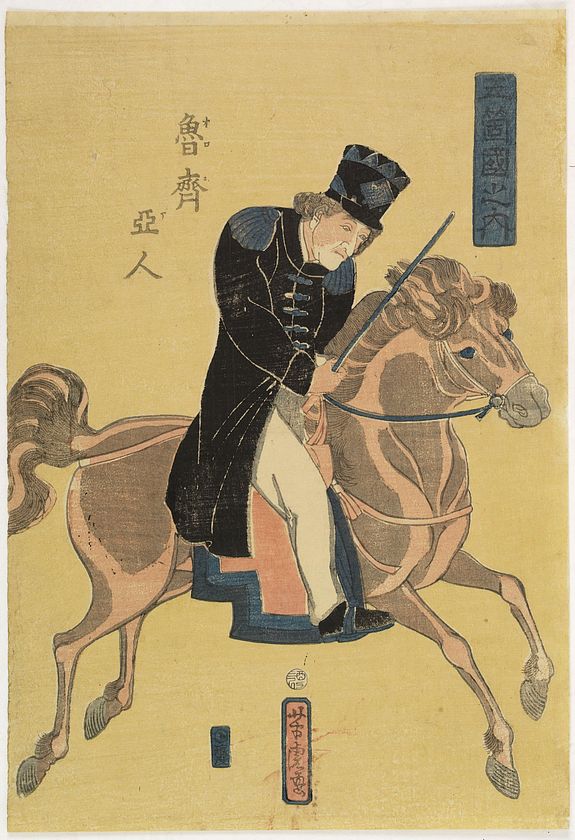
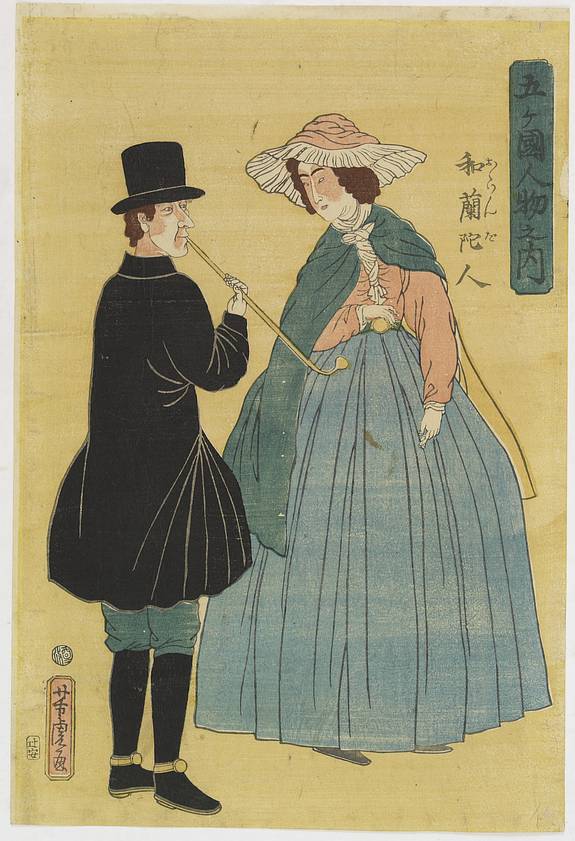
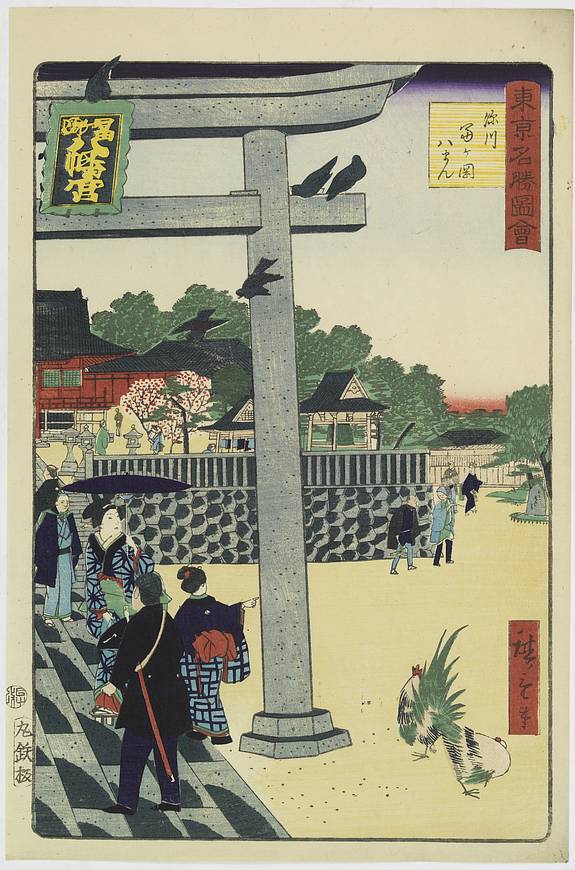
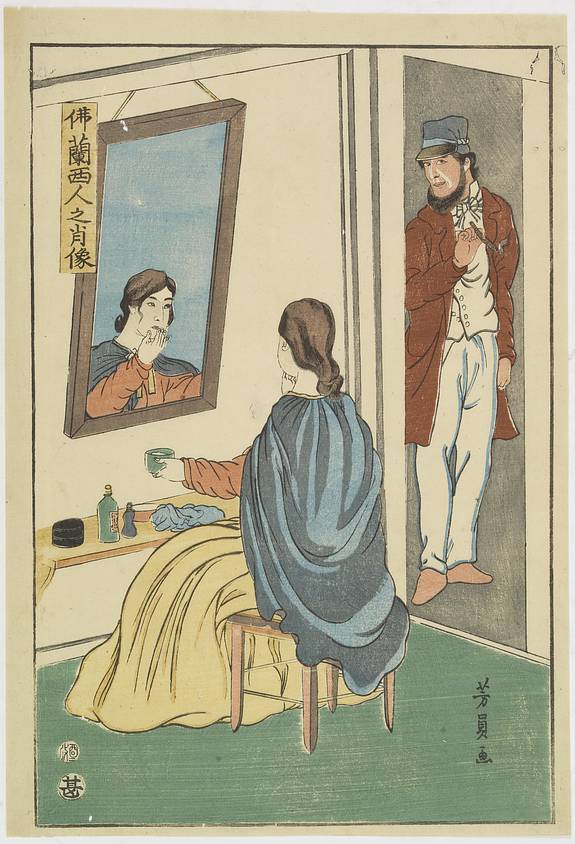
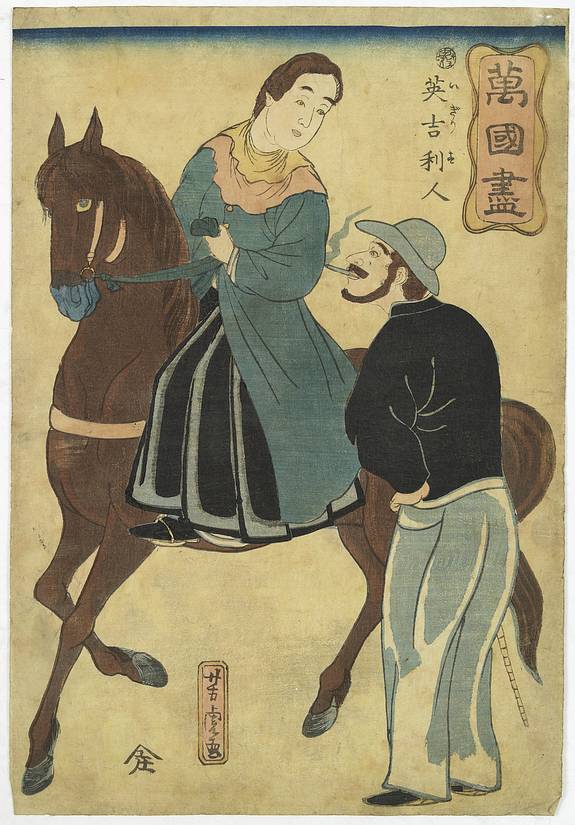
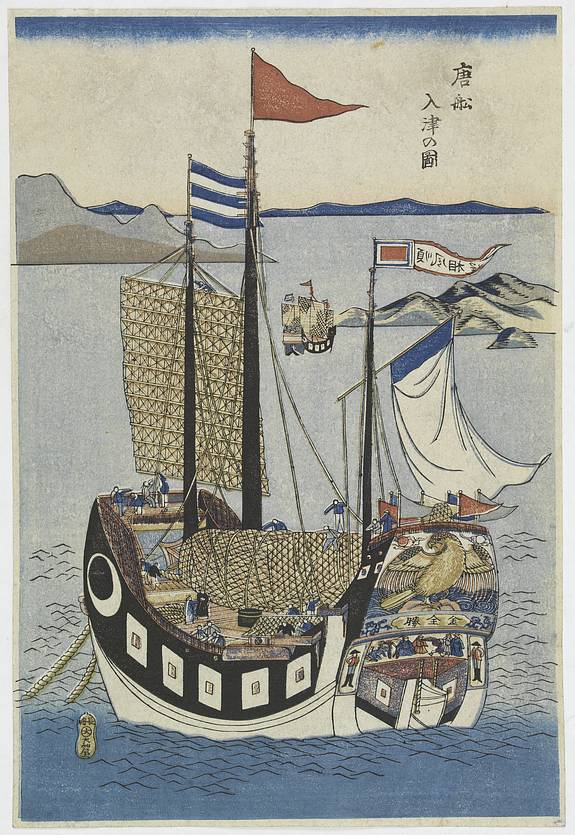
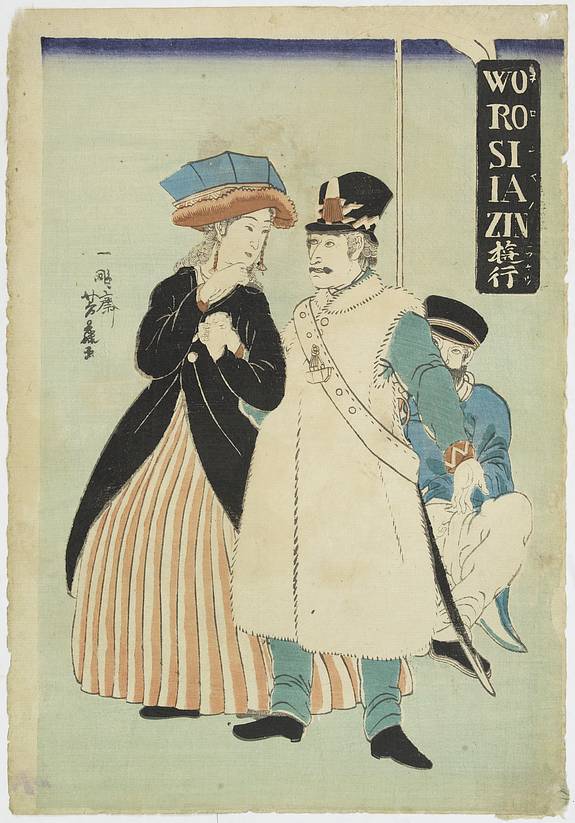
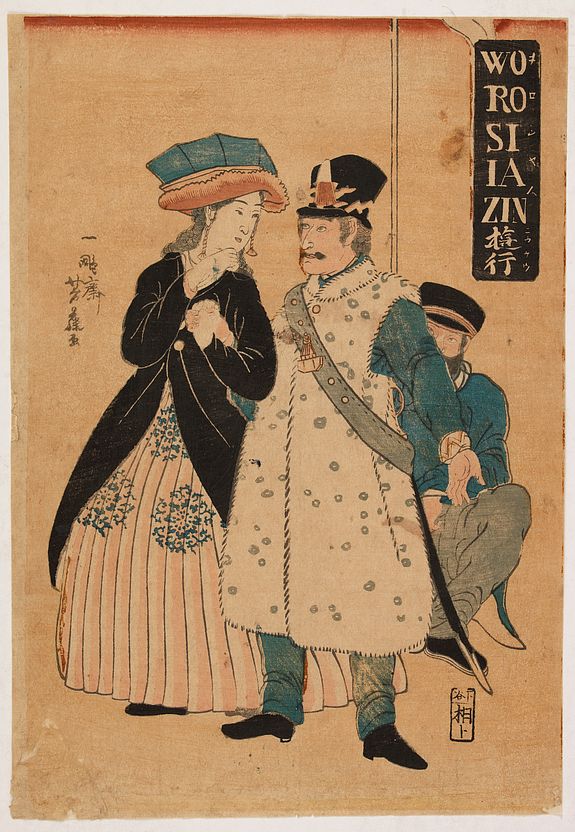
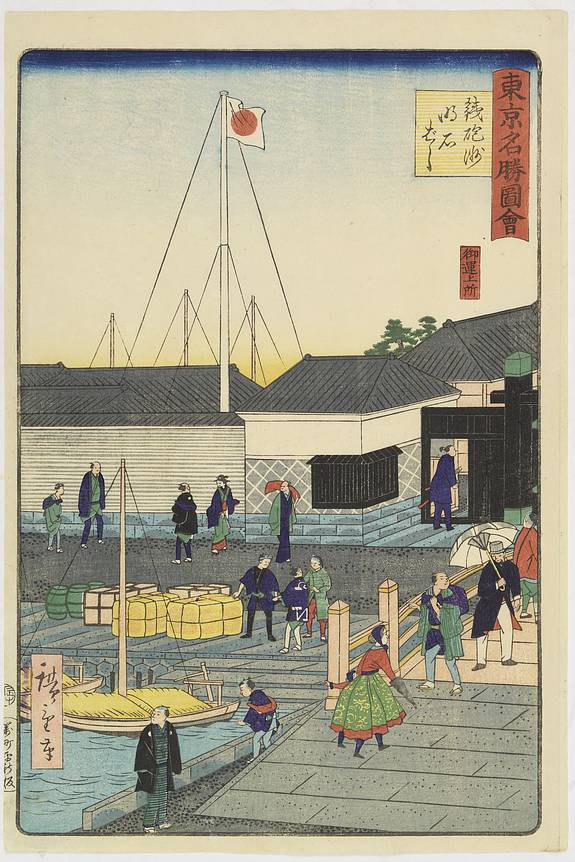
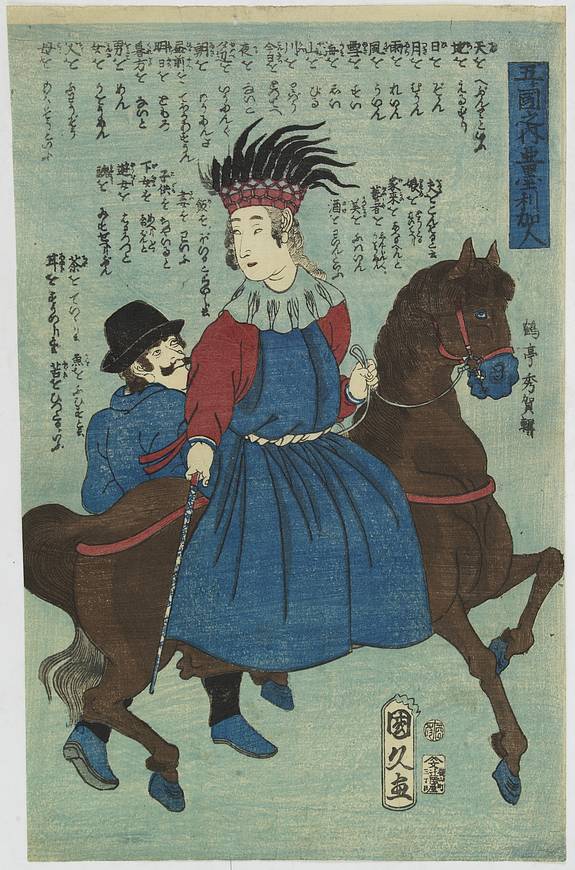
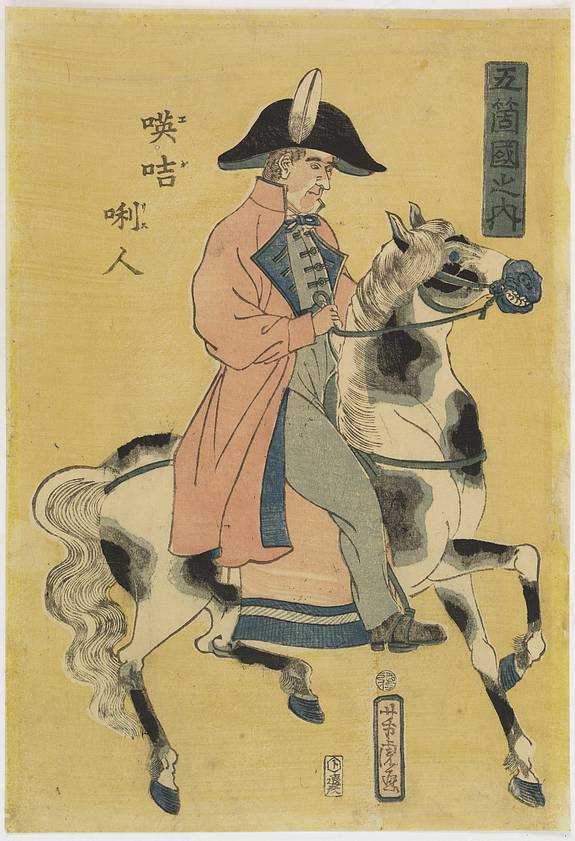
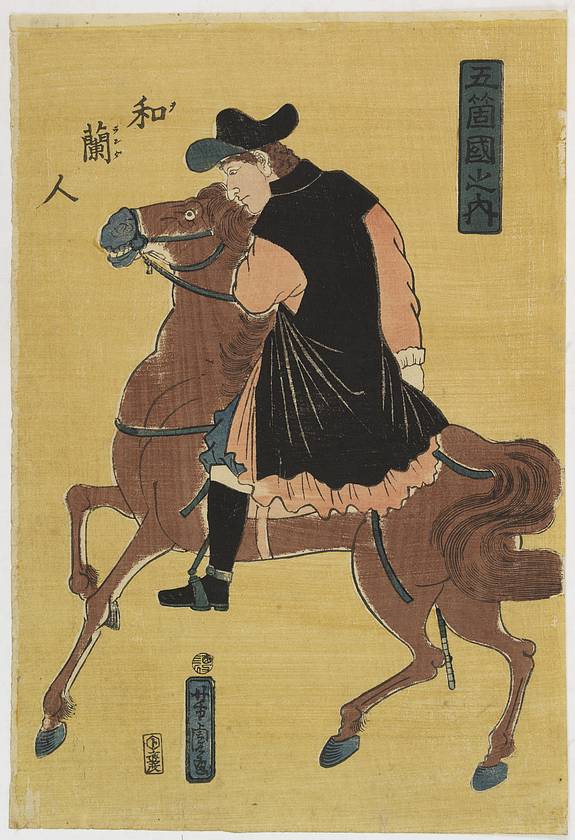
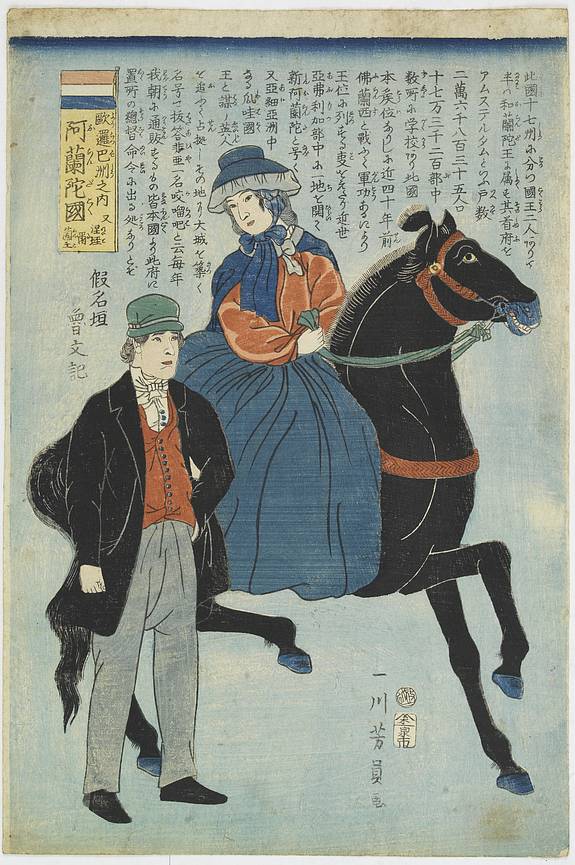
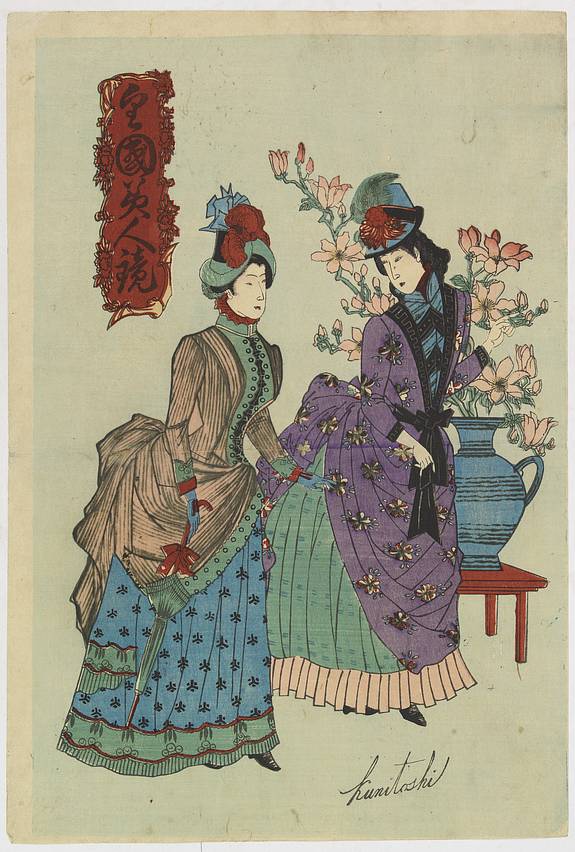
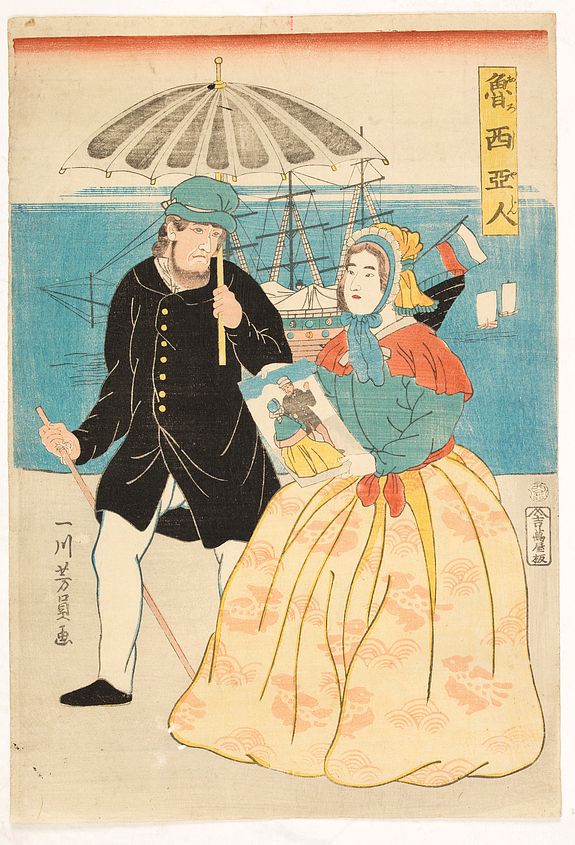
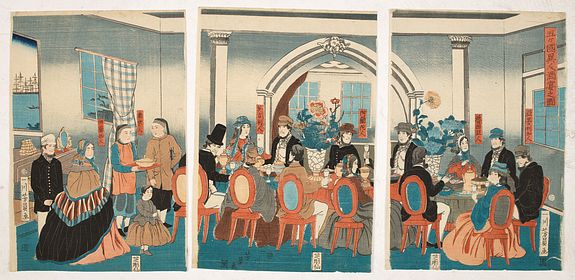
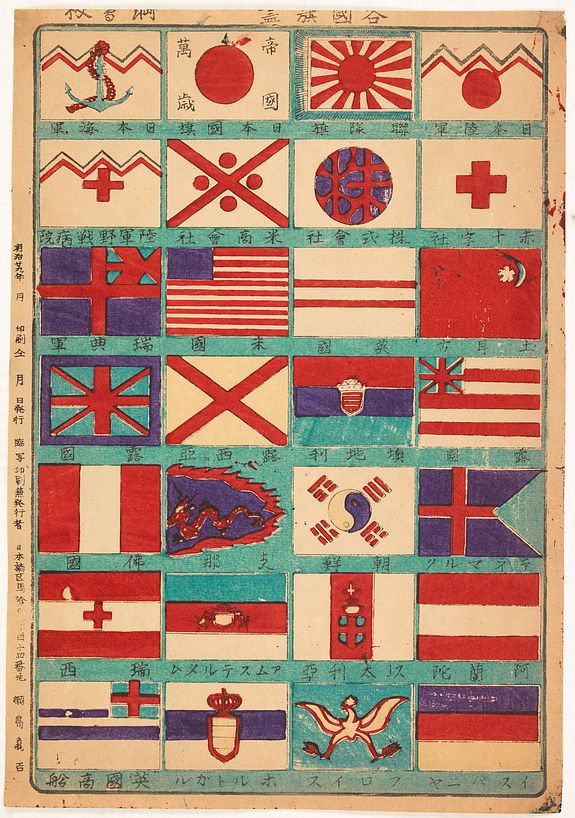
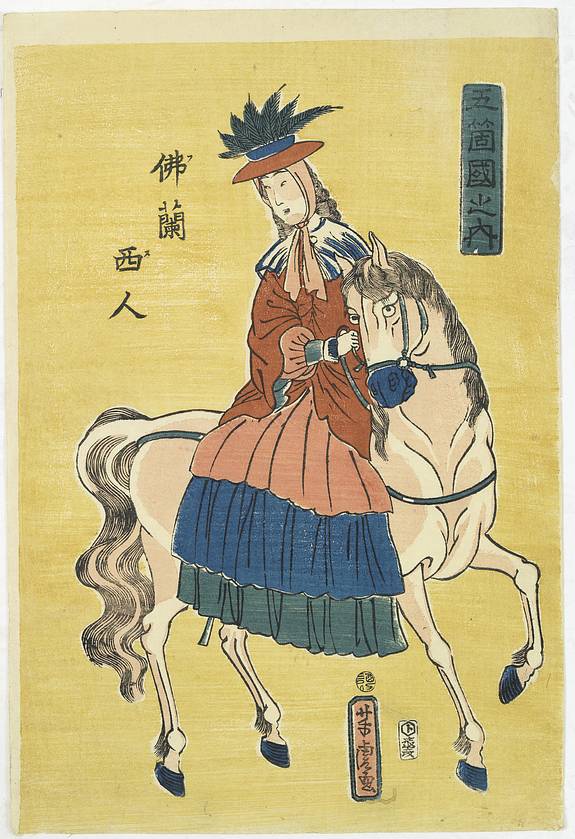
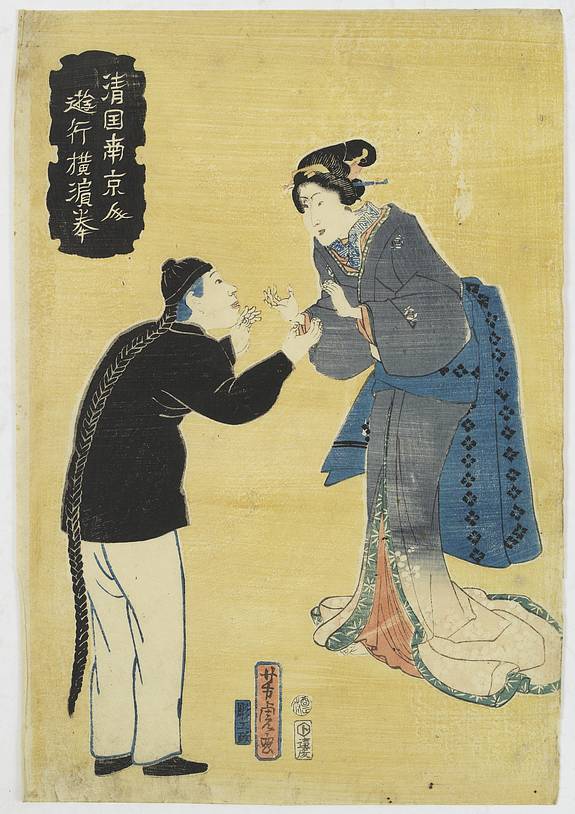
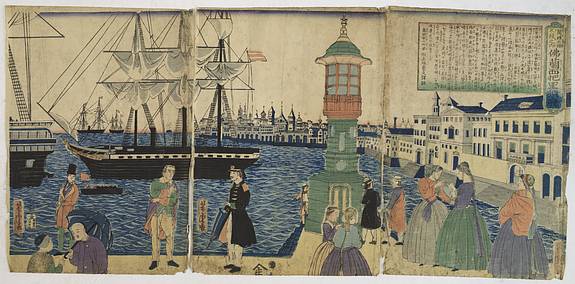
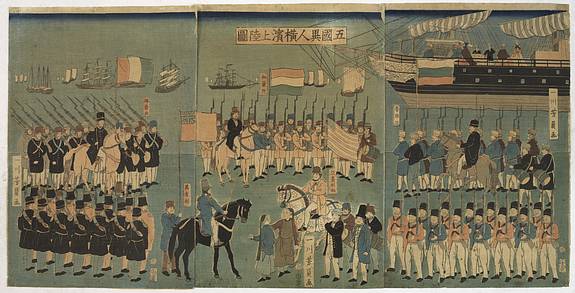
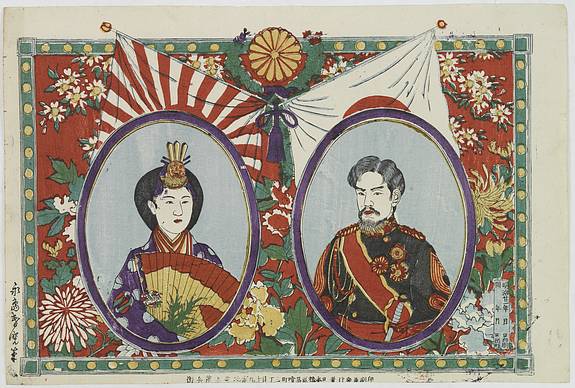
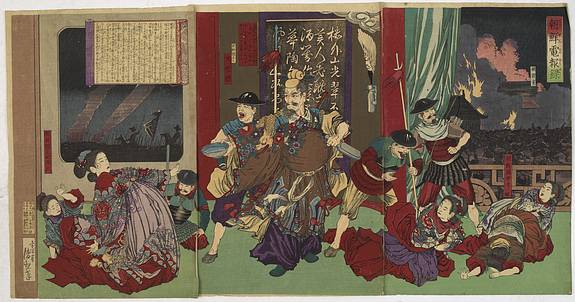
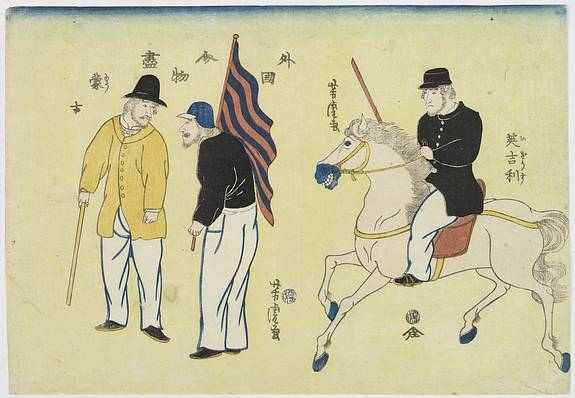
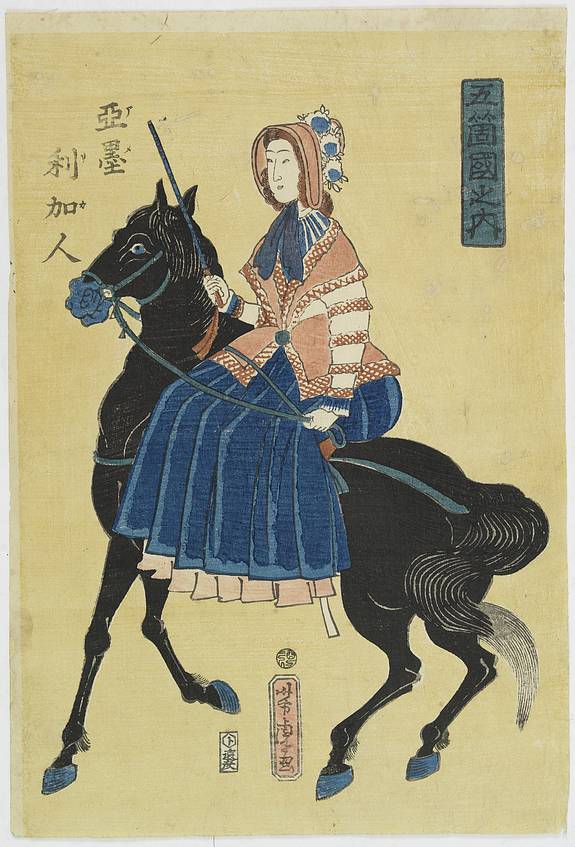
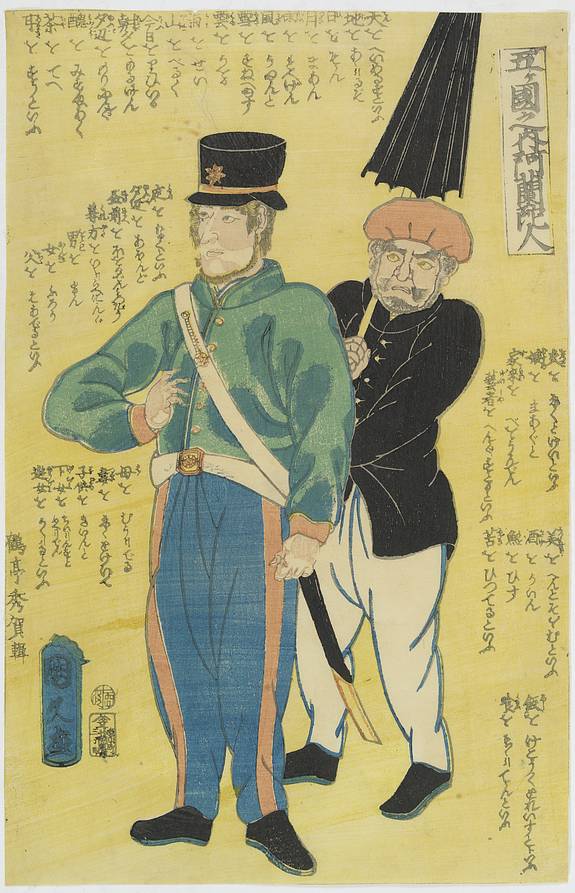
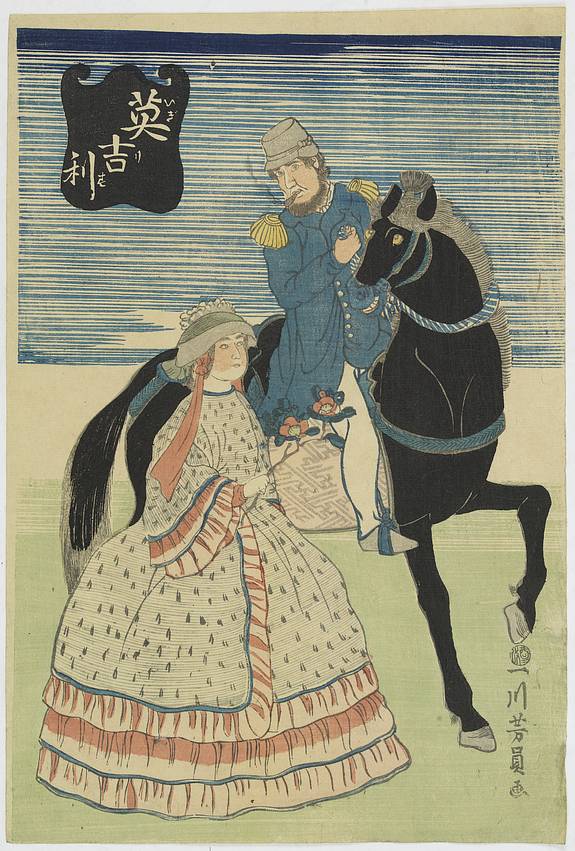
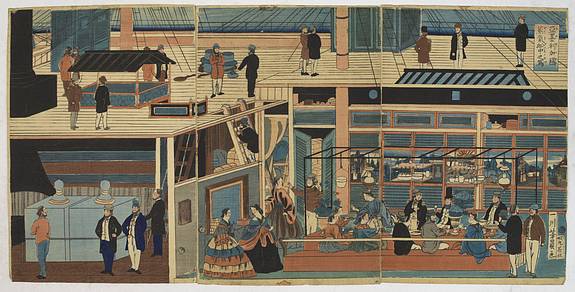
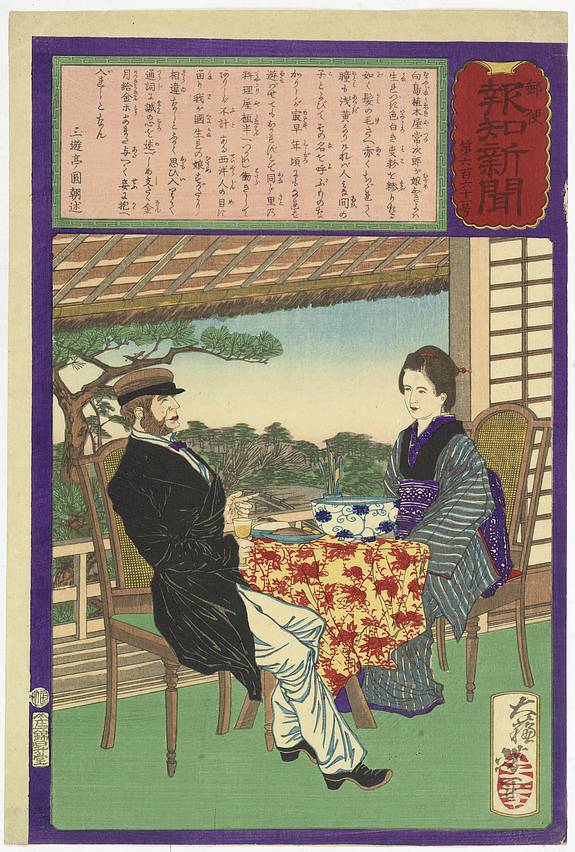
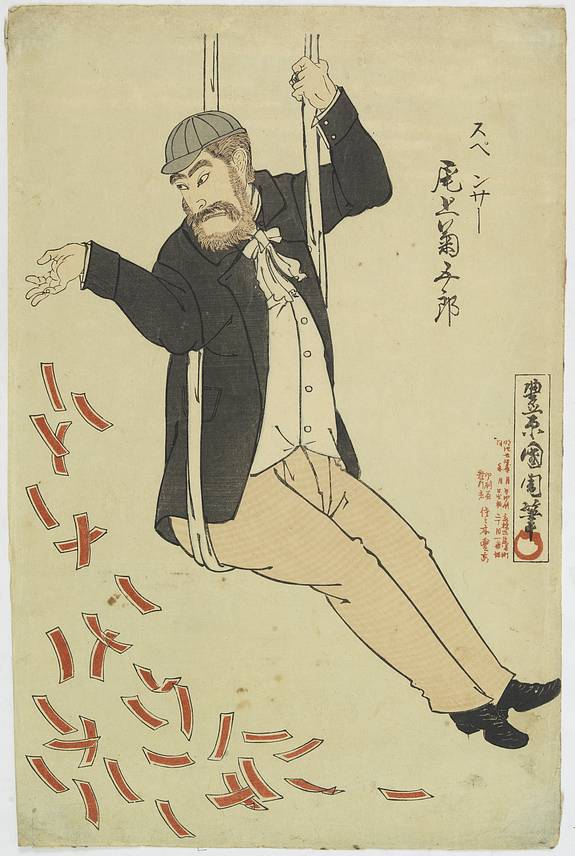
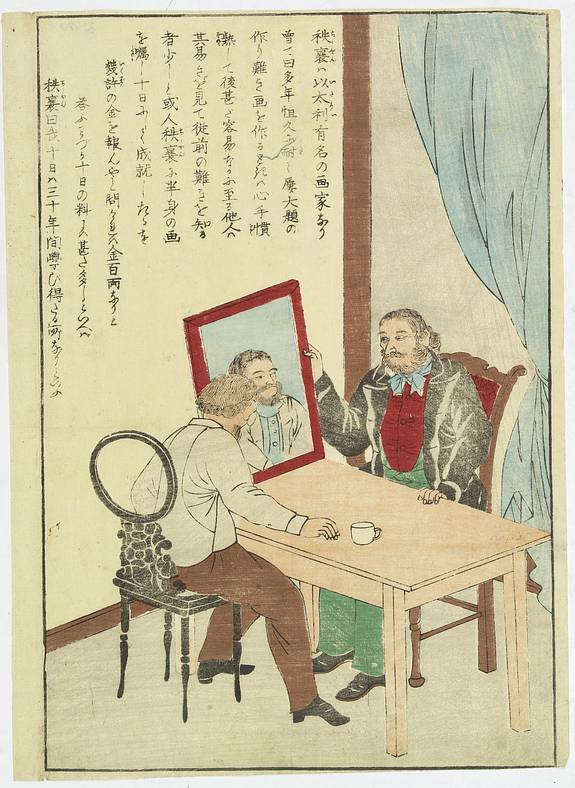
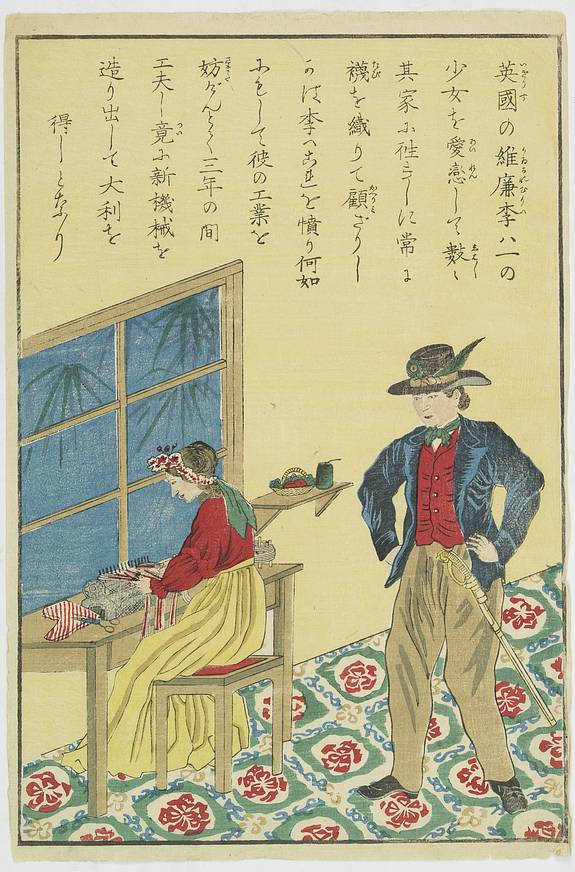
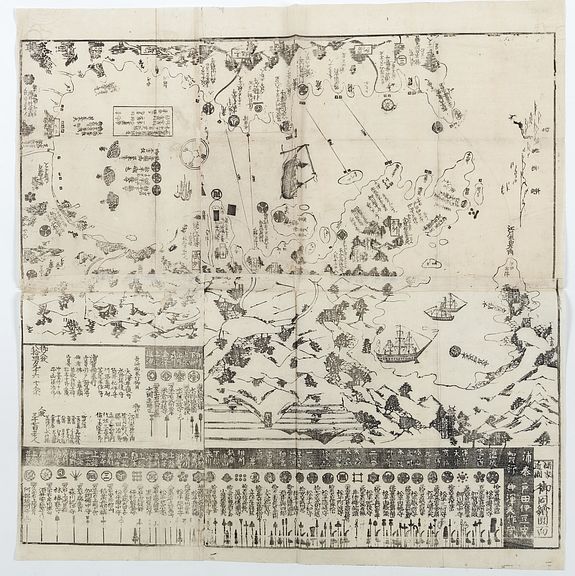
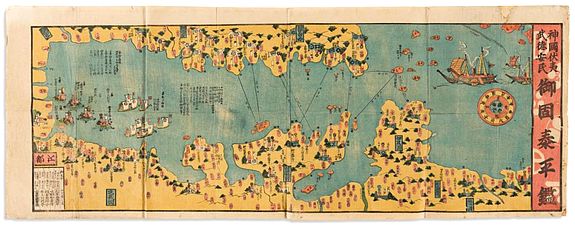
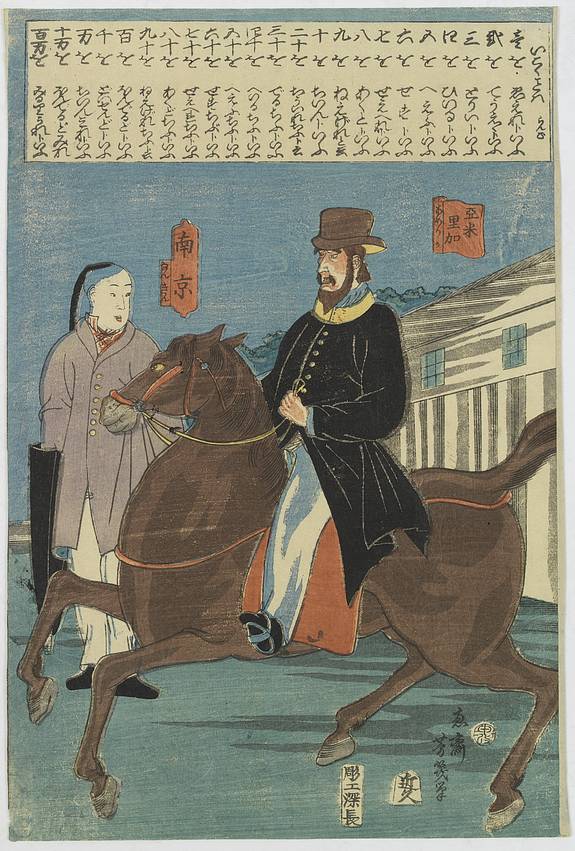
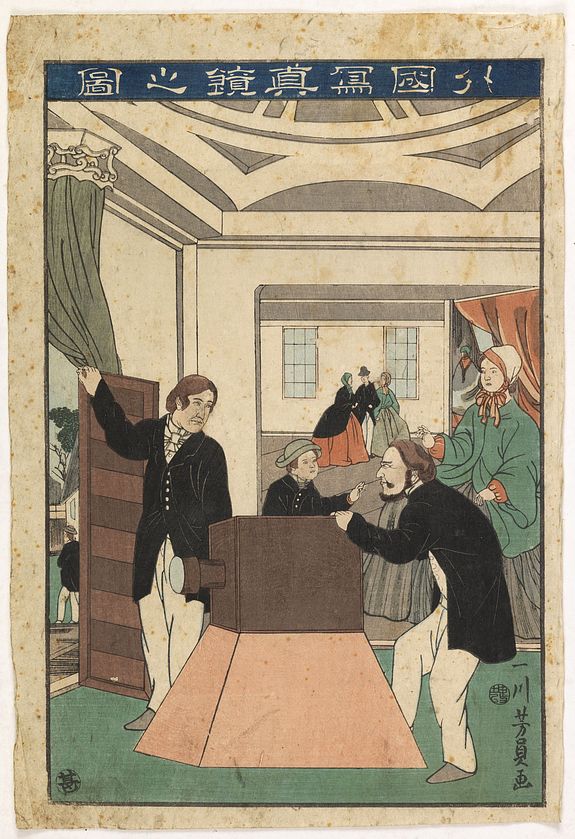
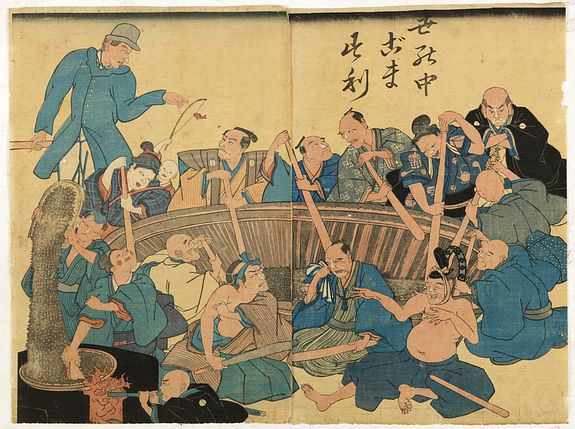
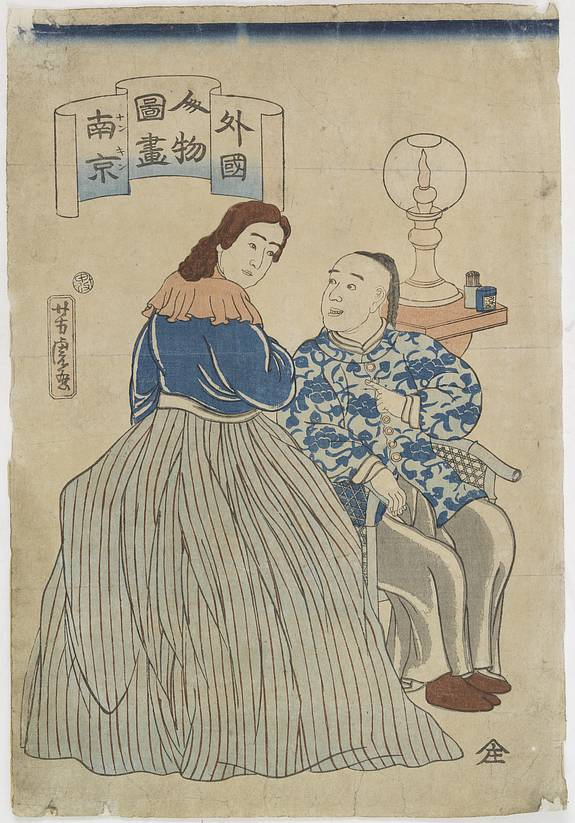
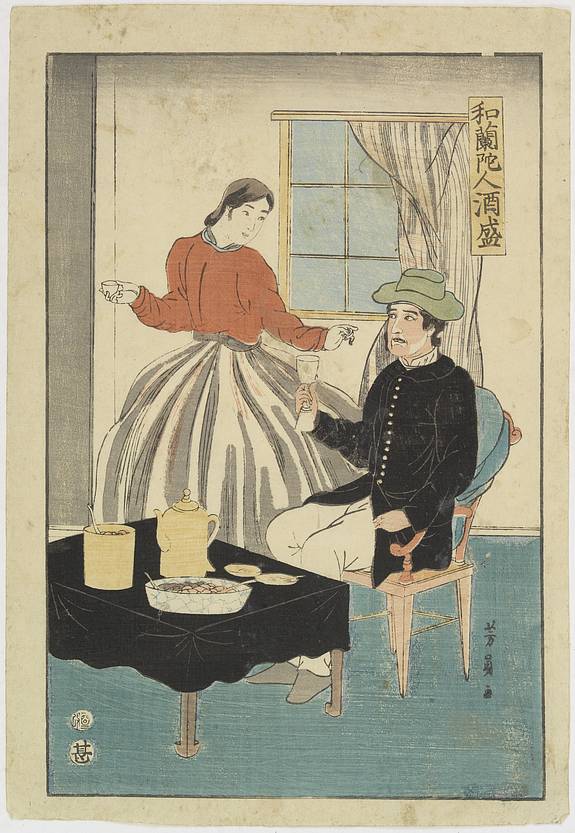
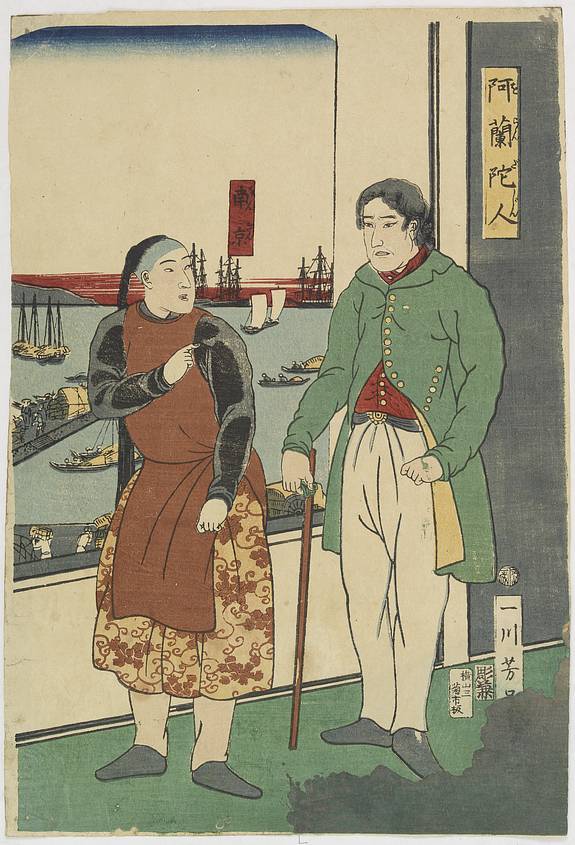
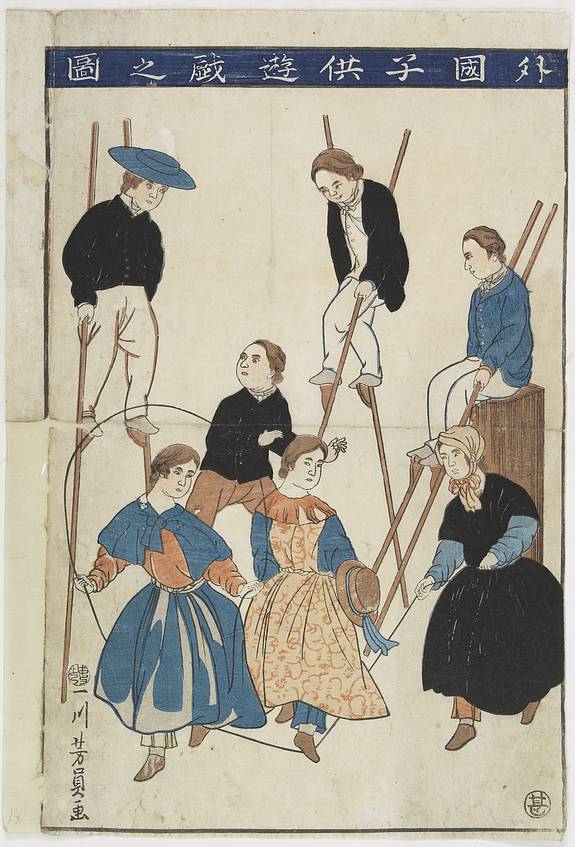
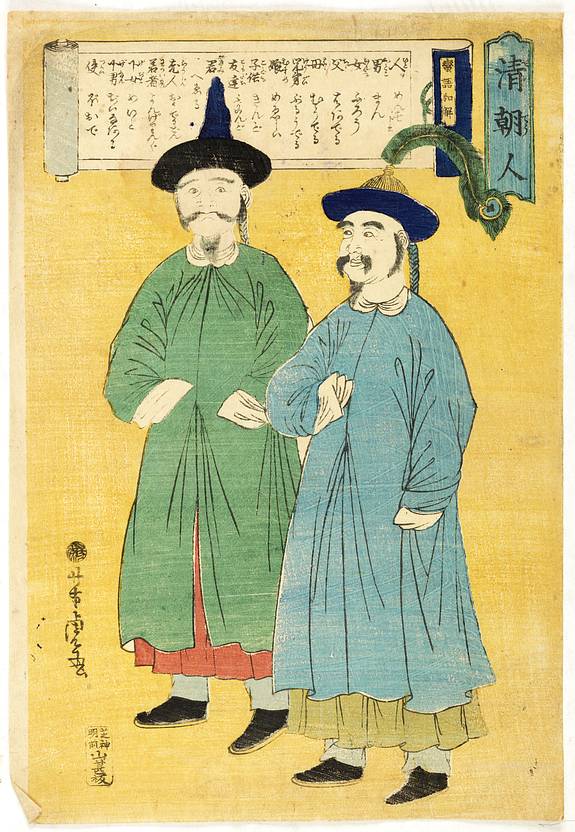
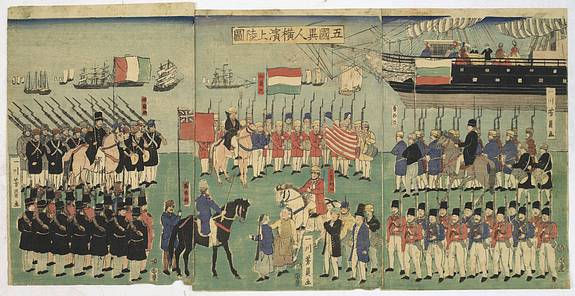
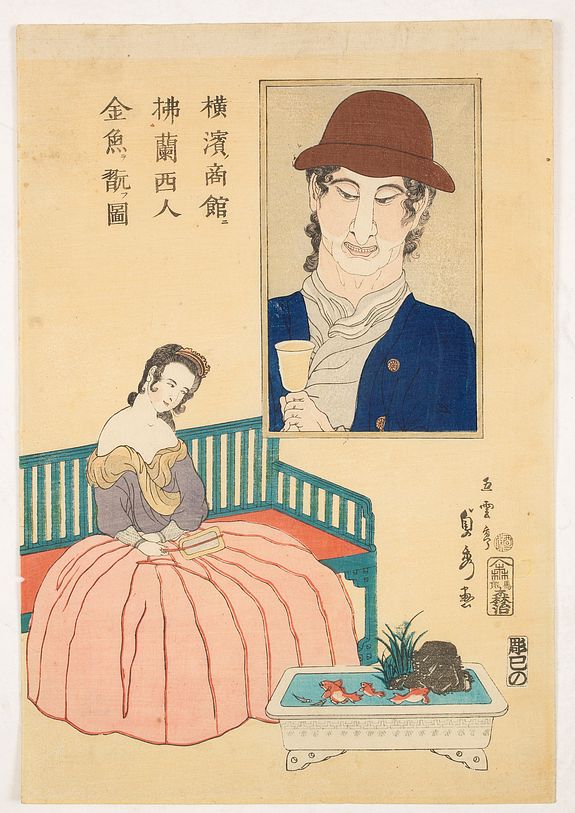
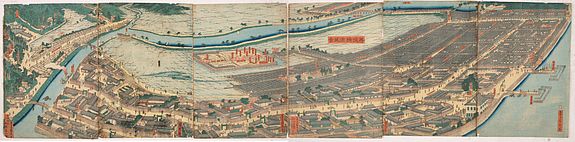
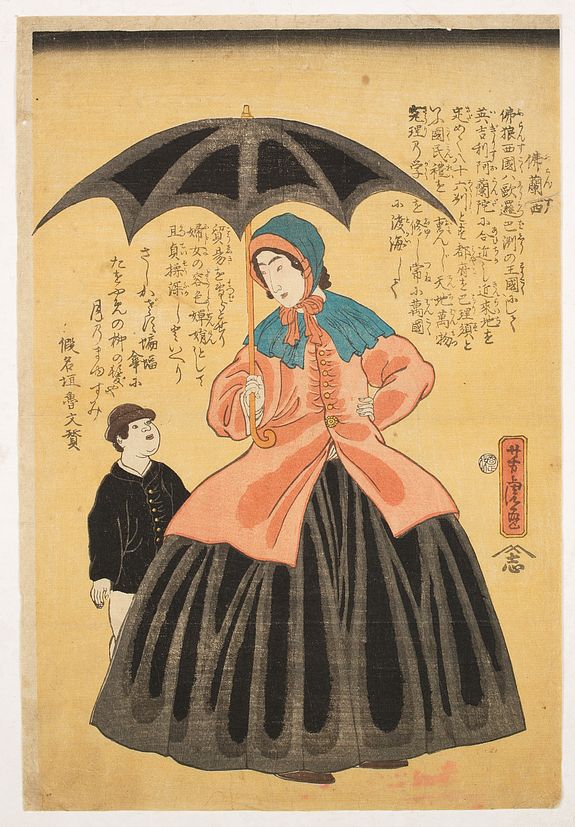
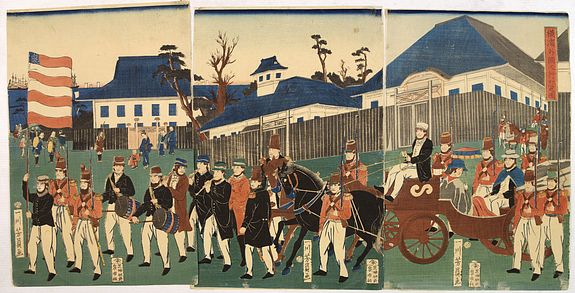
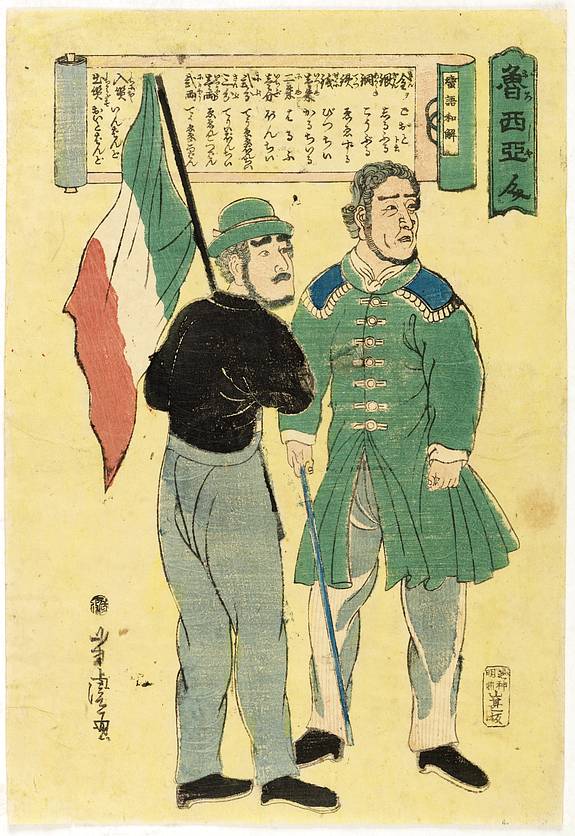
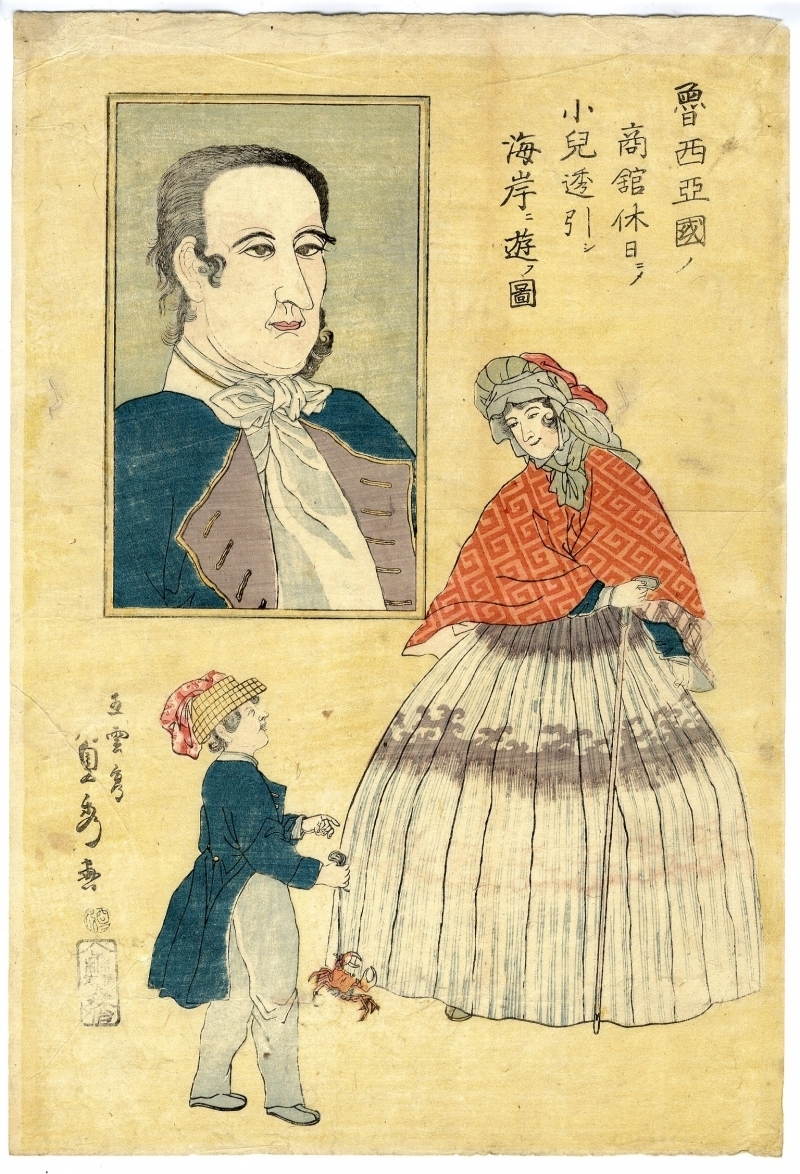
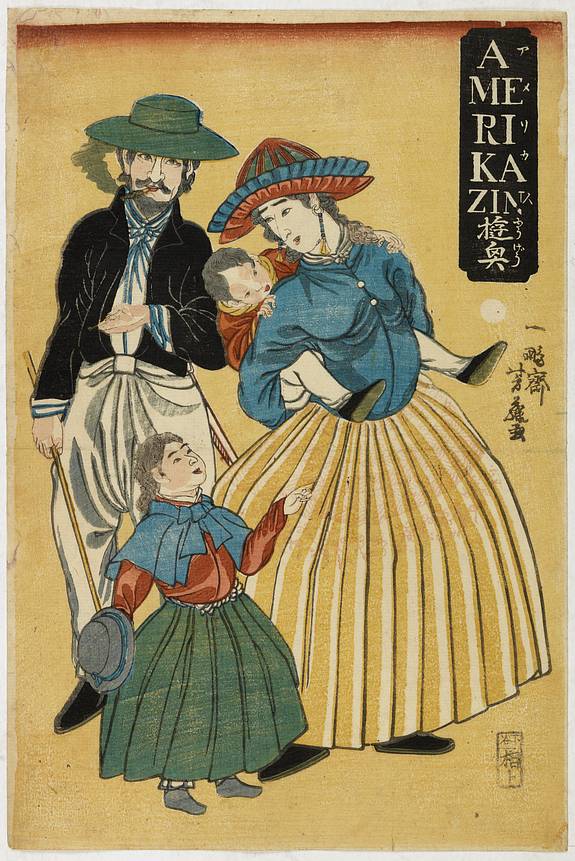
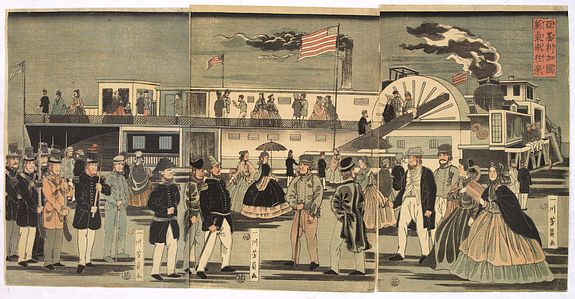
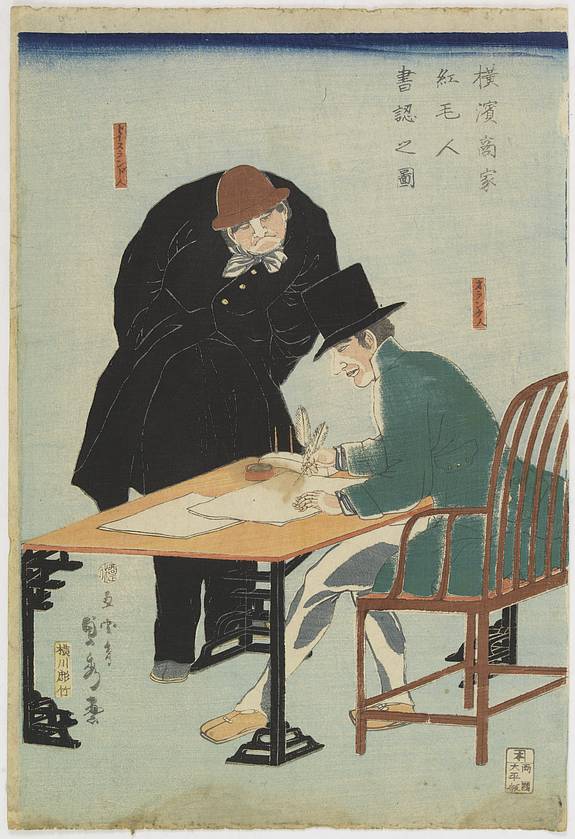
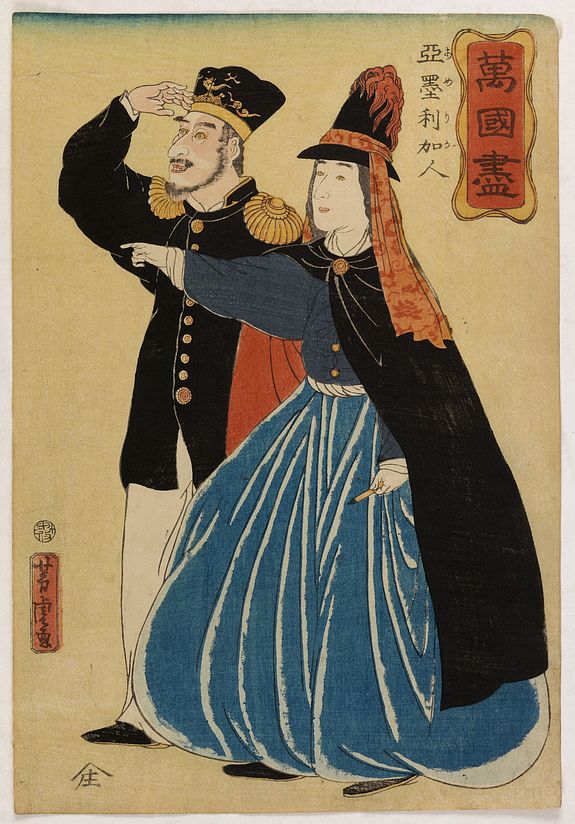
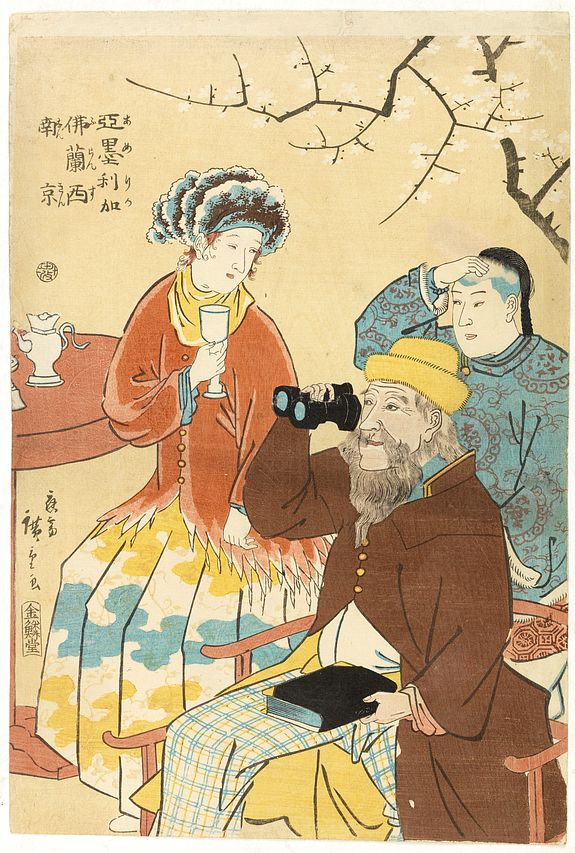
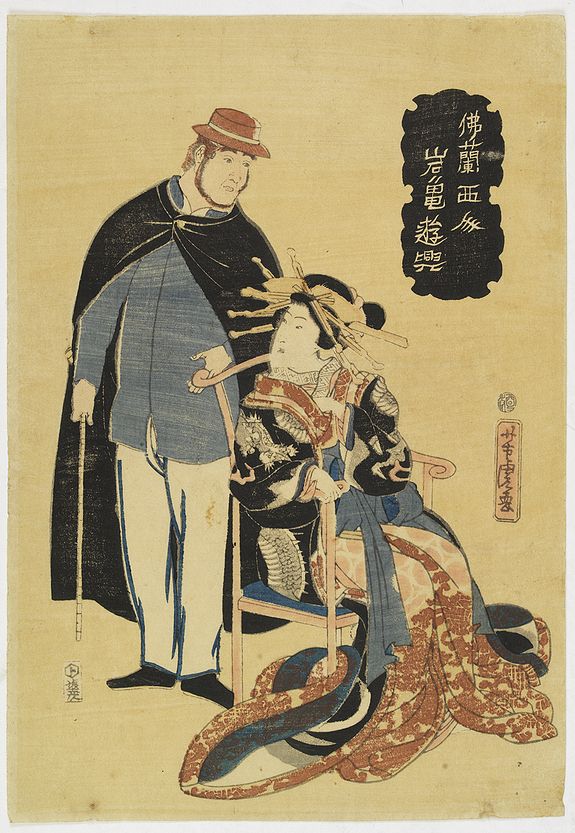
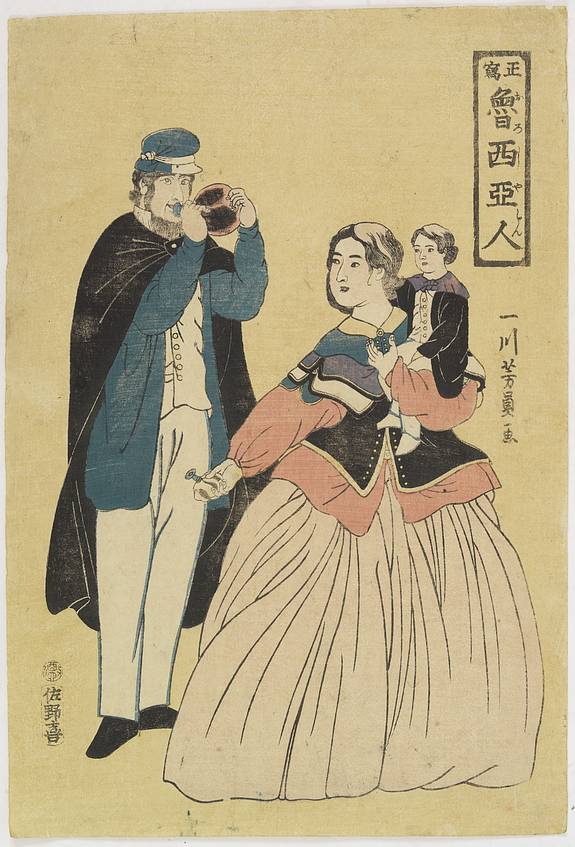
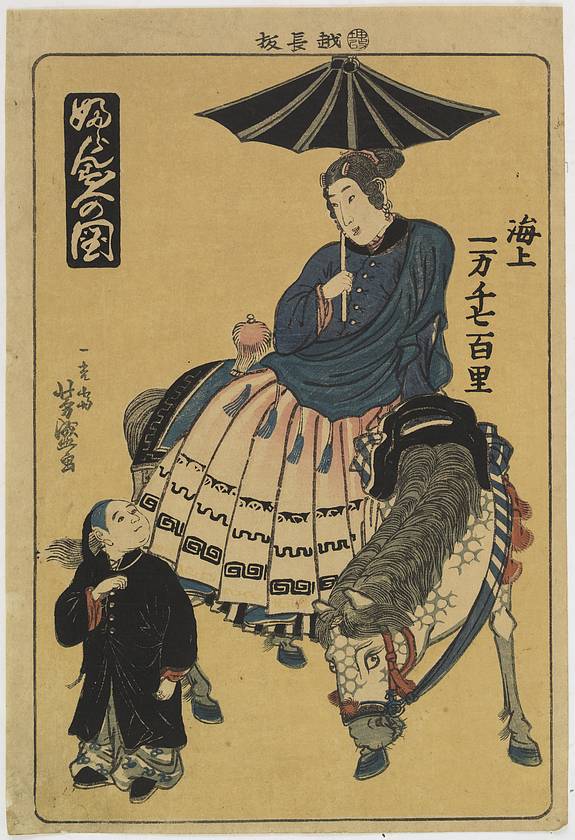
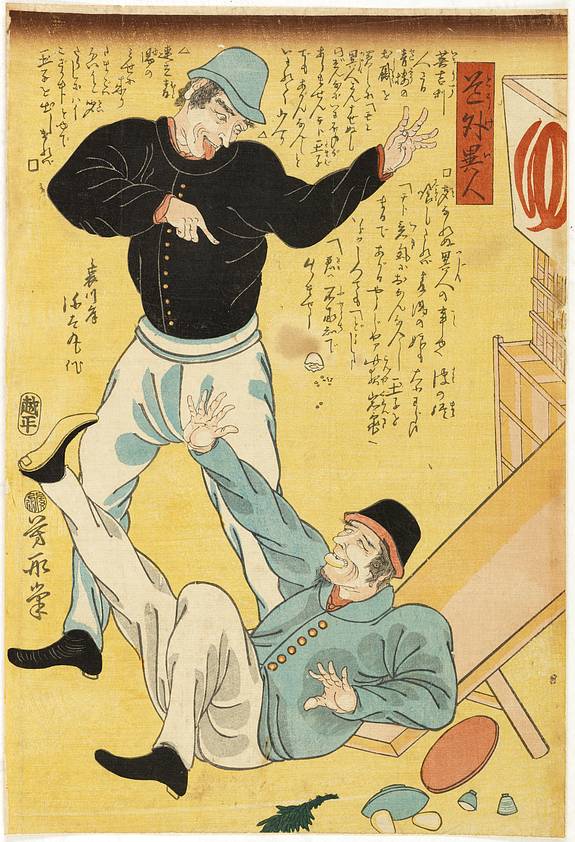
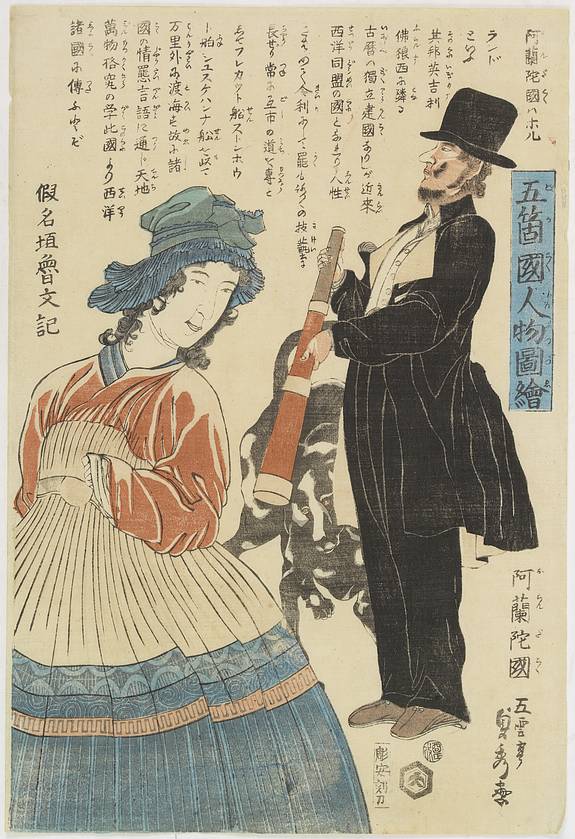
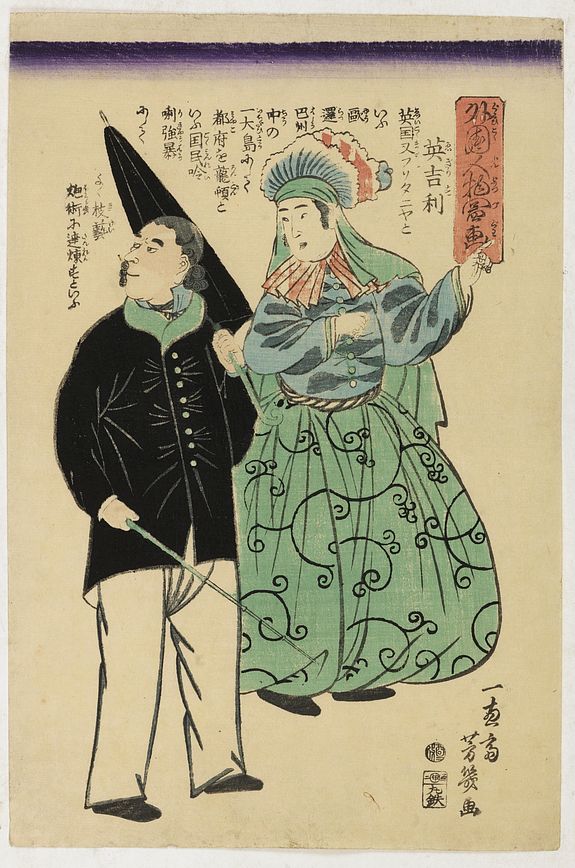
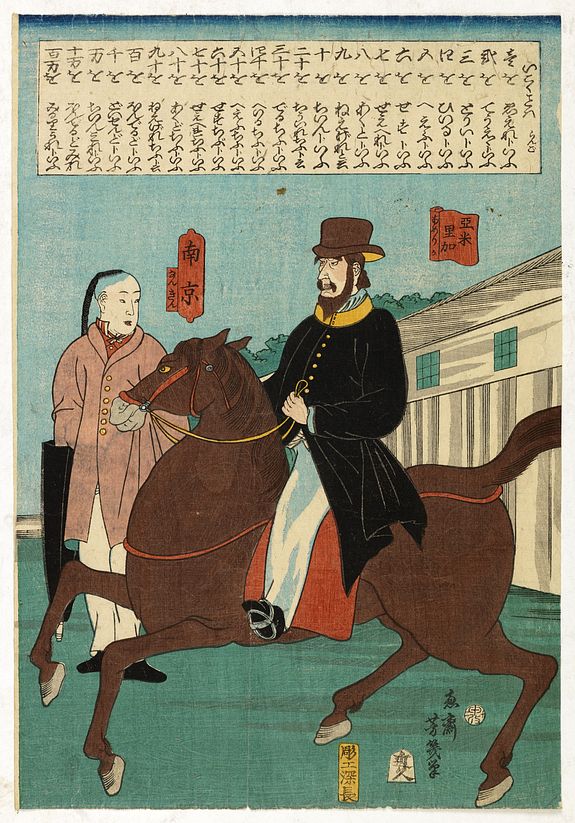
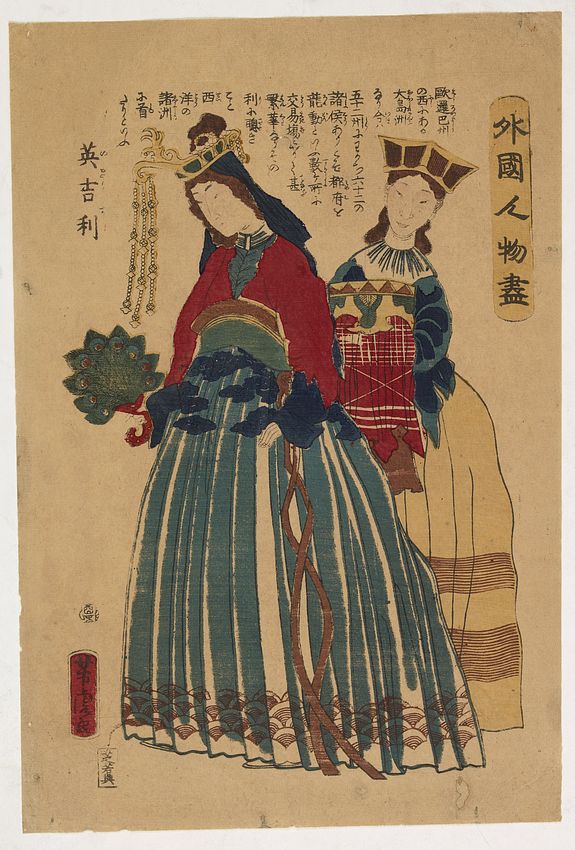
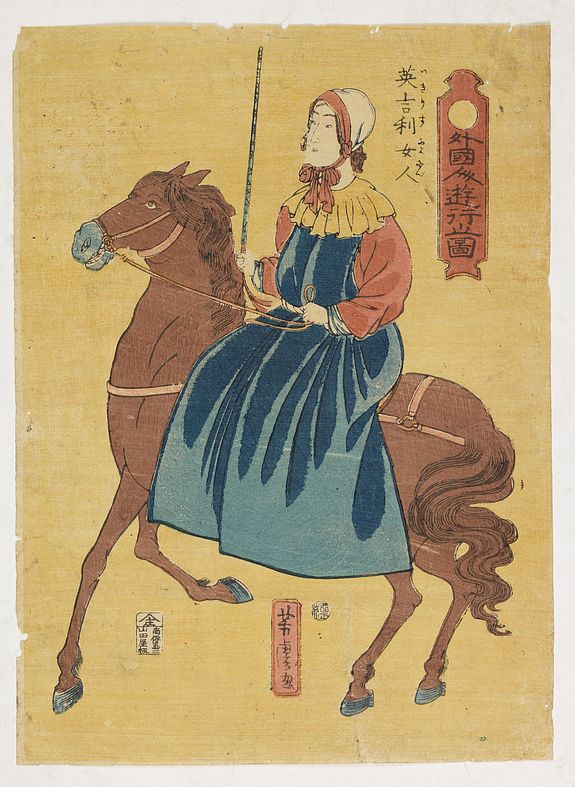
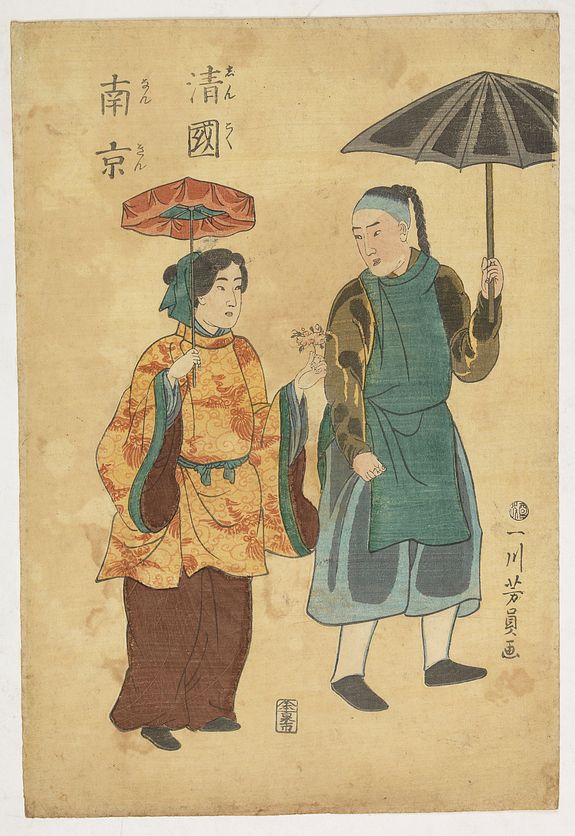
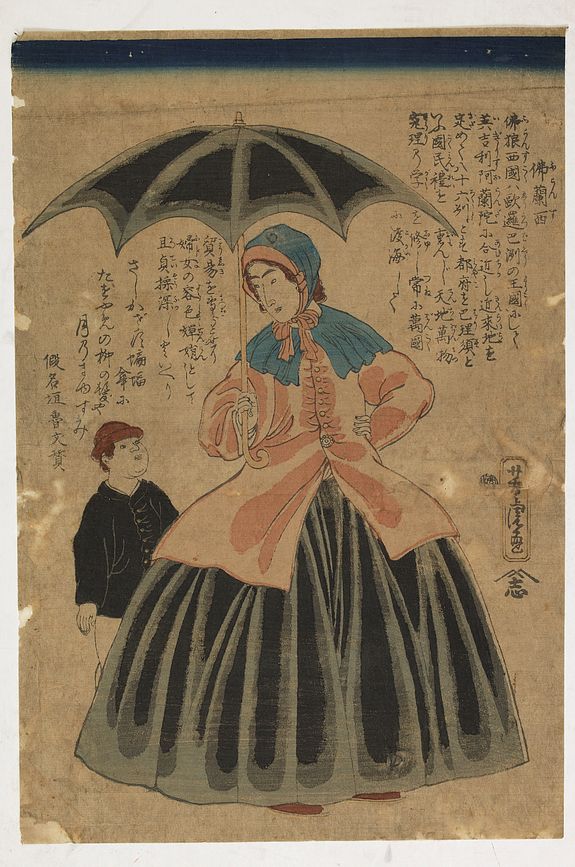
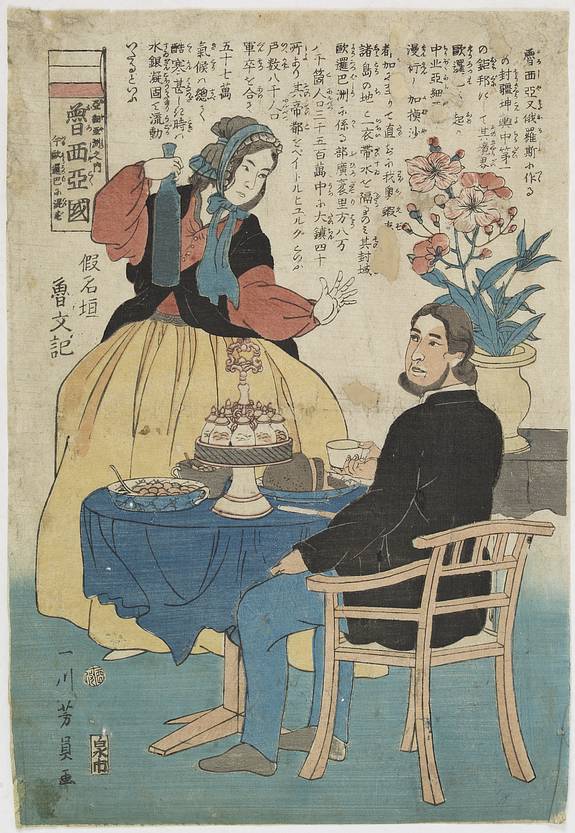
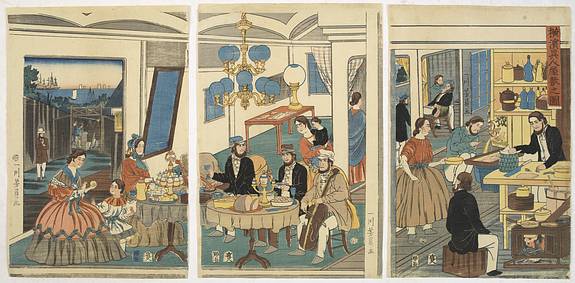
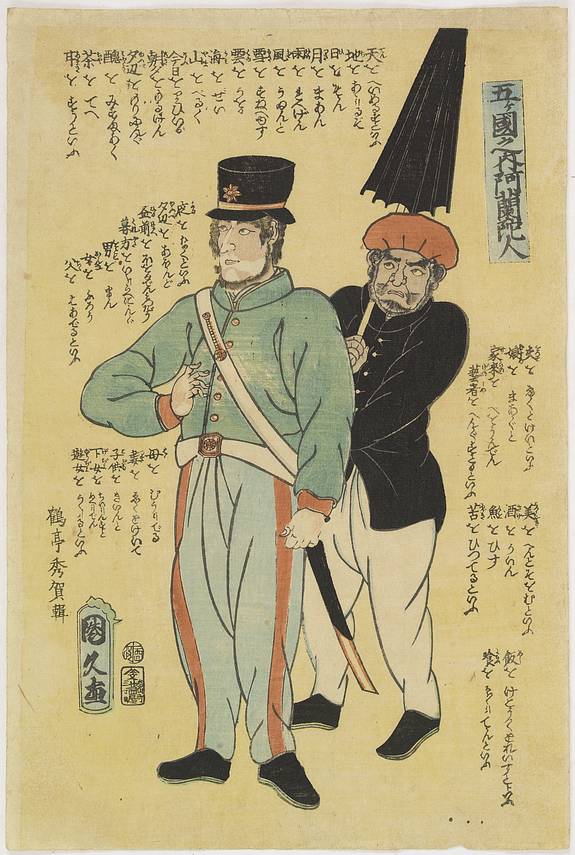
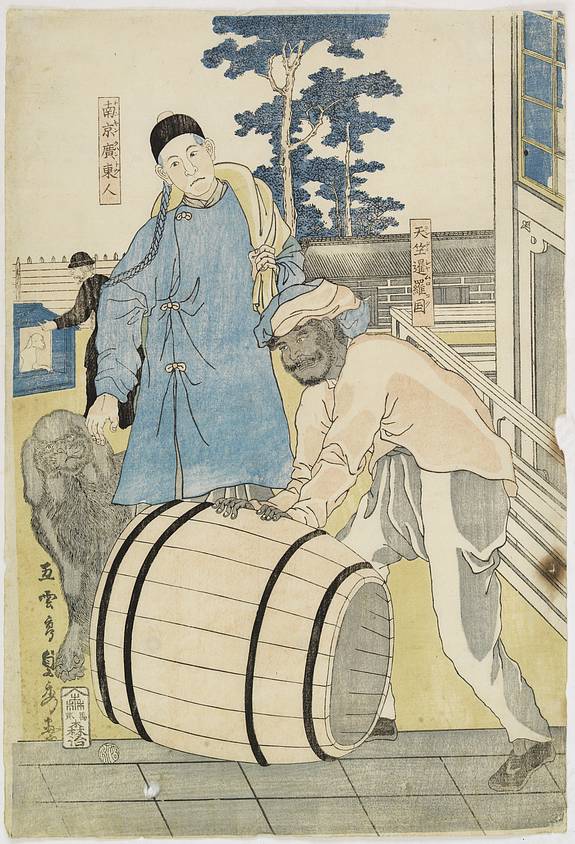
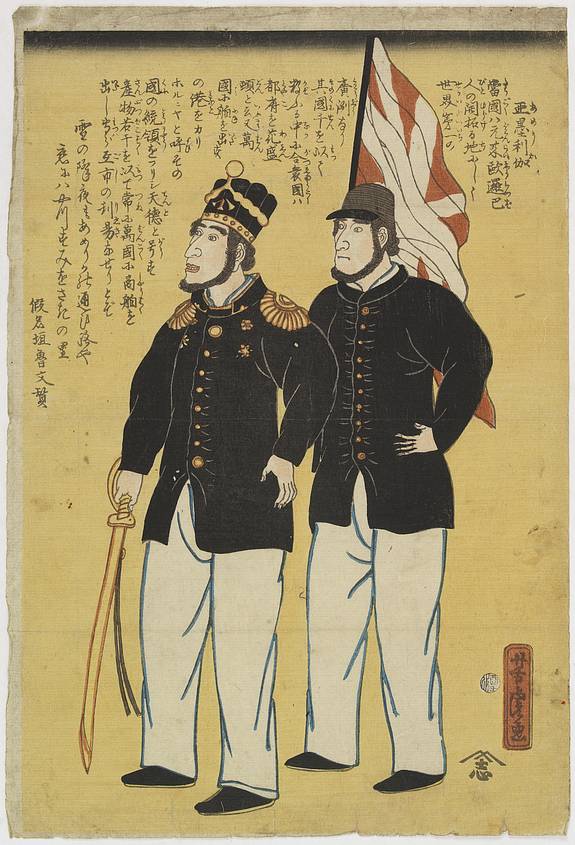
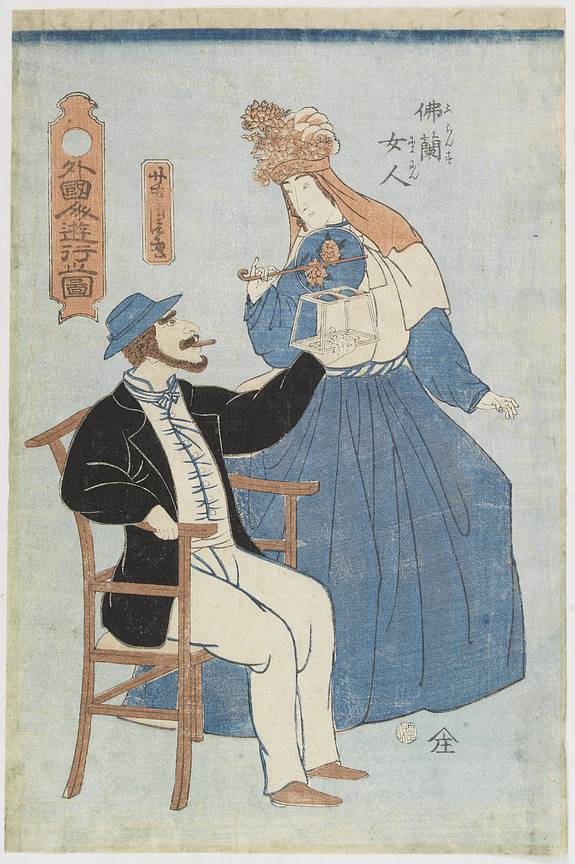
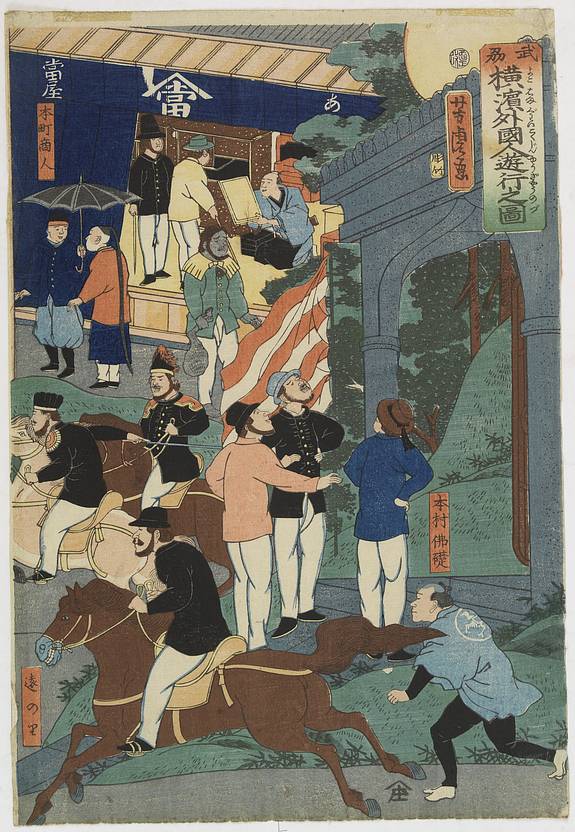
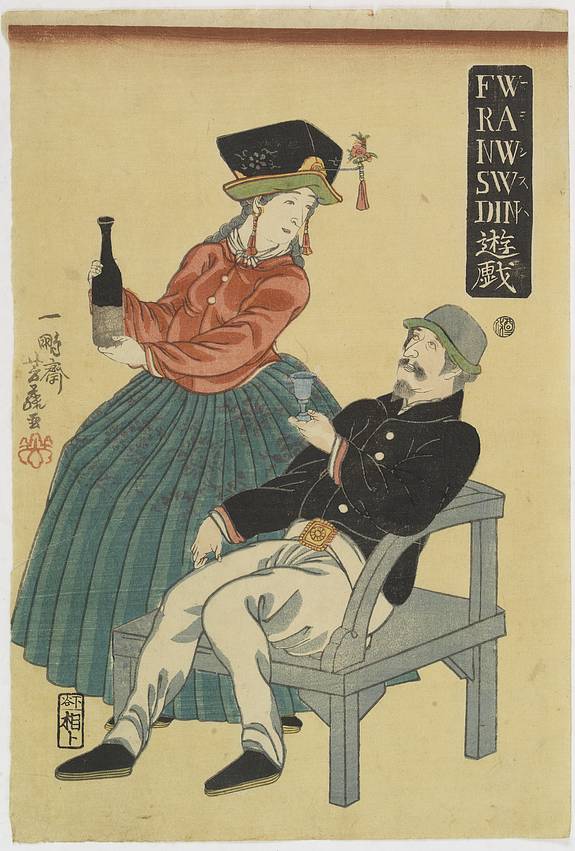
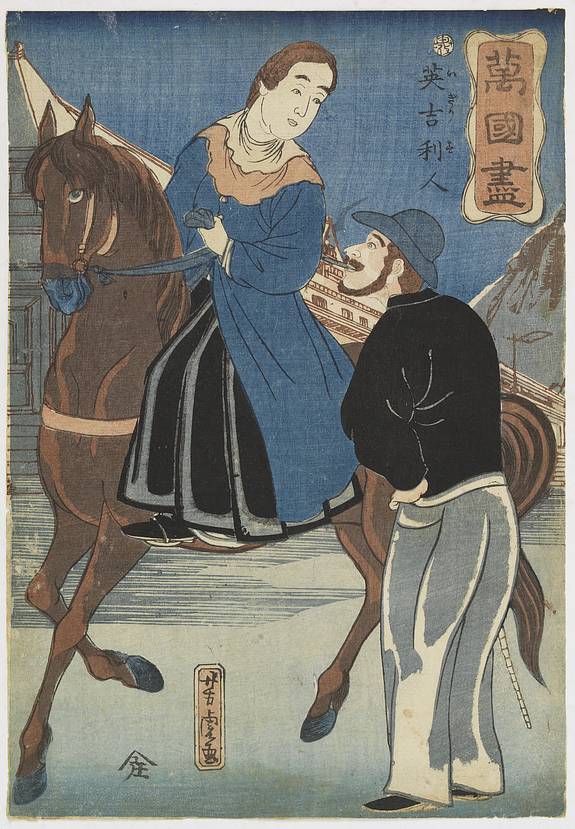
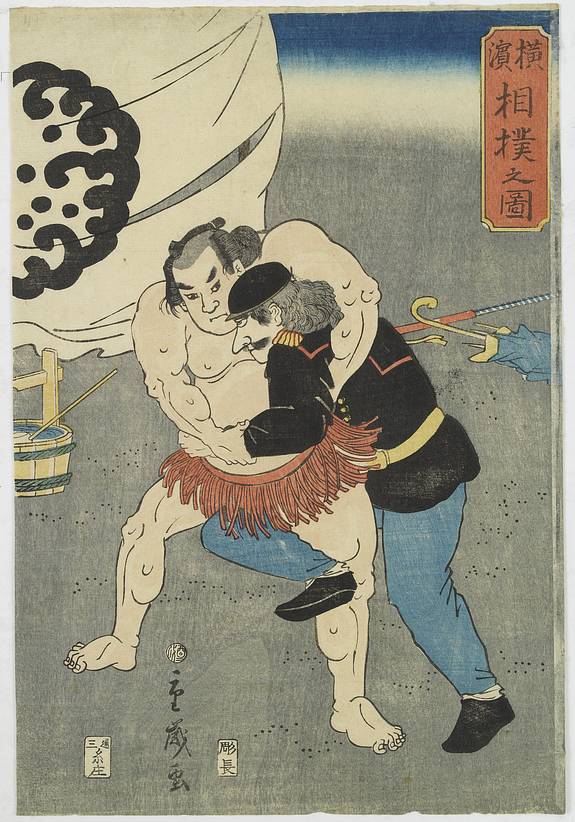
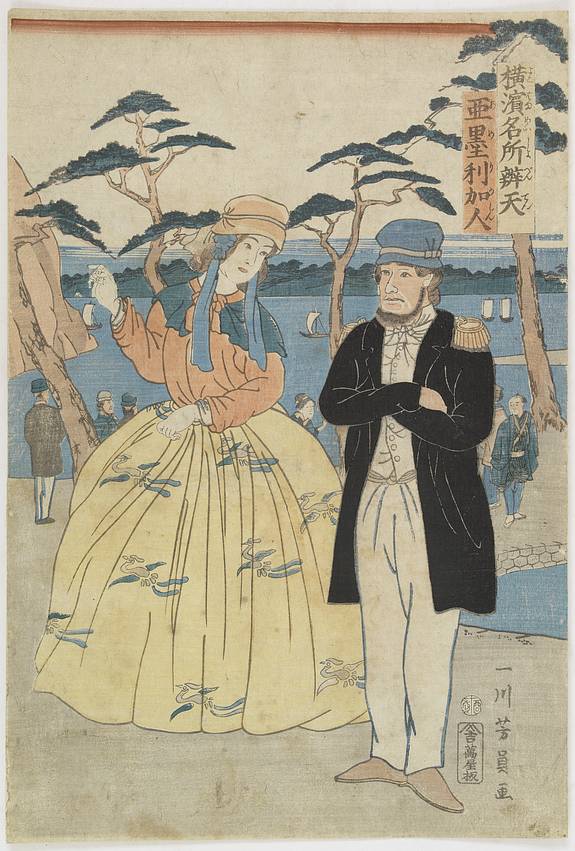
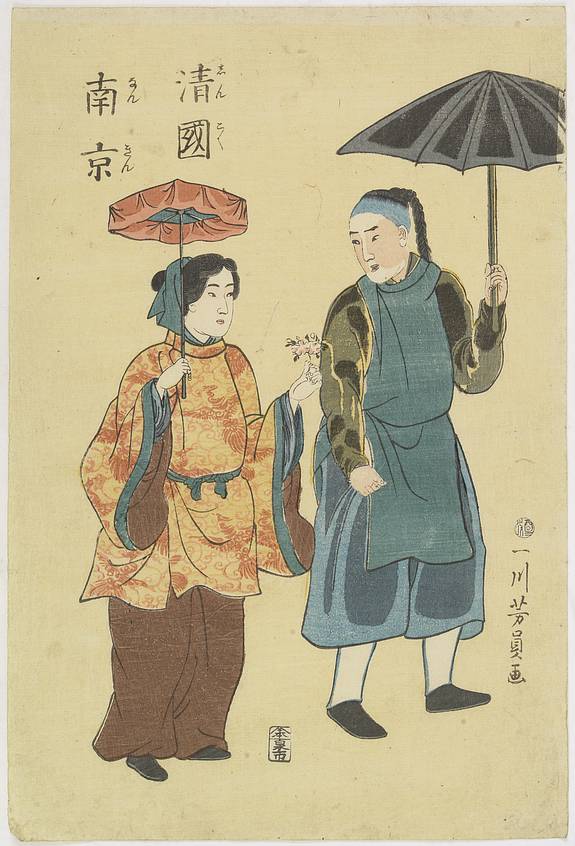
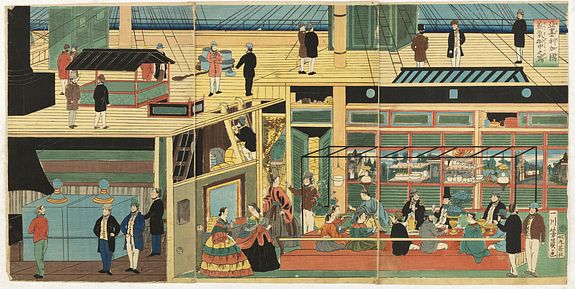
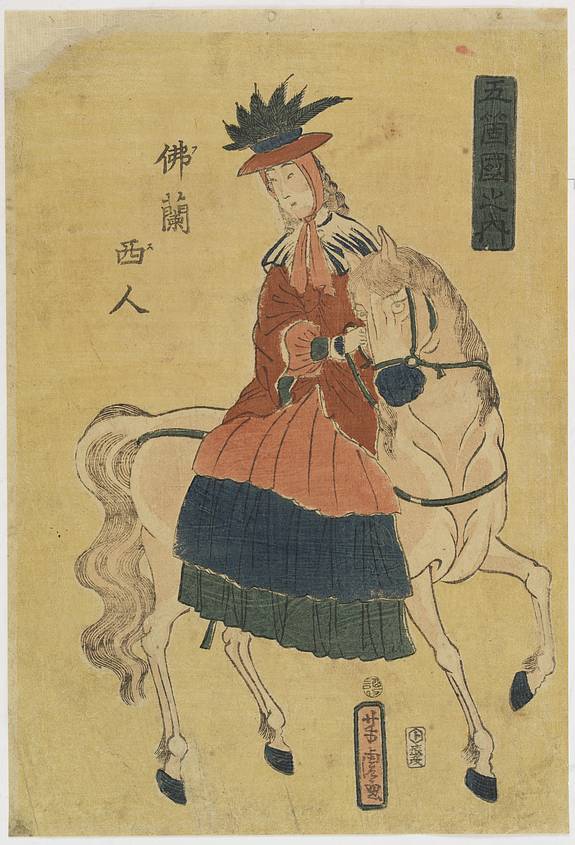
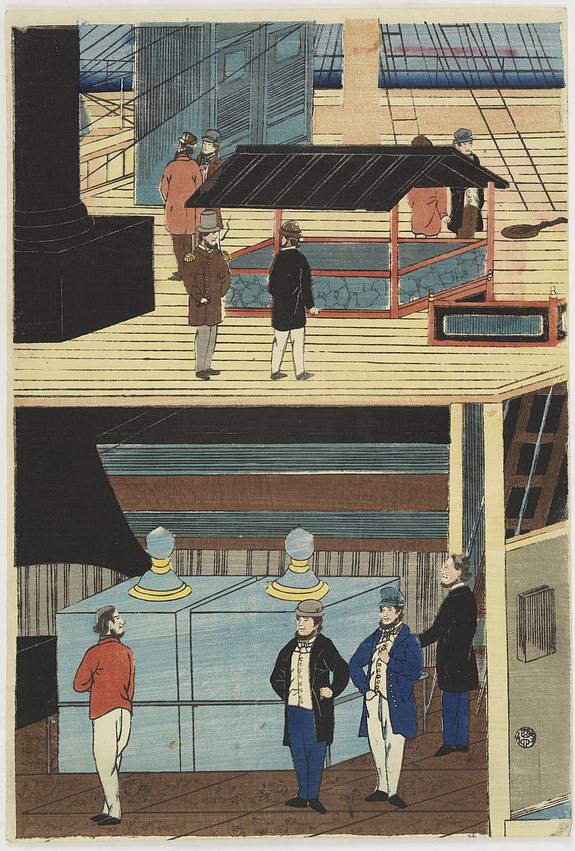
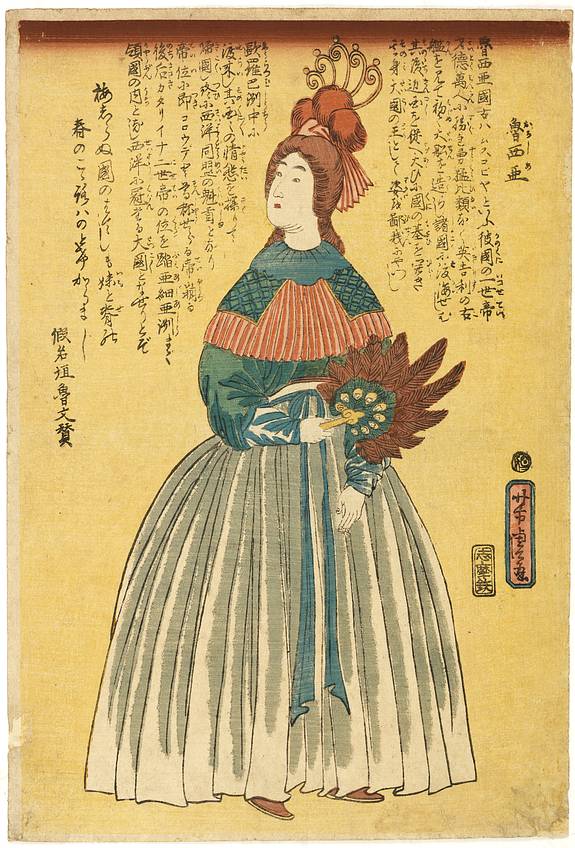
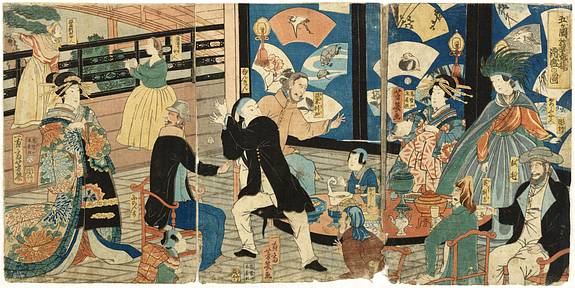
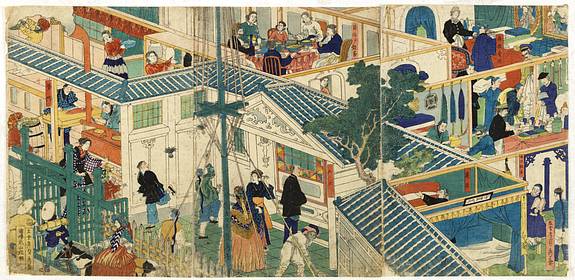
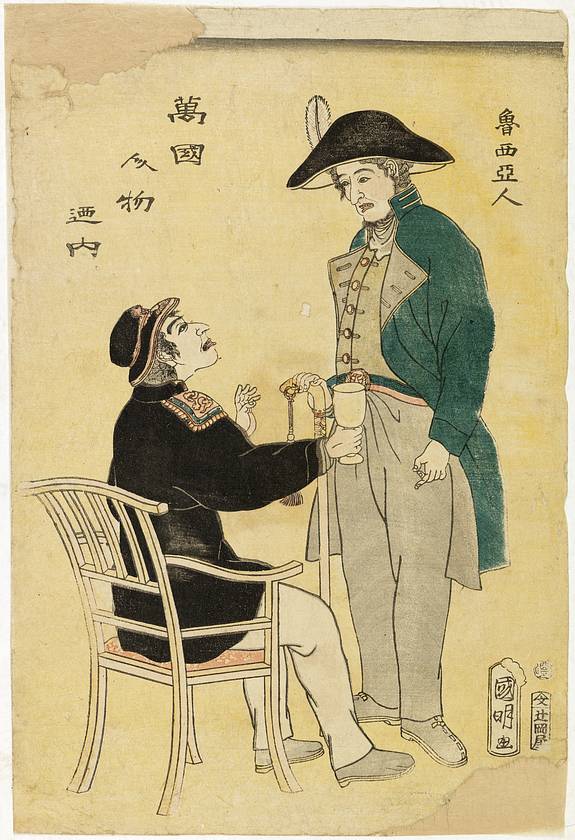
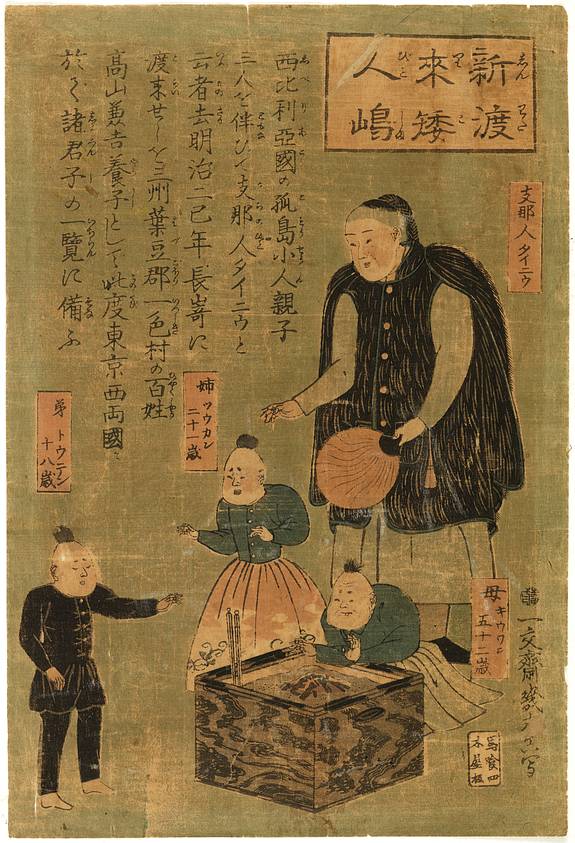
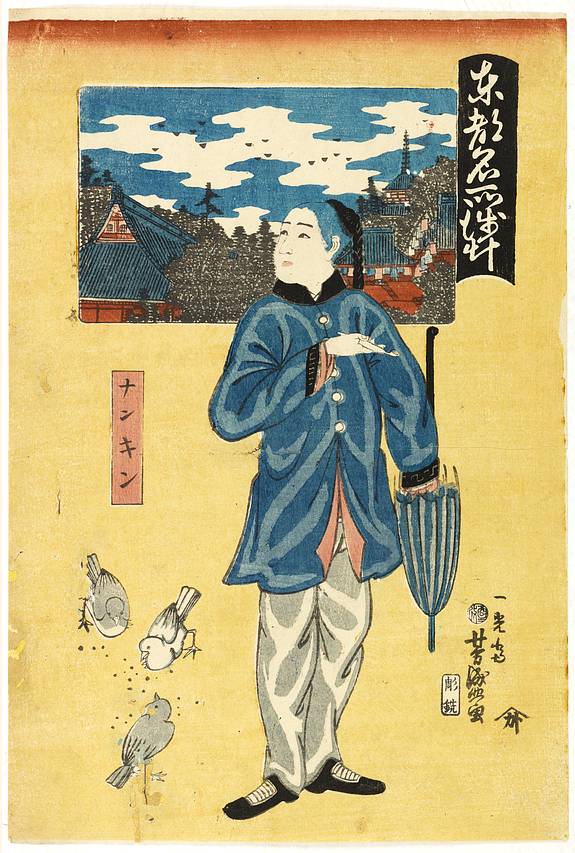
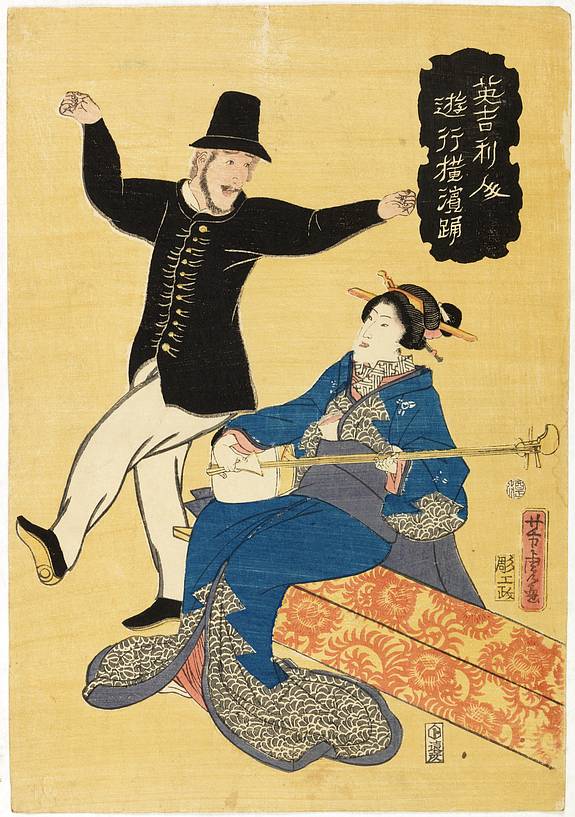
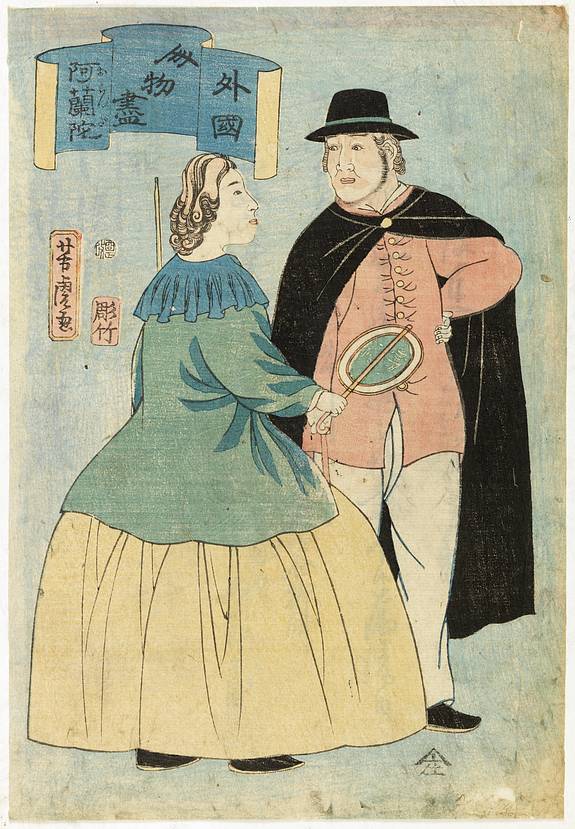
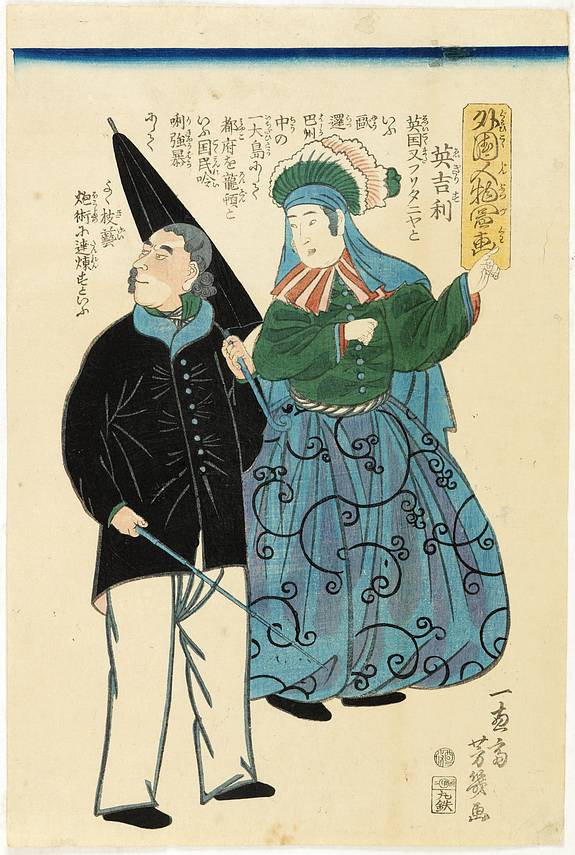
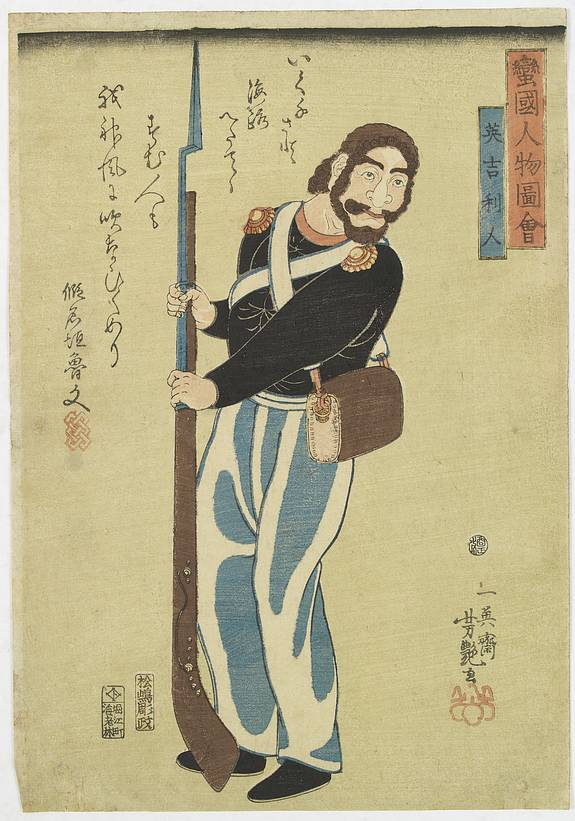
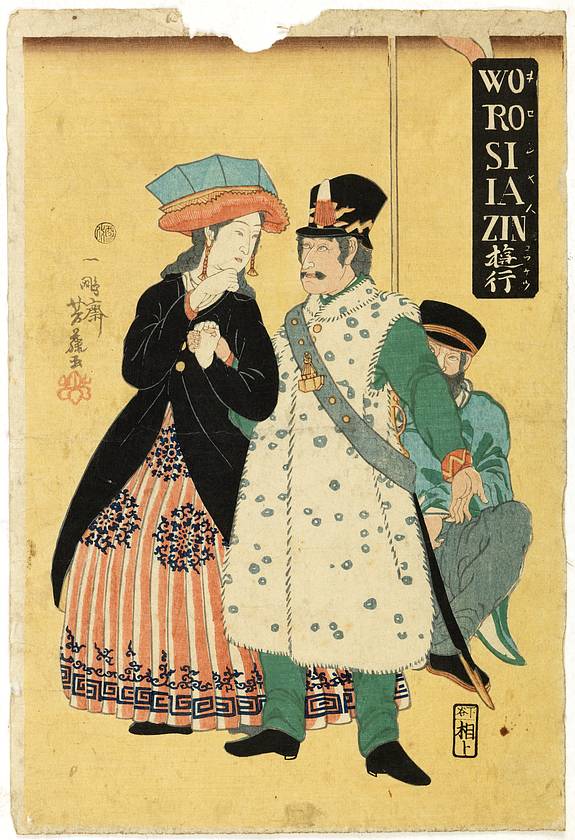
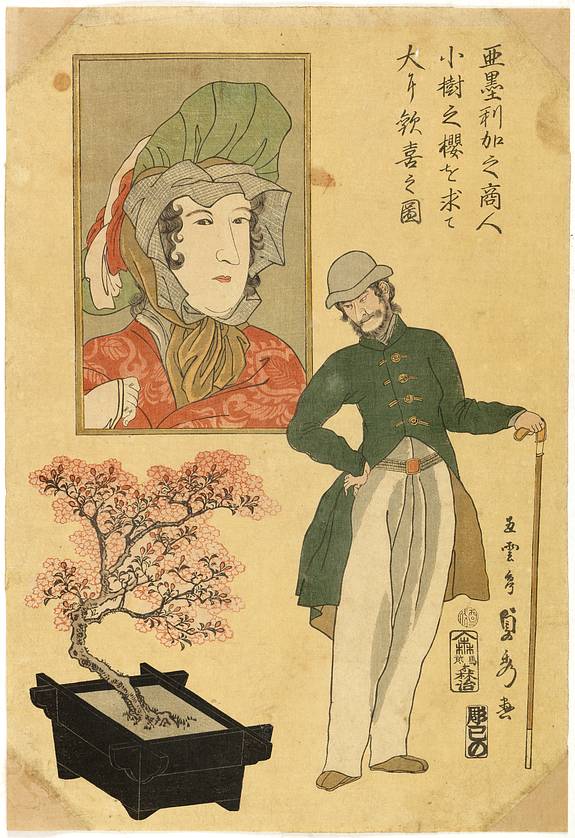
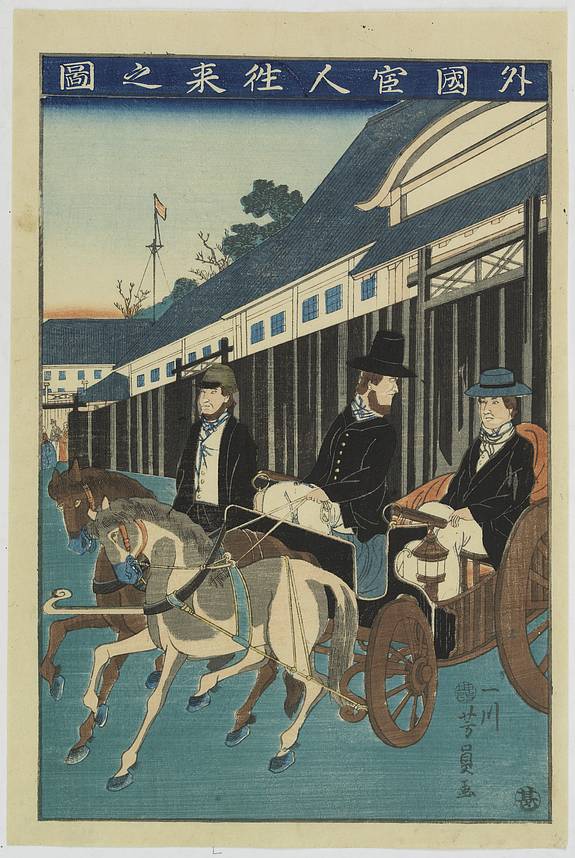
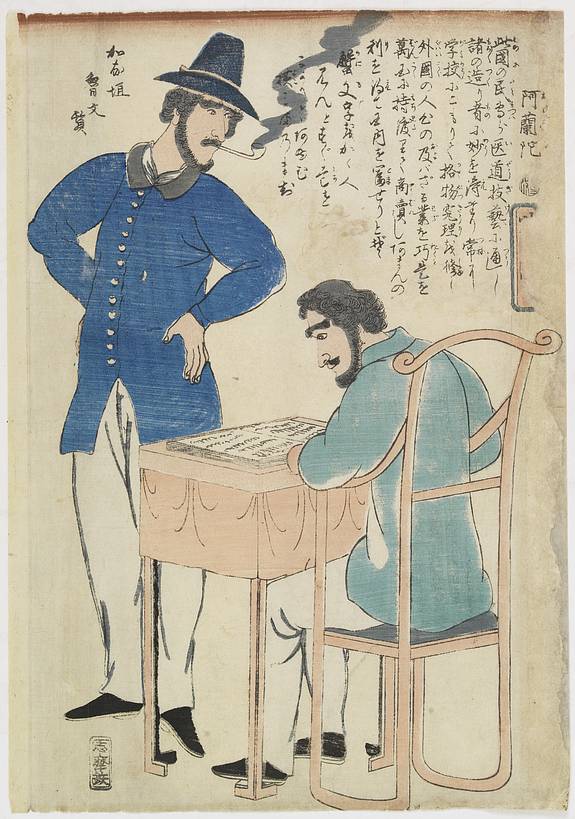
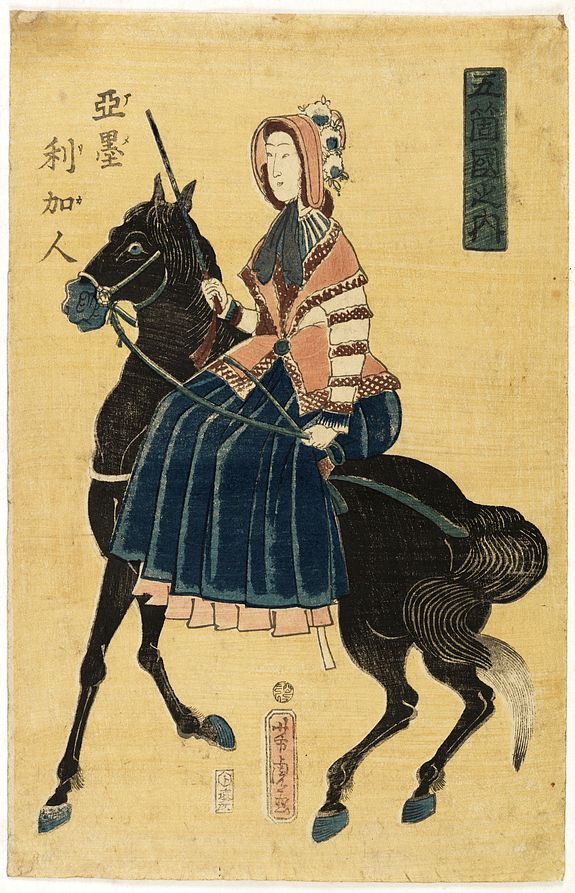
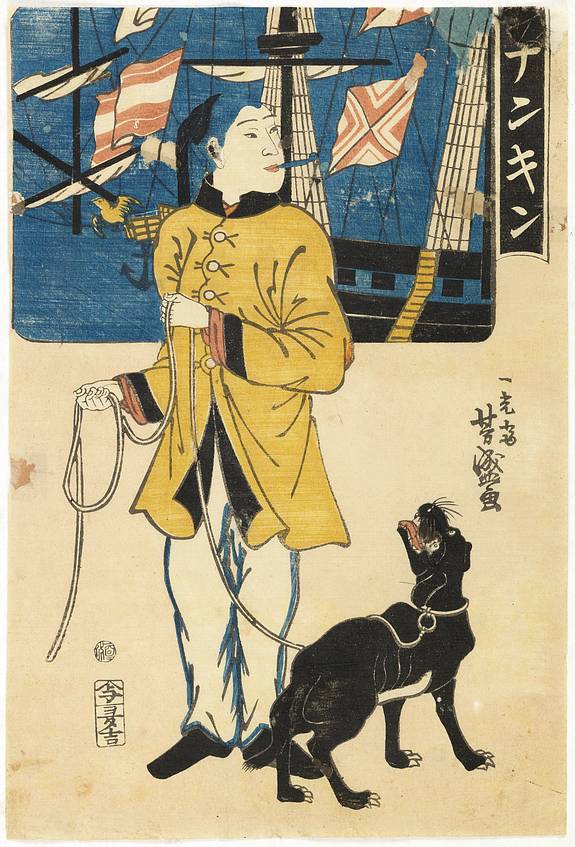
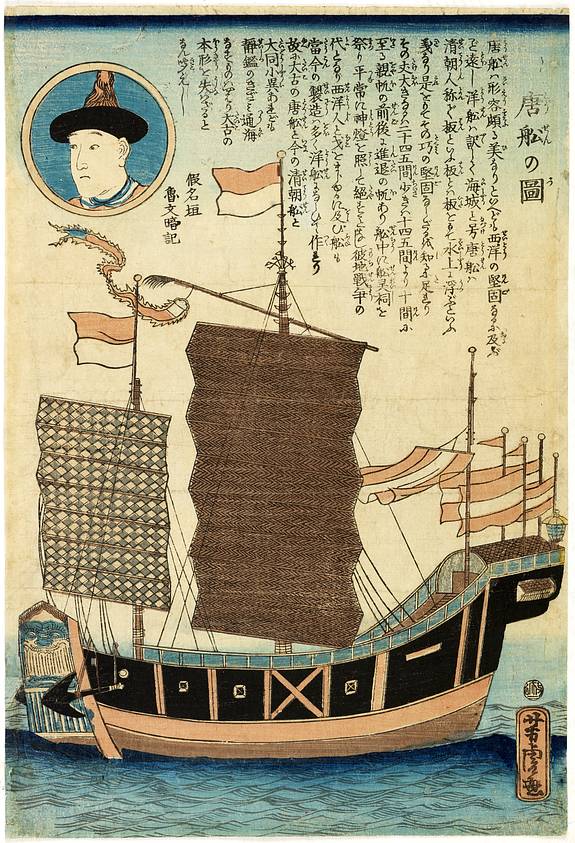
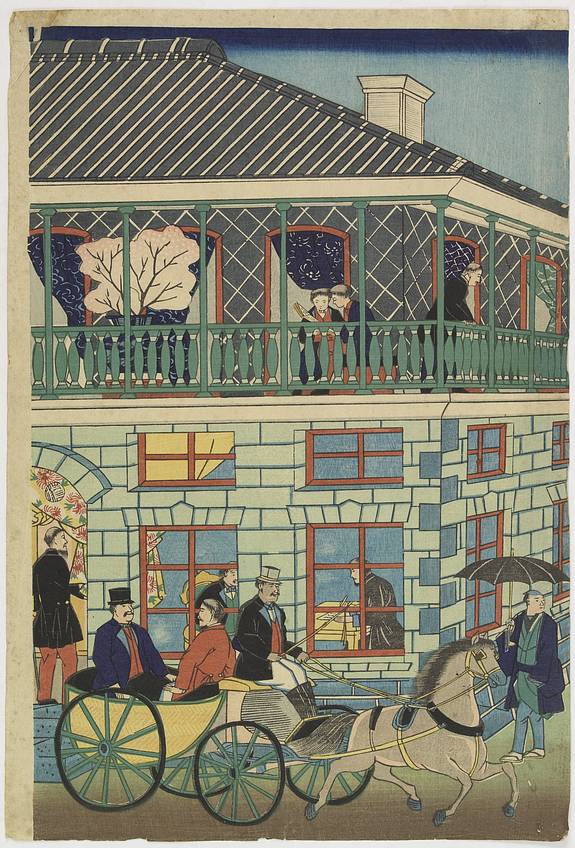
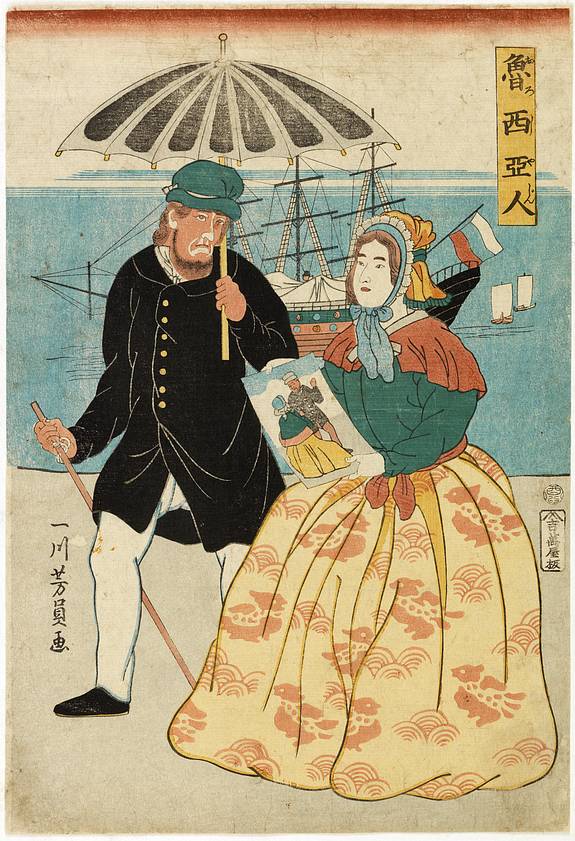
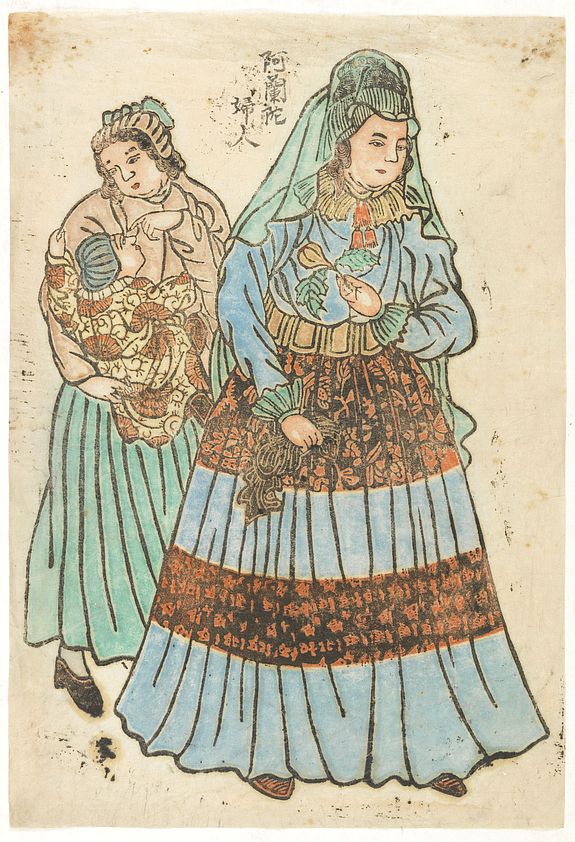
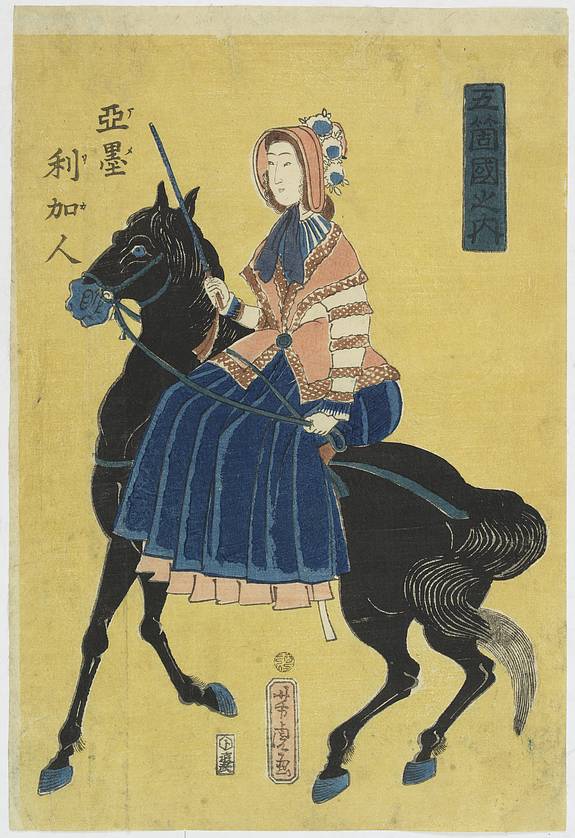
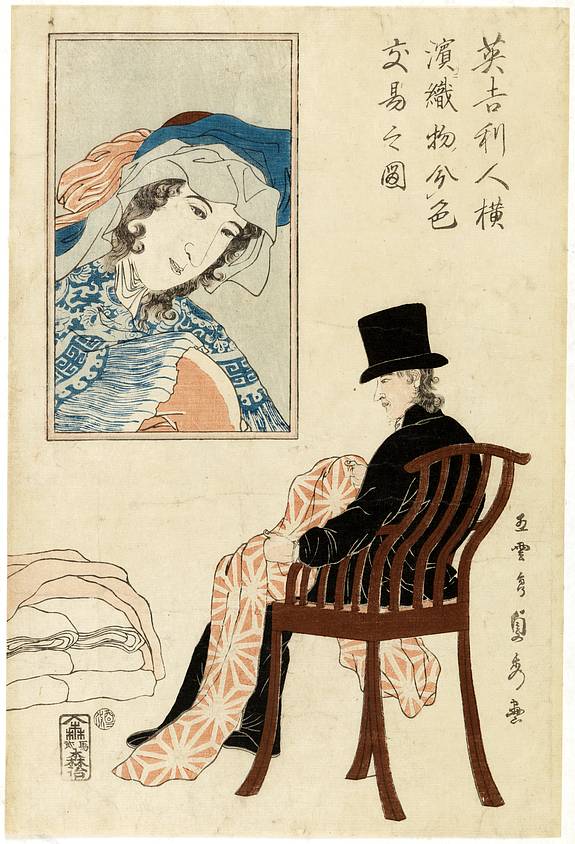
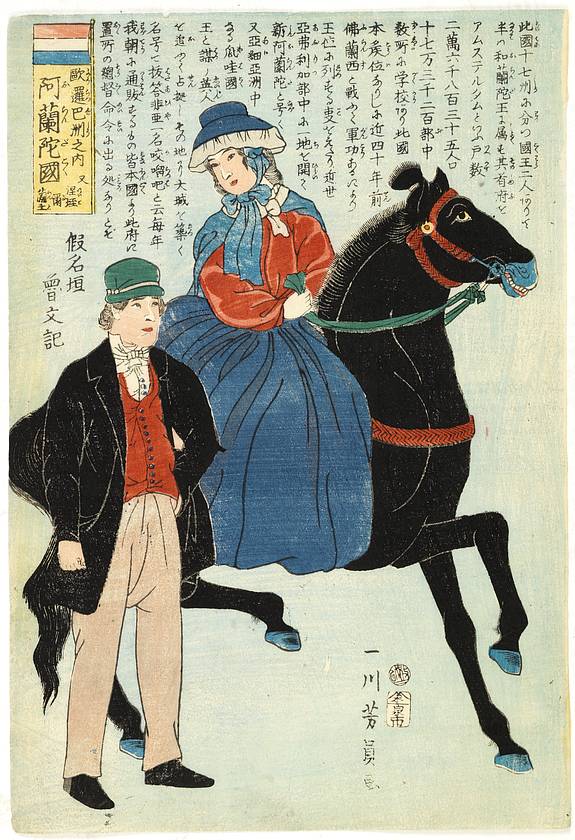
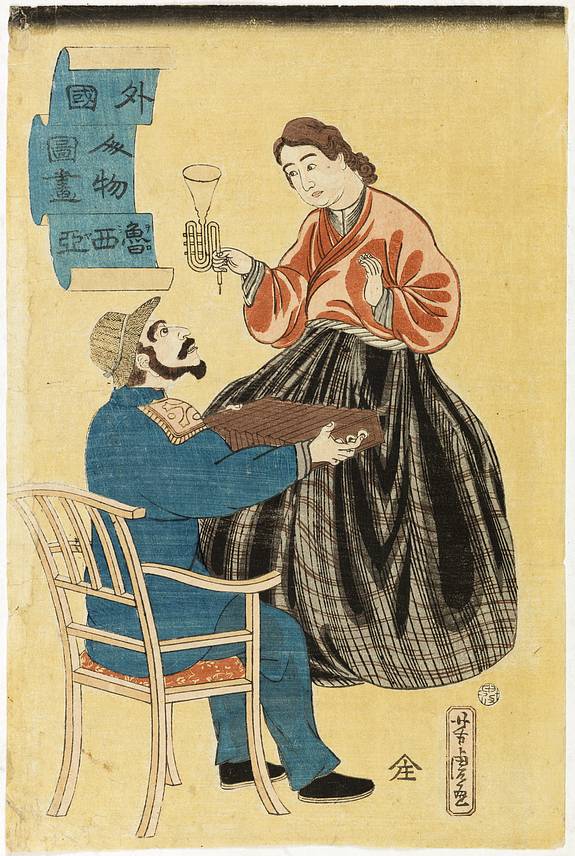
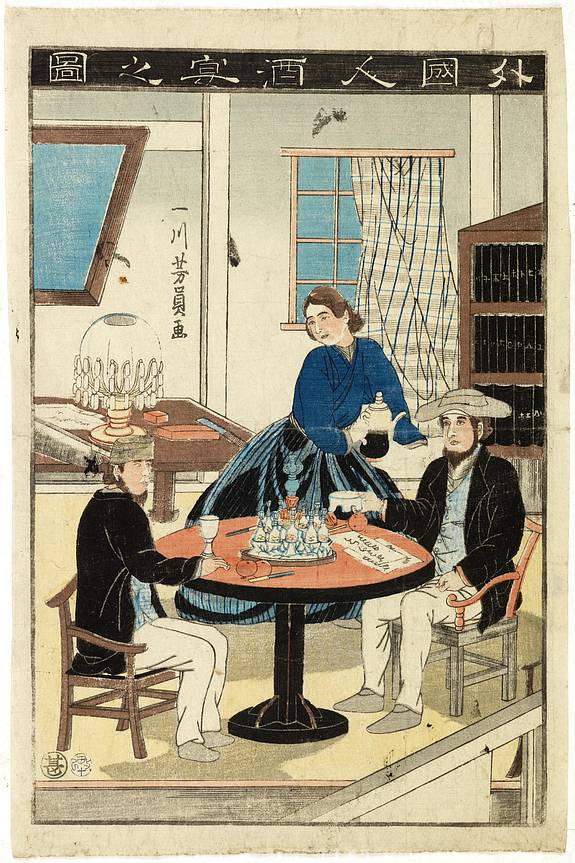
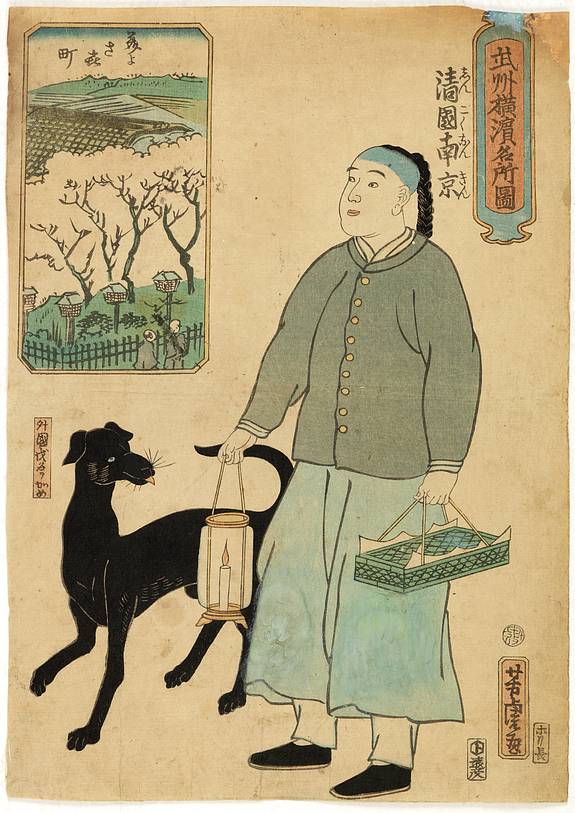
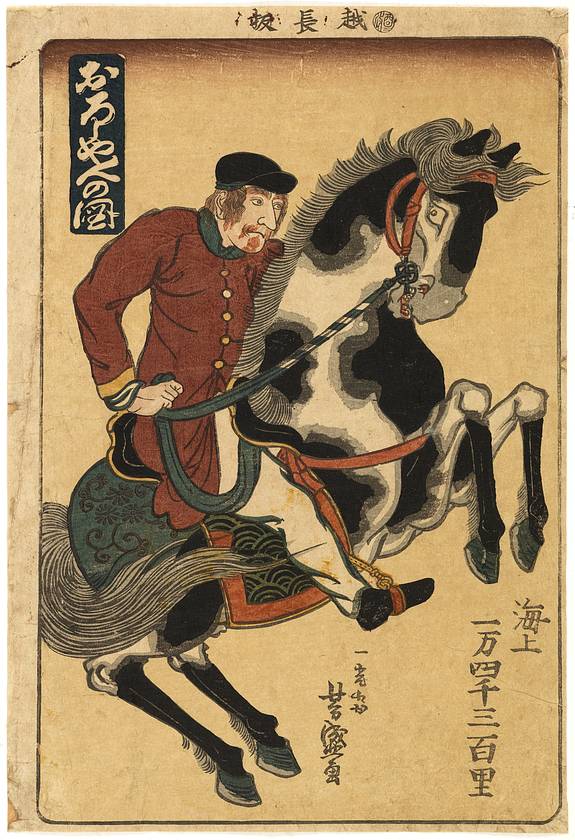
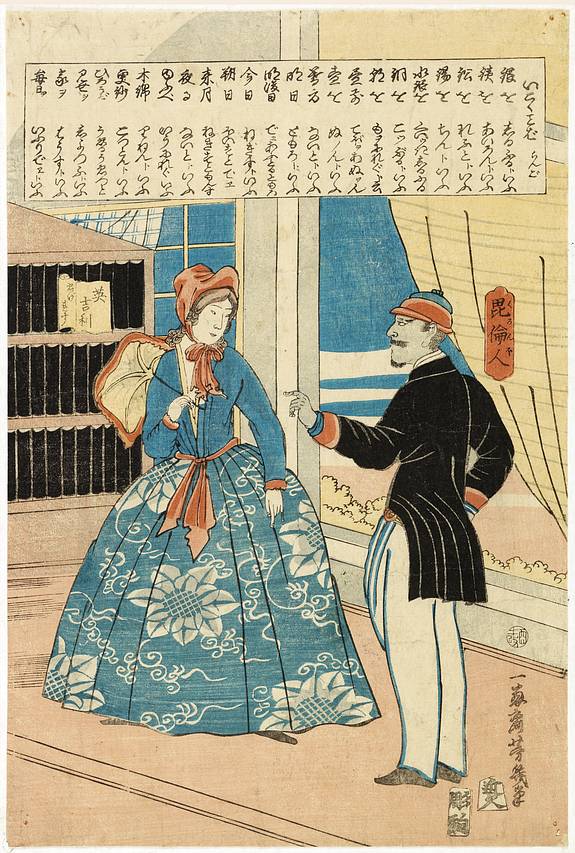
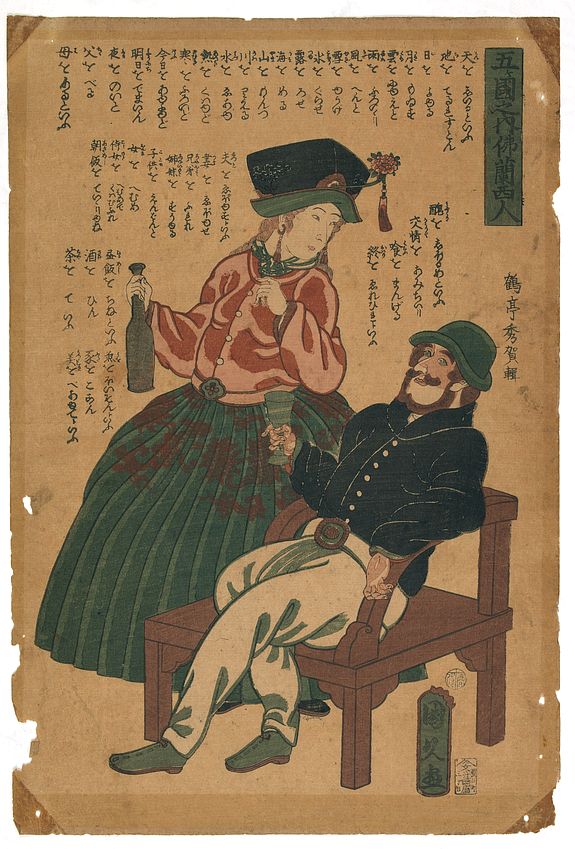
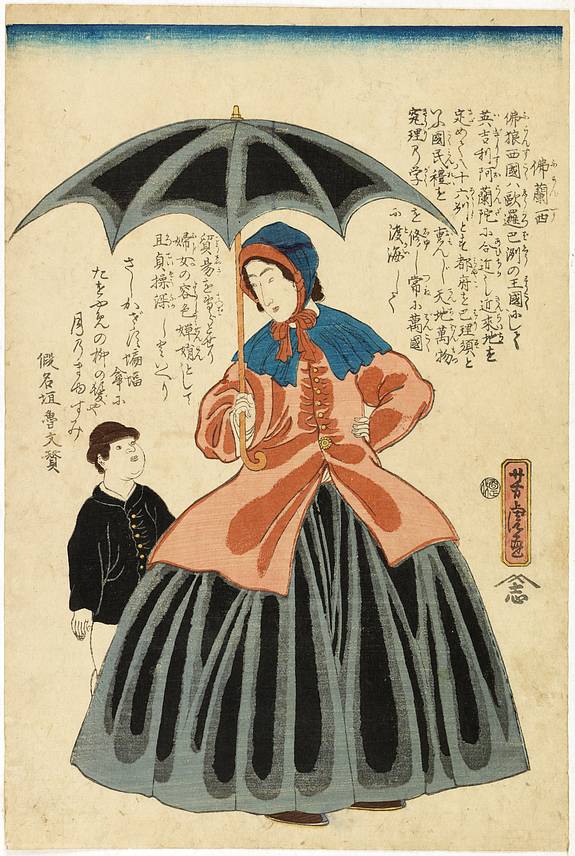
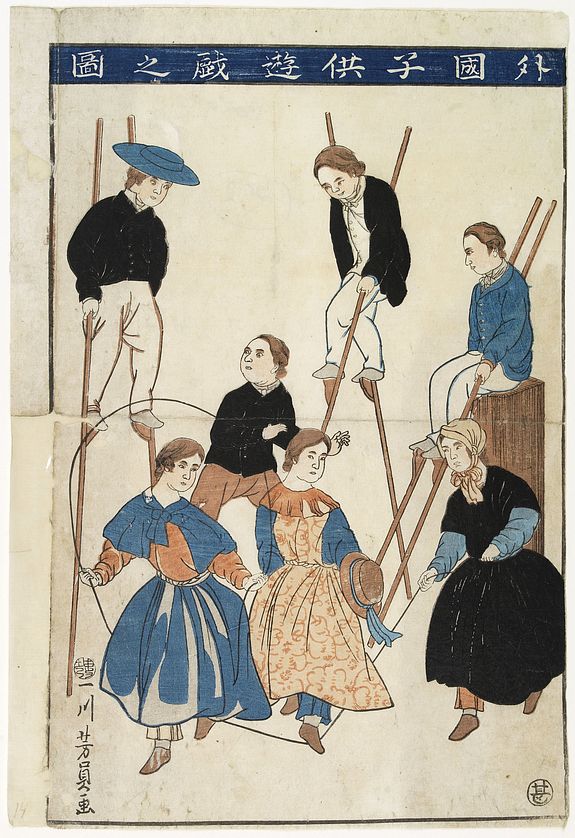
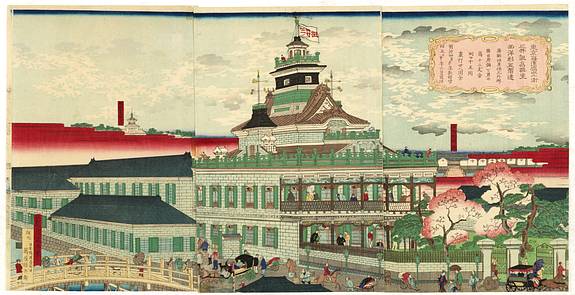
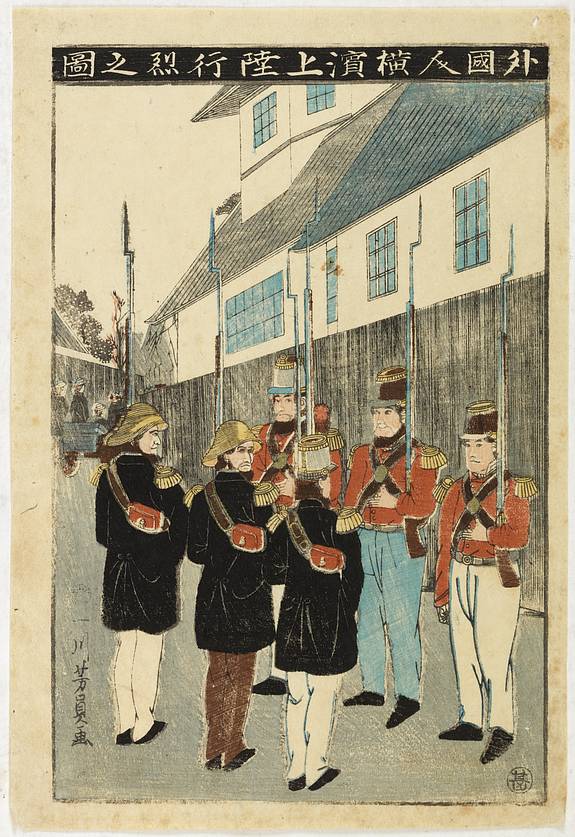
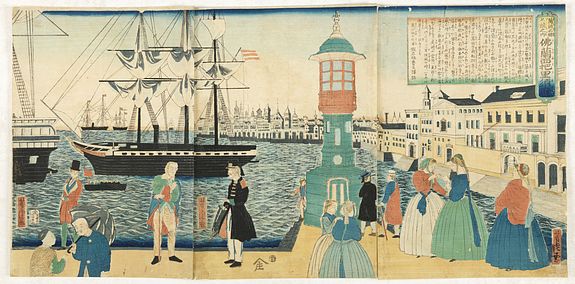
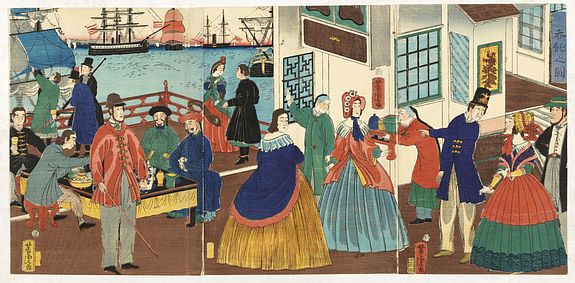
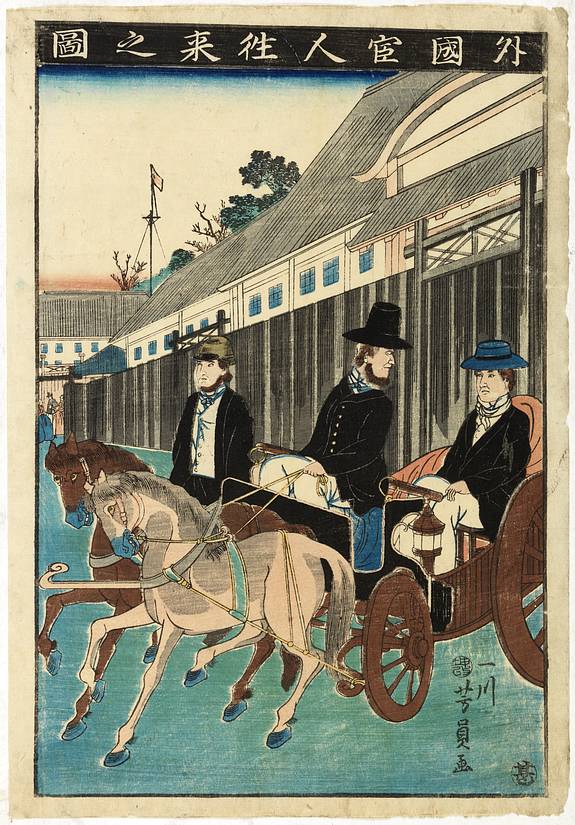
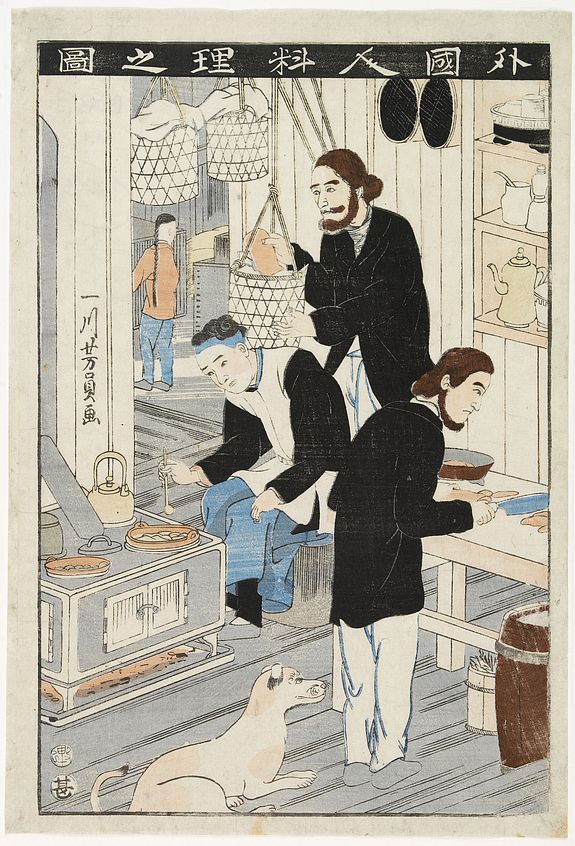
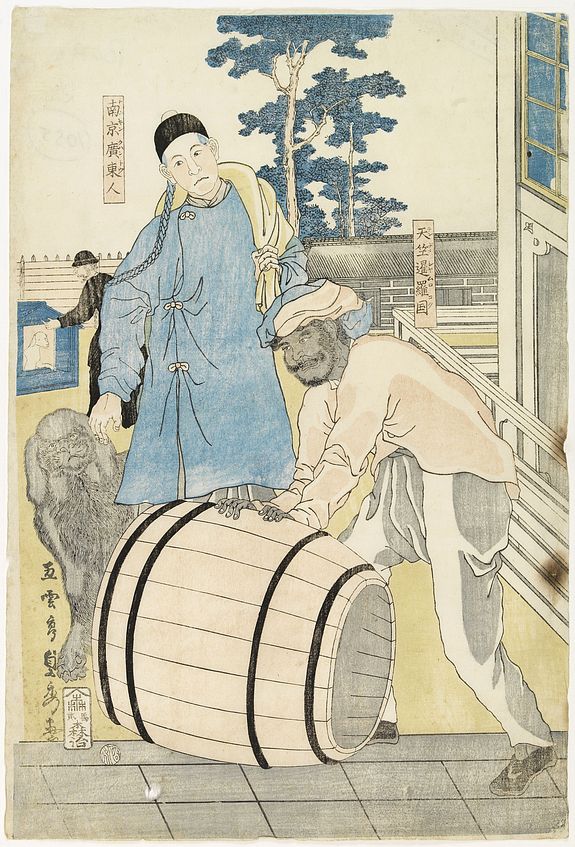
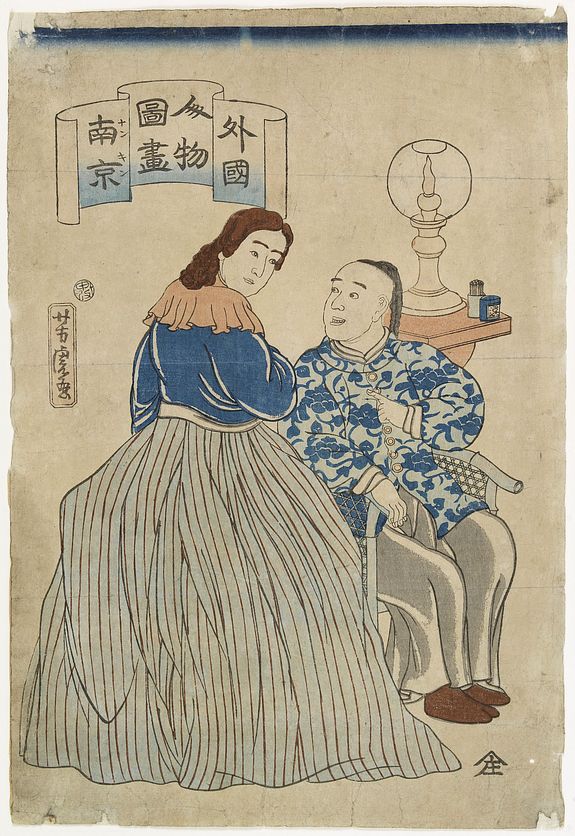
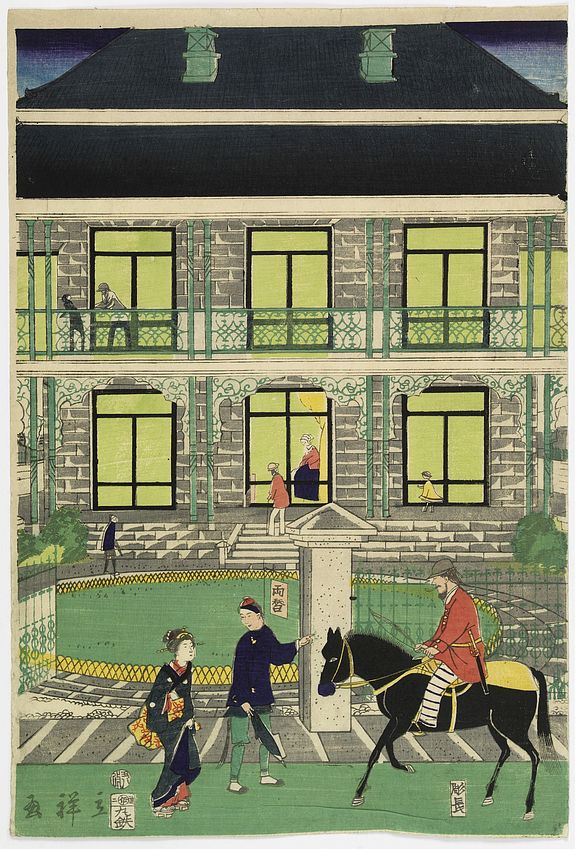
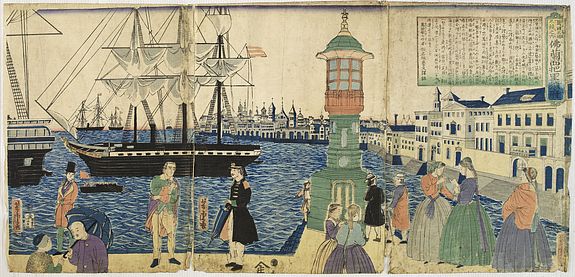
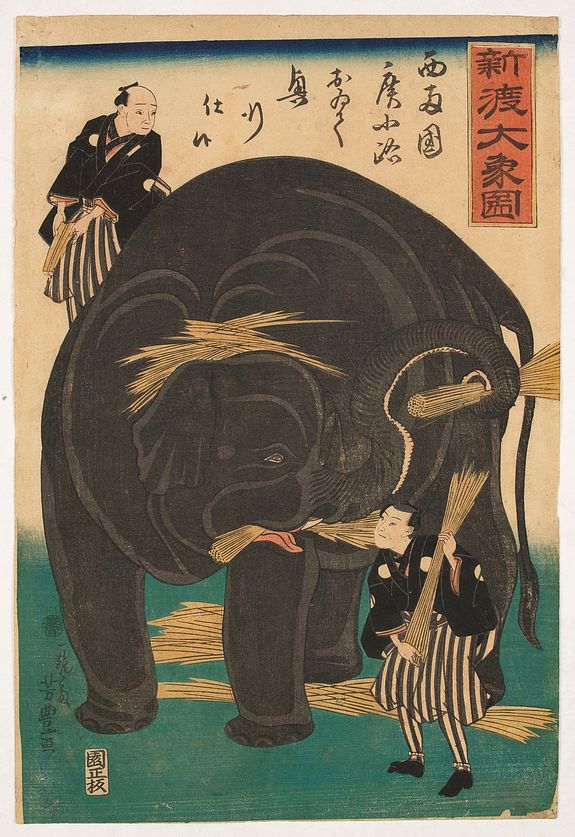
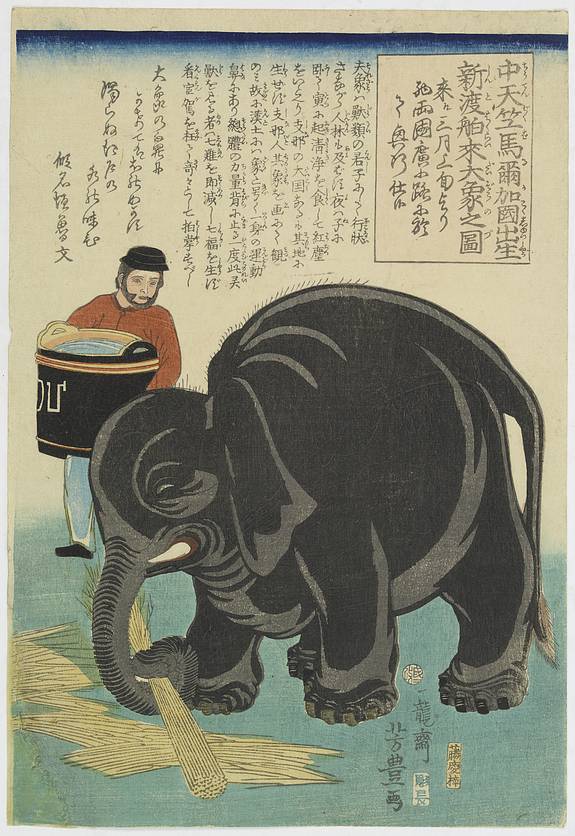
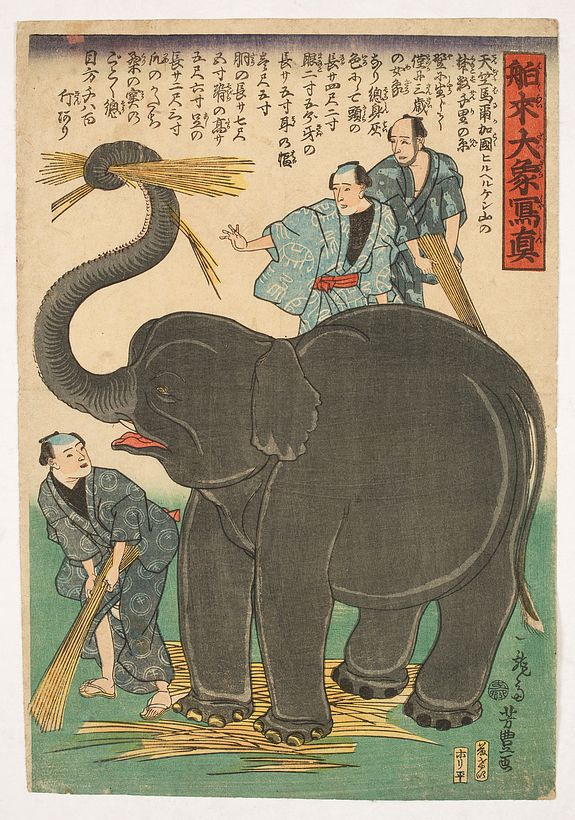
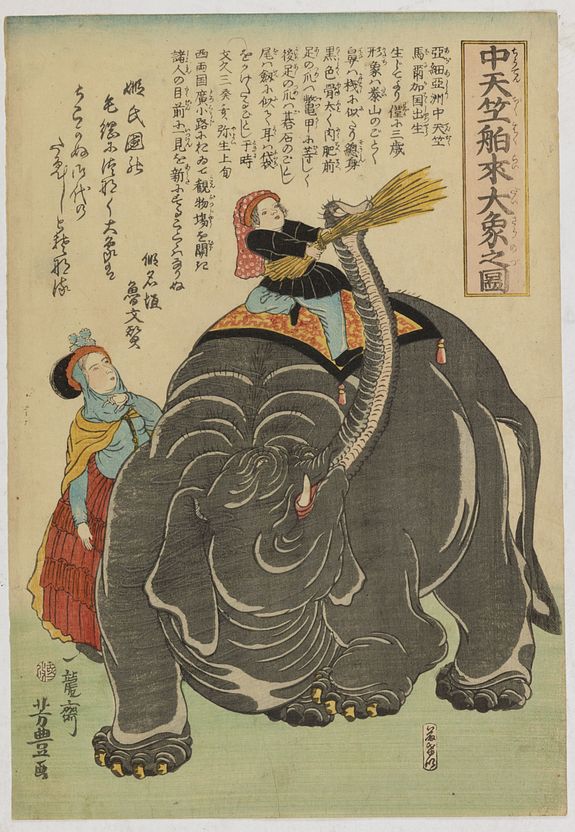
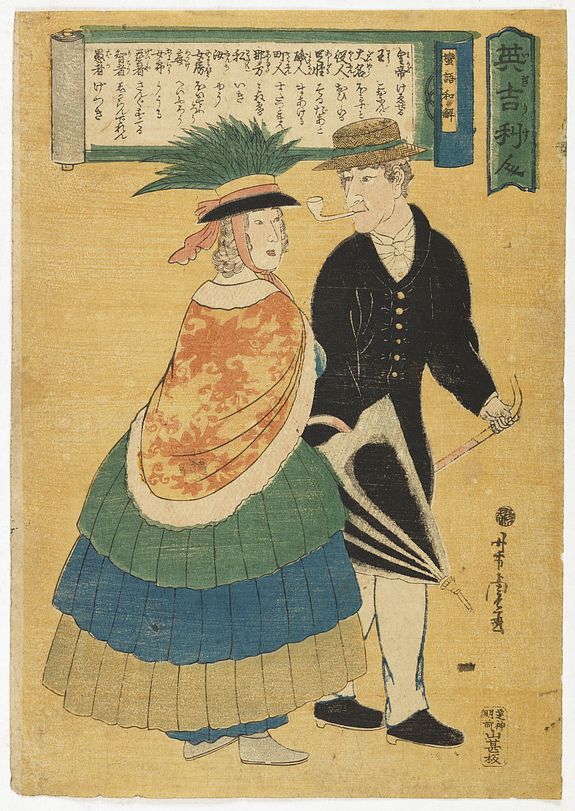
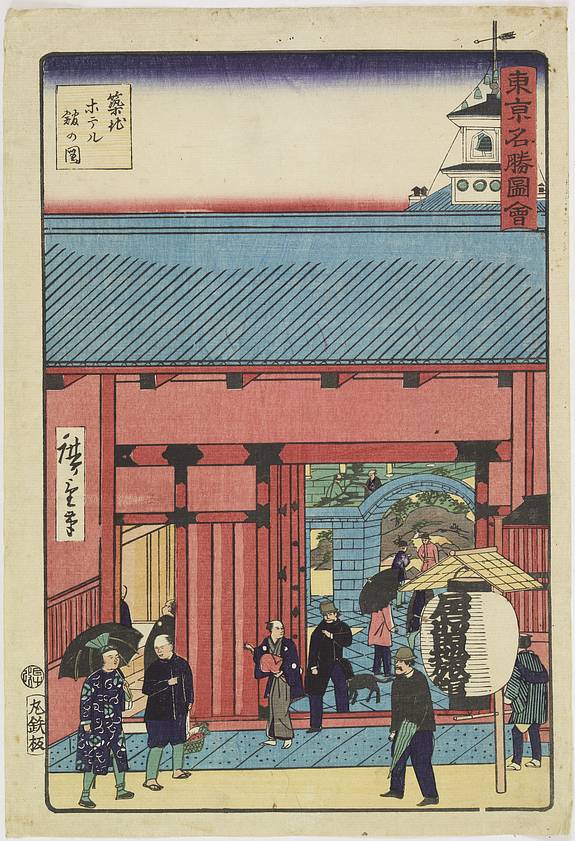
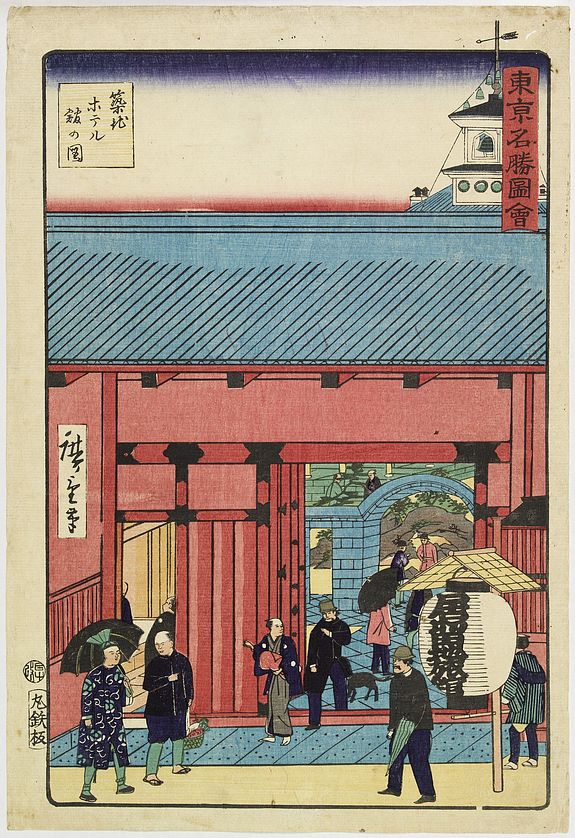
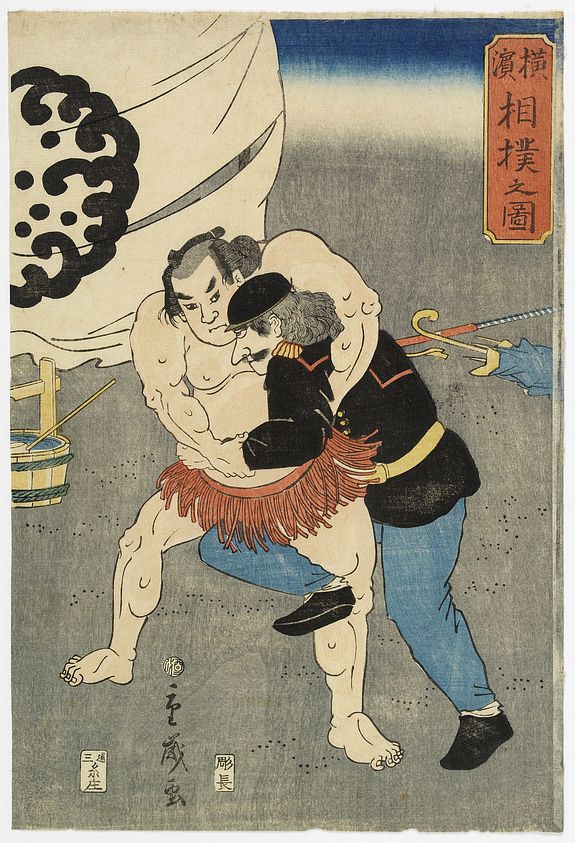
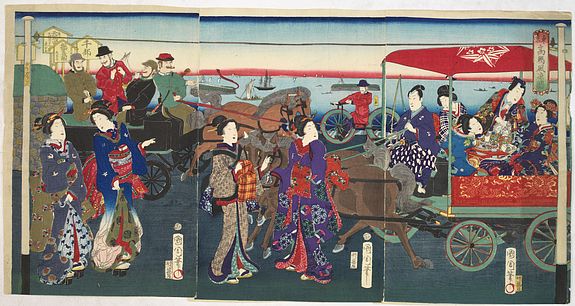
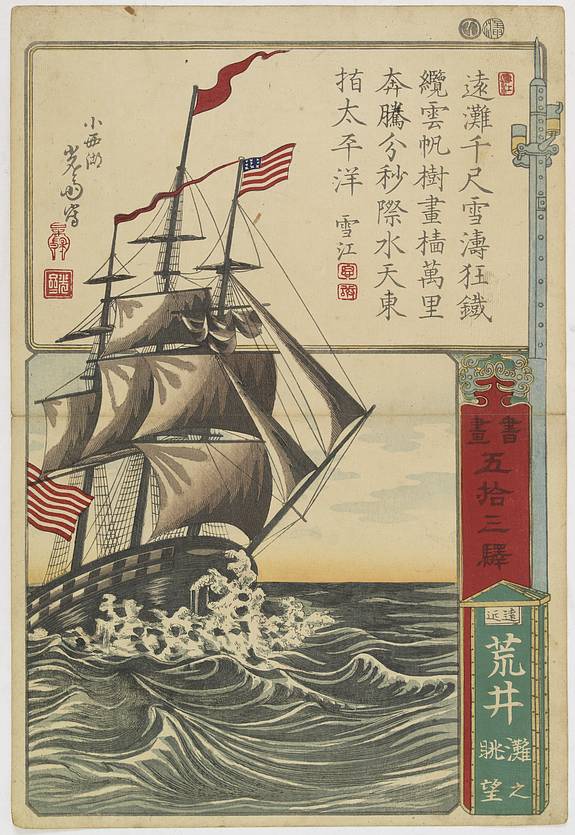
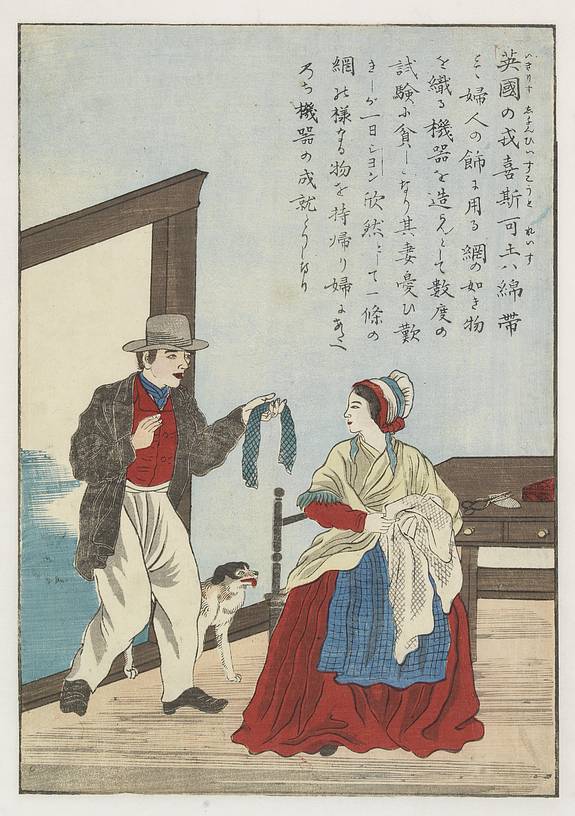
A new genre of prints known as Kaika-e, or ‘prints of enlightenment’, emerged around 1868 and were produced into the 1890s, becoming ‘a popular vehicle to introduce specific symbols of modernisation and scenes of the changing Meiji civilization and cityscape’.4 The government encouraged the printing of these scenes and also published their own educational or instructive kaika-e. The use of imported aniline colours, including vibrant reds and greens, is indicative of the changing times.
![33329/510:YokohamaPrints Amerika koku jyoukisha ourai [American locomotive runs.]](/images/Lgimg/33329.jpg)
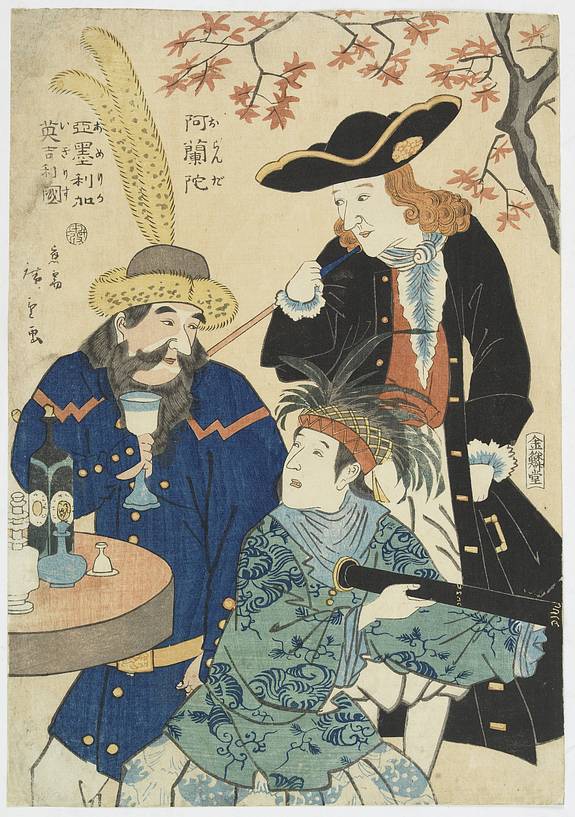
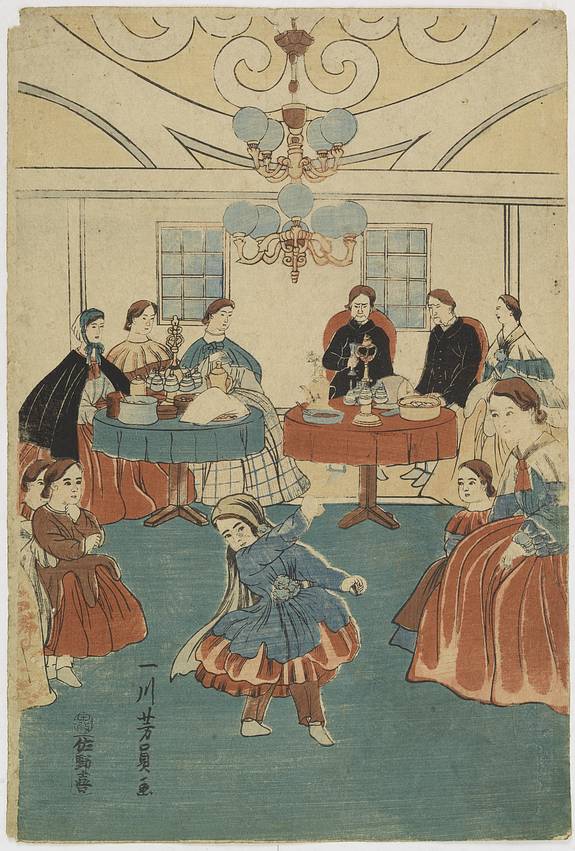
![31472/510:YokohamaPrints [No tittle] Yoroppa-shu Igirisukoko (Nel continente europeo : l'Inghilterra).](/images/Lgimg/31472.jpg)
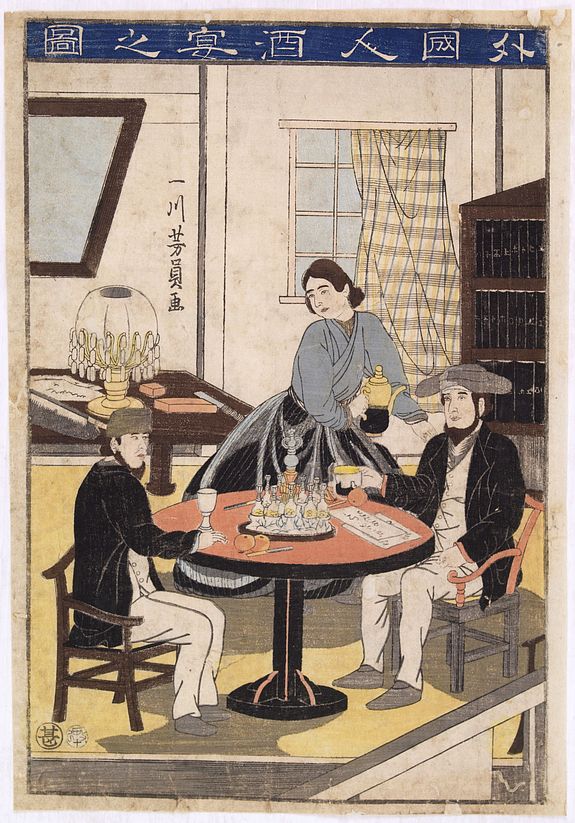
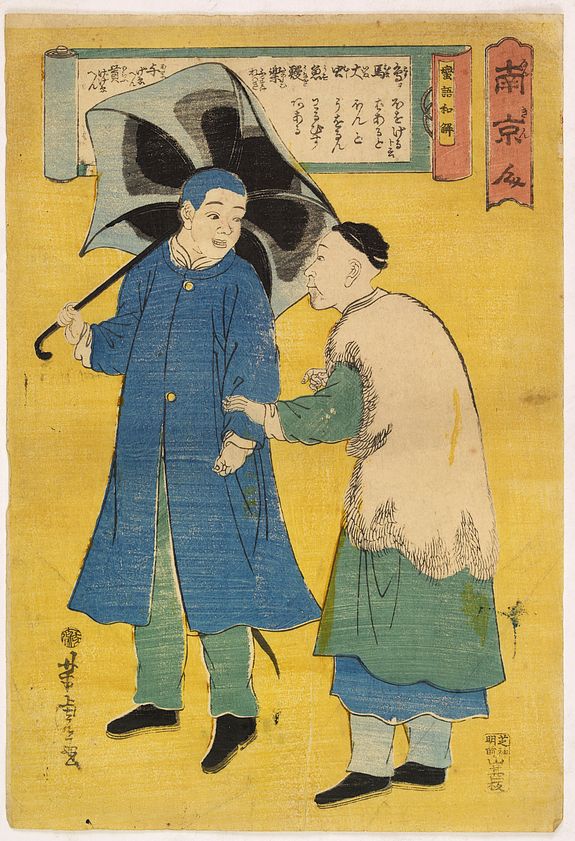
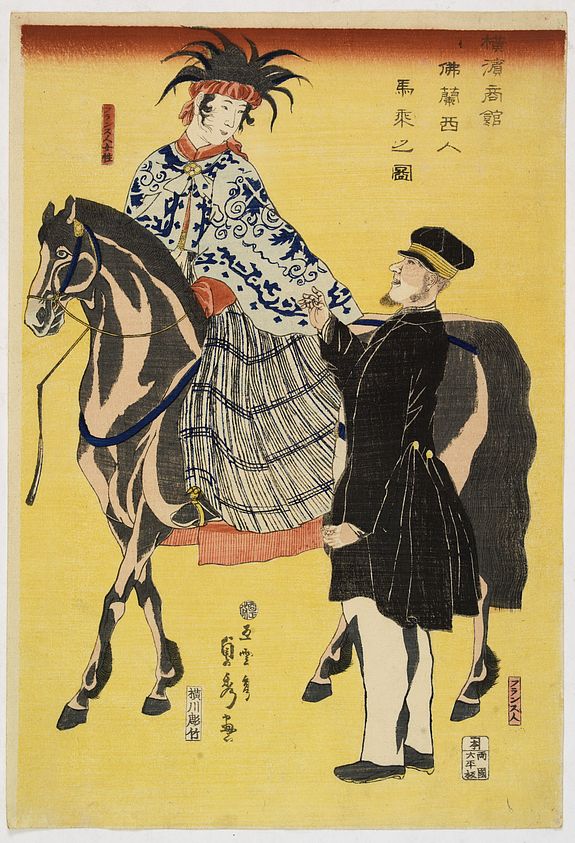
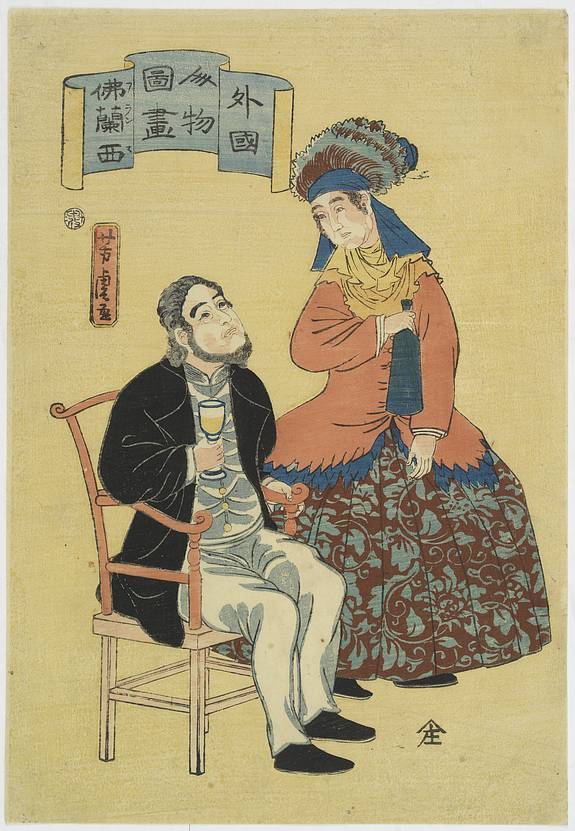
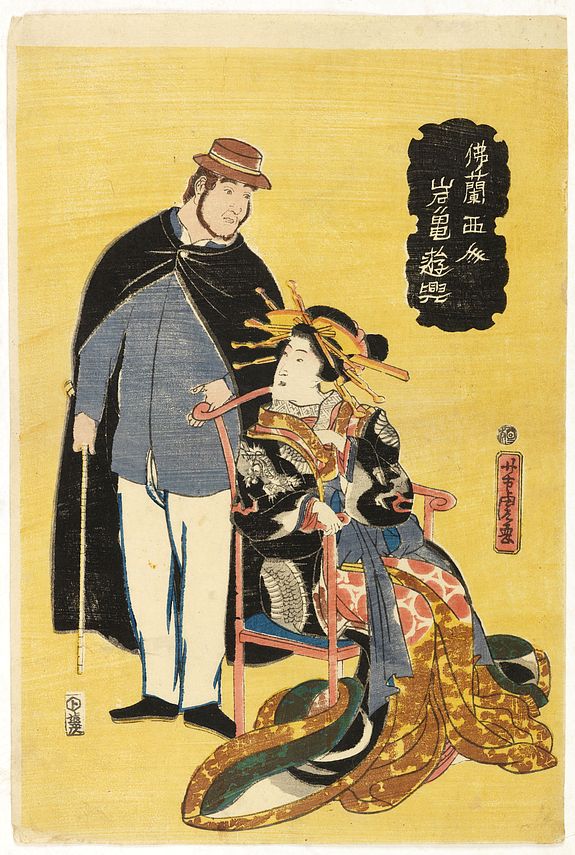
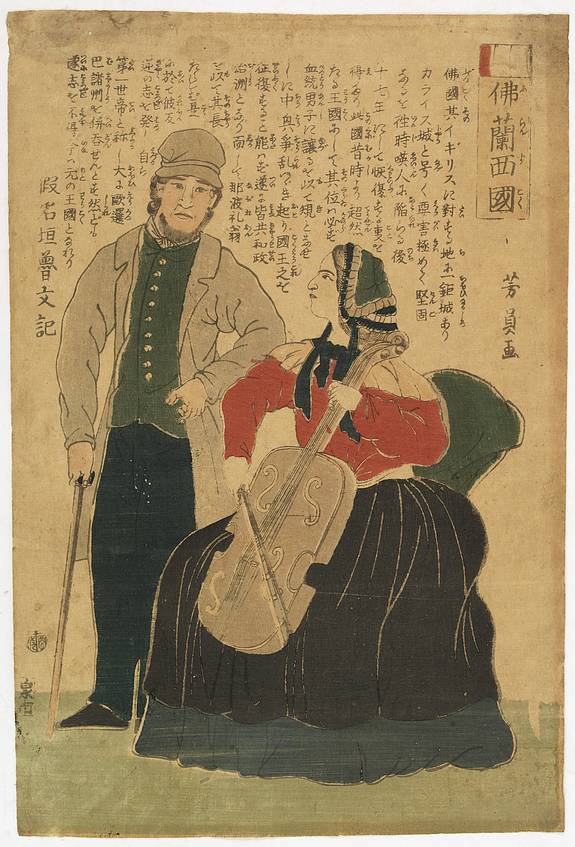
![33318/510:YokohamaPrints Fransu Koku [French celiste with her husband]](/images/Lgimg/33318.jpg)
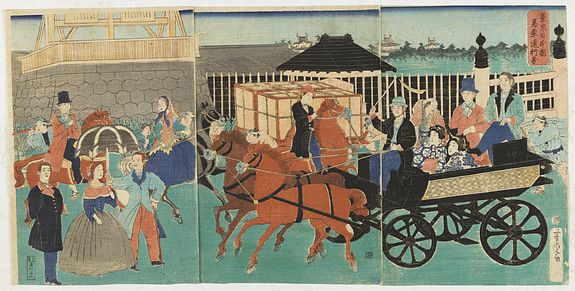
![32201/510:YokohamaPrints Yokohama honcho narabini Miyazakicho saiken zenzu. [Detailed views of Yokohama main street and Miyazaki pleasure quarters]](/images/Lgimg/32201.jpg)



![31530/510:YokohamaPrints [ Outskirts of Yokokhama.]](/images/Lgimg/31530.jpg)
![31646/510:YokohamaPrints Kokon chinbutsu shuran [Curios of all themes]](/images/Lgimg/31646.jpg)
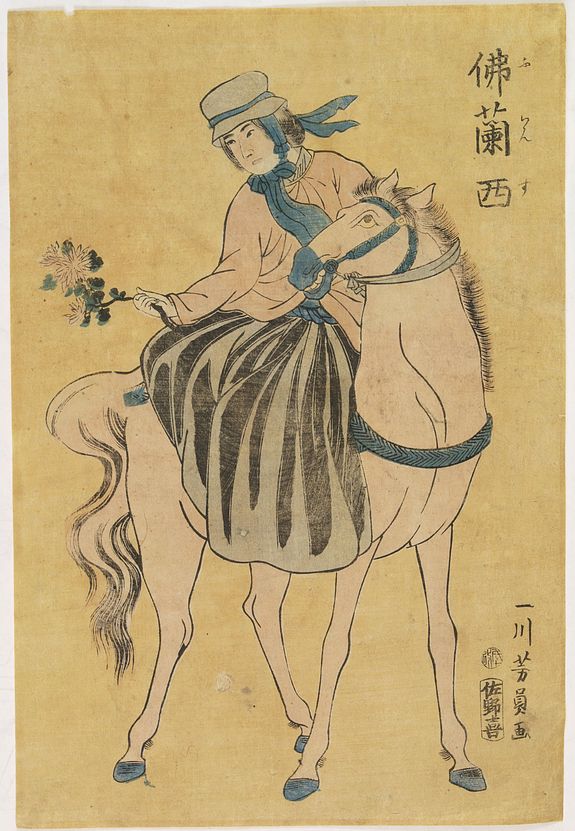
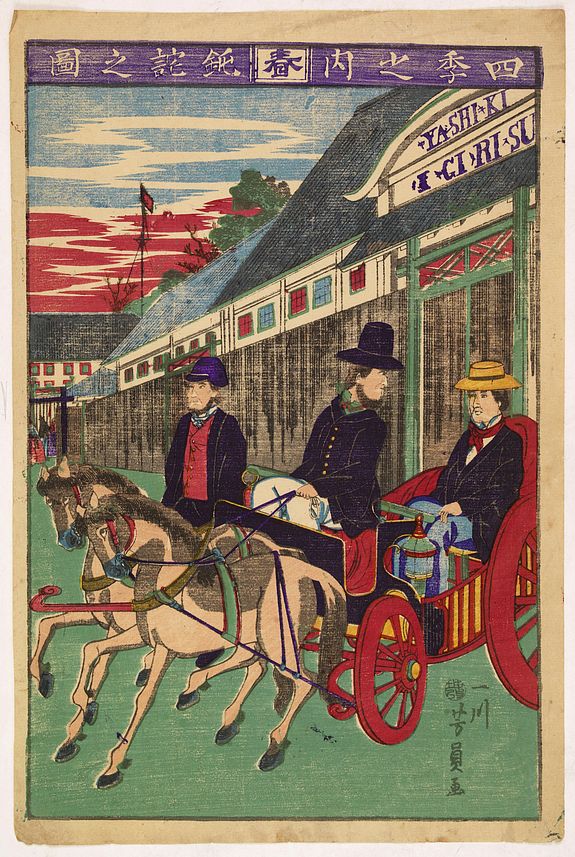
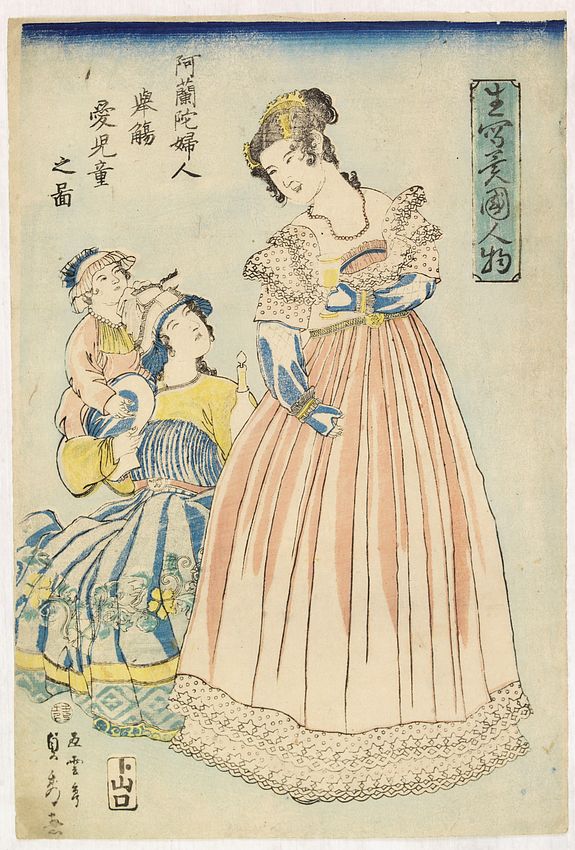
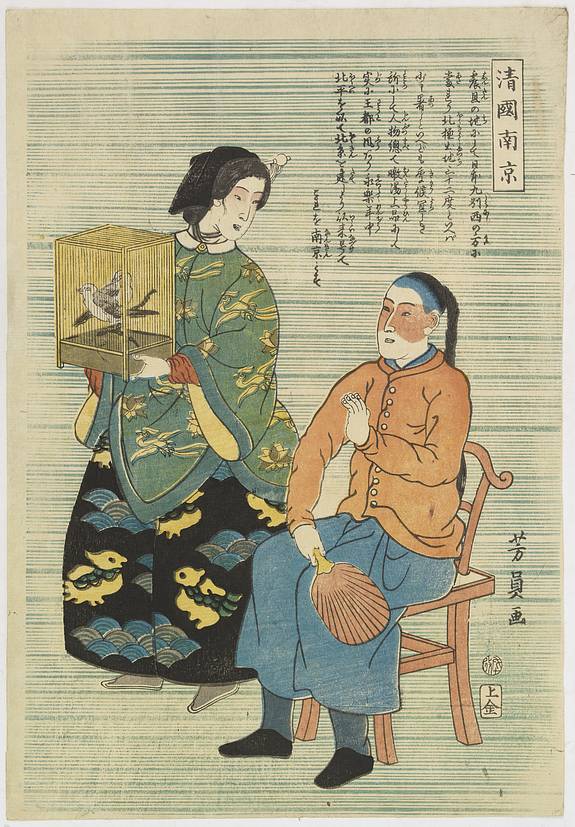
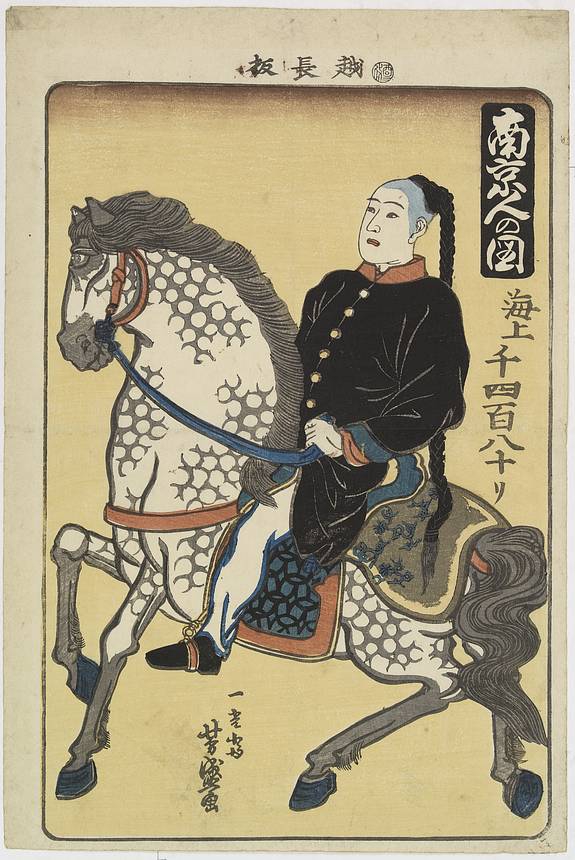
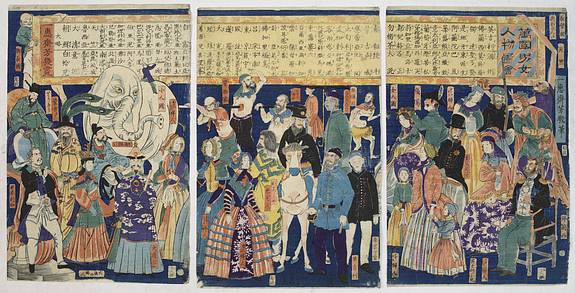
![33322/510:YokohamaPrints [International costumes ]](/images/Lgimg/33322.jpg)