Spices
The Portuguese established a factory at the beginning of the sixteenth century, but were compelled to leave a century later by the ruler of Gingee, who found them unfriendly. After that, the Danes shortly set up an establishment, and likewise the Dutch. The latter set up trading posts in Porto Novo and Cuddalore. The French, who had trading centres in the North, Mahe and Madras were invited to open a trading centre in Puducherry by the new ruler of Gingee to compete with the Dutch.
Spice Islands
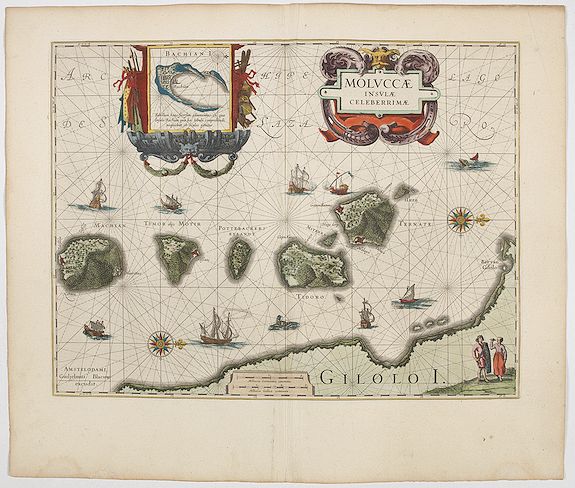
Ambon
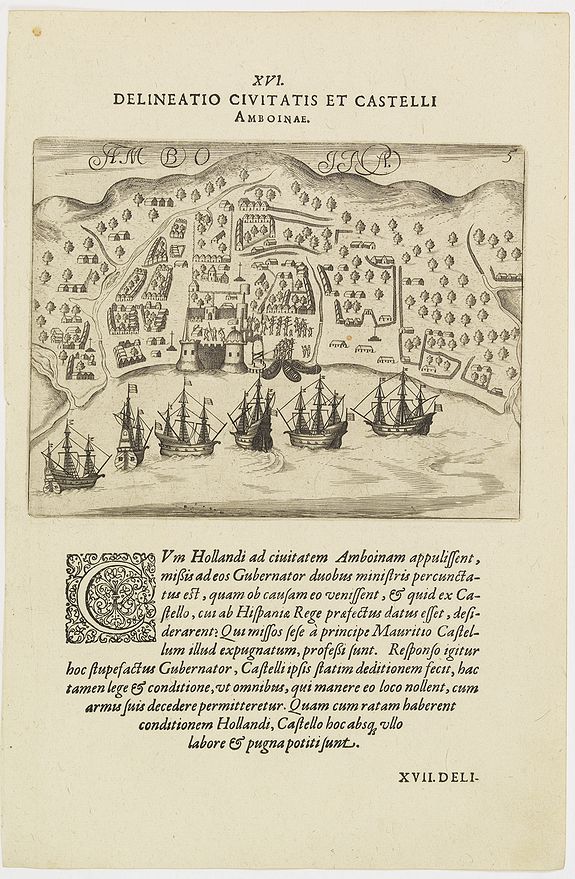
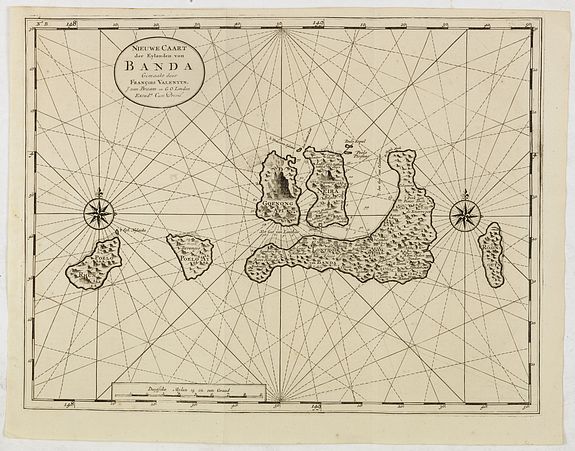
In 1513, the Portuguese were the first Europeans to land in Ambon, and it became the new centre for Portuguese activities in Maluku following their expulsion from Ternate. The Portuguese were dispossessed by the Dutch in 1605, when Steven van der Hagen took over the fort without a single shot. Ambon was the headquarters of the Dutch East India Company (V.O.C.) from 1610 to 1619 until the founding of Batavia (now Jakarta) by the Dutch.
Ternate
Ternate was an important sultanate from the 15th to the 17th century and a part of the Moluccas. The initial Western visitor was Portuguese and came in 1512; other Portuguese followed to ship cloves and construct a fort (1522). In time the people of Ternate conquered the fort and expelled the Portuguese (1574), and in 1606 the sultan signed a treaty with the Dutch and granted them a spice monopoly.
Restriction of production to maintain high prices led to revolts in 1650 and 1679 and the end of clove production in the northern Moluccas. The sultan became a vassal of the Dutch East India Company, and the Dutch assumed executive power on the island until the establishment of the Republic of Indonesia after World War II.
Jan Huijgen van Linschoten
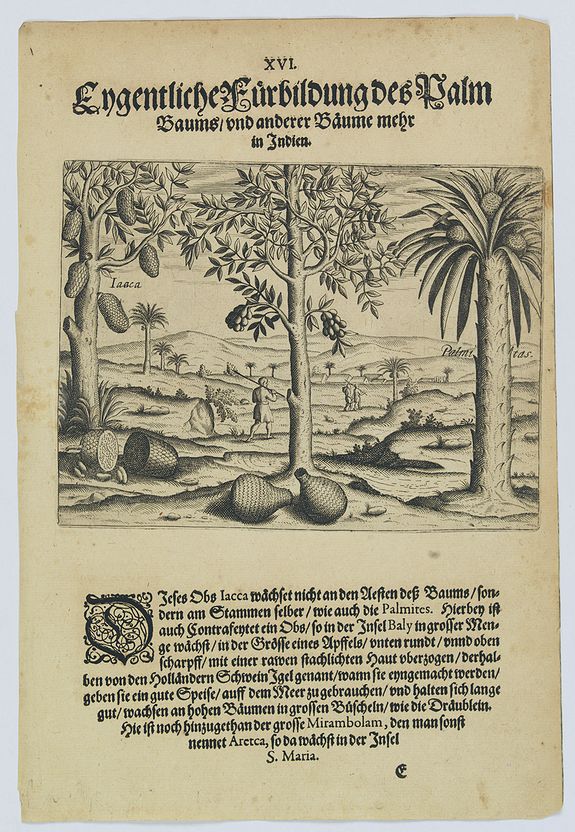
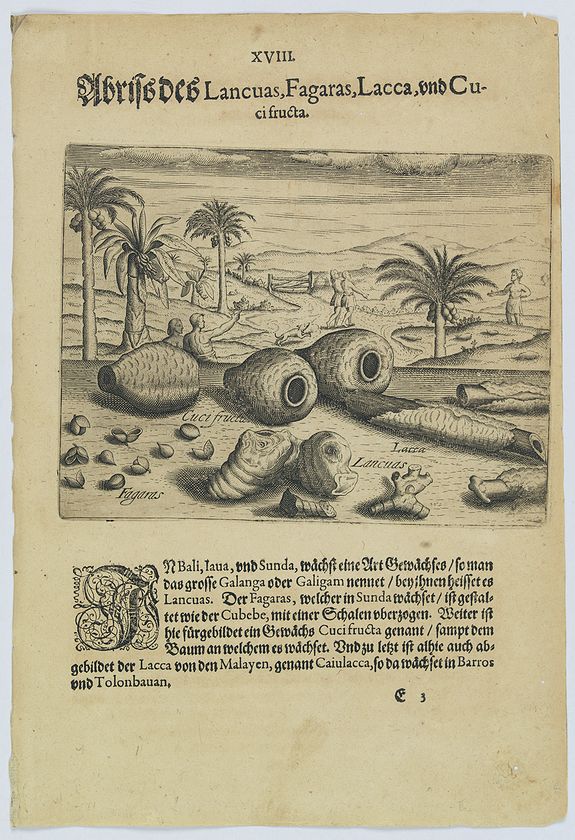
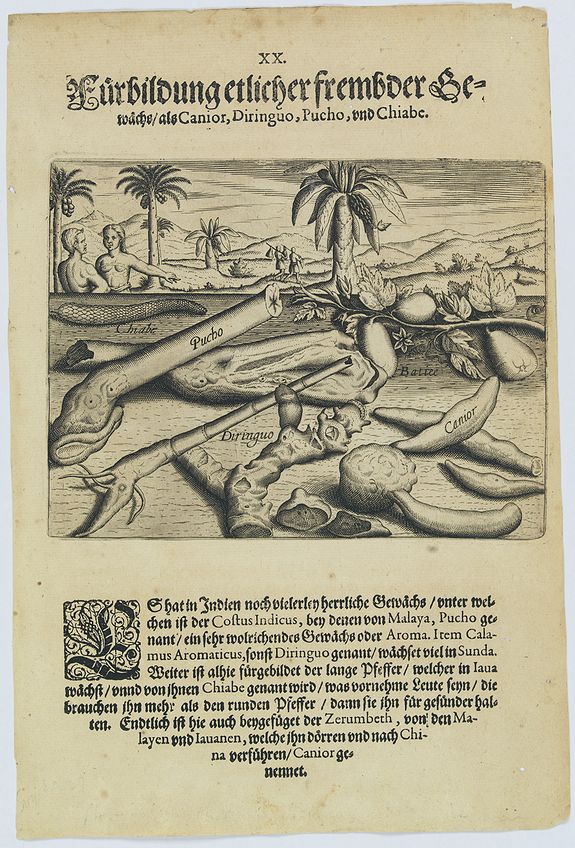
Jan Huygen van Linschoten (1563-1611) was a Dutchman born in Haarlem. He had an "avaricious thirst for knowledge, which enabled him to get detailed information of land and sea as far afield as the Spice Islands and China" (Penrose).
Linschoten traveled to Goa in 1583 as a clerk to the newly appointed Portuguese Archbishop of Goa. He made a few trips into India, compiling notes on his experiences, gleaned information on sea routes from Portuguese sailors, and collected information from other sources as well.
Linschoten left India in 1589, hired as a pepper factor for the Fugger and Welser interests, where he learned about the organization and administration of the spice trade. Returning to his hometown of Enkhuizen in 1592 (after a two-year stay in the Azores), he prepared his notes for the Amsterdam publisher Claeszoon in response to interest in the Netherlands and other European countries about commercial possibilities in Asia.
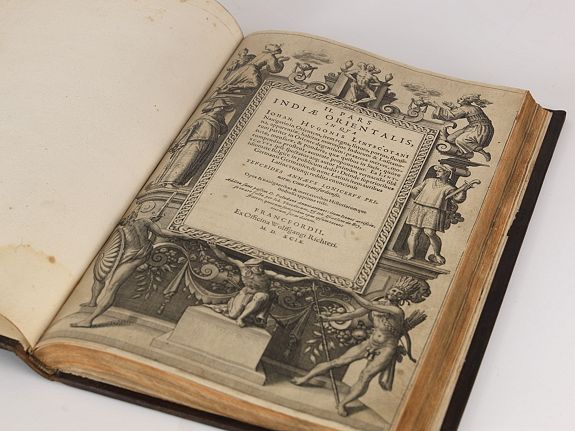
No other book contained so much usable intelligence on the East and West Indies as Linschoten's. Unhindered by the censorship that affected writers in the Iberian Peninsula, the author included information such as sailing directions, descriptions of countries, and statistics on commerce and trade.
The work was held in such high regard that for nearly a century, every Dutch ship headed for the East carried a copy of a Dutch edition of Linschoten.
Cornelis de Houtman
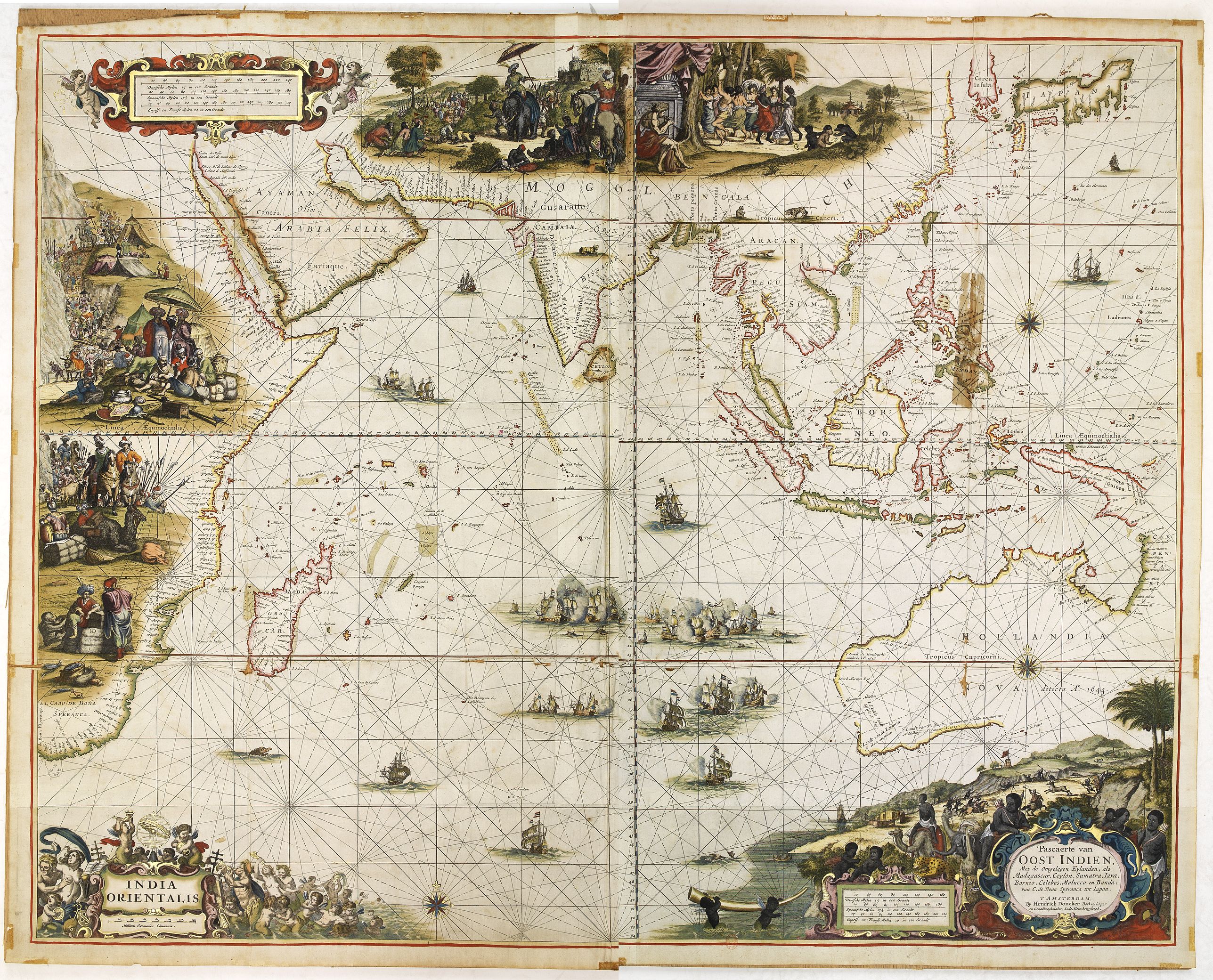
The first Dutch voyage to the East Indies was made under the command of Cornelis de Houtman. The expedition left in 1595, after Holland had achieved independence from Spain and could therefore freely explore its own interests in the East. The ships sailed across the Atlantic to Brazil, and rounded the Cape of Good Hope on 7 February 1595. They arrived in Sumatra in May 1596 and proceeded to Java with the intention of reaching the Moluccas.
The ships were un-seaworthy, however, and troubles arouse between captains and crew. Finally reaching an accord, they sailed to Bali and returned to Texel in August 1597, with only eighty-nine of the crew left alive. Because of the increased price of pepper, the voyage was able to turn a profit, despite returning with a small cargo.
Batavia
Batavia was designed and settled by European Dutch in 1619 and at one point of time was renamed to Jakarta. The city expanded from a small Dutch colony into one of the world’s biggest cities.
![37948/250:Spices [Dutch ship Amsterdam].](/images/Lgimg/37948.jpg)
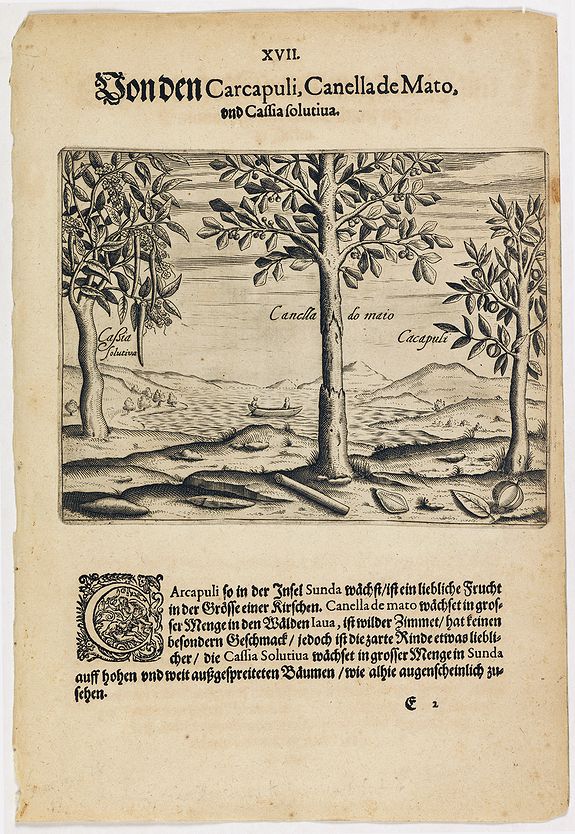
![25837/250:Spices [ Sumatra plants ].](/images/Lgimg/25837.jpg)