The Silk Road and Early Trade Routes
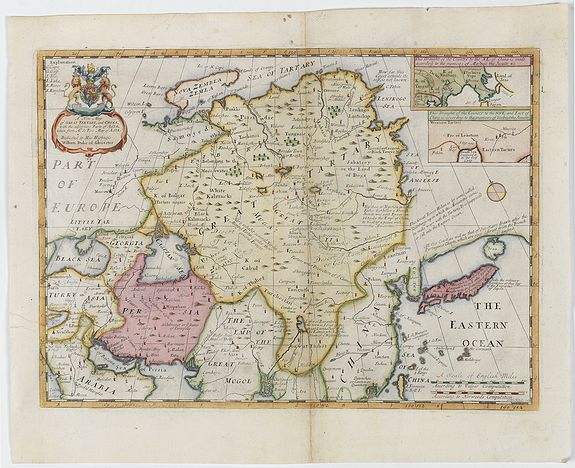
The Silk Road saw various growth spurts in its early centuries and one of the first major steps in its development happened during Alexander the Great’s expansion of the Greek Empire. In 329 BCE Alexander founded the city of Alexandria Eschate (not to be confused with the port city of Alexandria in Egypt) along the Fergana Valley located near the modern-day city of Khujand in Tajikistan. However, as the Mongolian Empire eventually came to an end, history began to see the sparks that would ignite the start of the Silk Road's decline.
It was around this time that Europeans began looking for other ways to stay connected with the Chinese Empire, and they started looking towards the open ocean. Of course, this blog post would not be complete without comparing some of the influence Eastern weapons had on the development of Western Swords. Found trade beads are giving good information about the commercial contacts between different countries. Dutch glass beads, produced since the late 16th century were mainly used for trade in North America, Africa, and Indonesia.
In 1543 the Portuguese Empire made another historic first when Portuguese traders – during the height of what would become known as the Portuguese Discoveries -- became the first Europeans to travel to Japan and set up shop with the locals. This lead to the start of an exclusive trade partnership between Portugal and Japan that would last for over ninety years. Portugal strengthened their hold even further in the East by establishing the first permanent European maritime trade post in 1557 when China rented the port city of Macau to the Portuguese Empire.
Other Europeans would eventually establish their own trading routes and relationships with Asia, but Portugal held a monopoly for decades before the rest of Europe caught up. Eventually, this lead to the decline of the once great trade regime that was held by the Silk Road.
Portuguese Jesuits living in Nagasaki were responsible for introducing life-changing concepts to the East. Not only did they bring the printing press to Japan for the first time in 1590, but it was also the Portuguese who heavily influenced Japan's development of firearms. This would go on to change Japan politically and militarily as the gun began to replace the sword.
Even though firearms were first introduced to the Japanese during the 13th century they saw little use until the mid 16th century when the Portuguese brought over the matchlock musket.
The japanese name for the matchlock musket was Tanegashima – named after the island of Tanegashima where The “Festival da Espingarda” (“Rifle Festival”), is still celebrated in Japan to this day.
Marco Polo
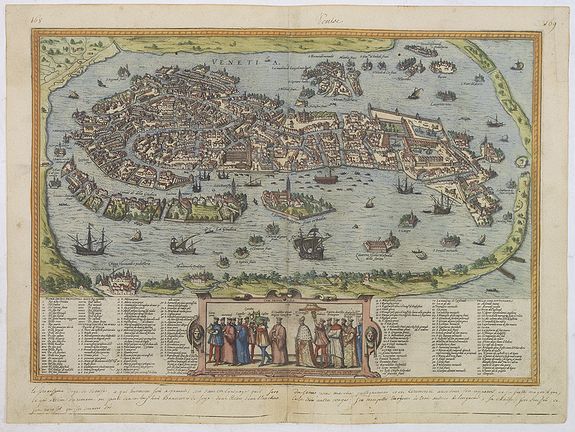
On September 15, 1254, Marco Polo was born in Venice, then an independent city-state and today part of Italy. Marco, his father Nicolo and his uncle Maffeo, while not the first Europeans to visit the area we now call China, had such a storied journey to the Far East that its telling helped inspire European journeys of discovery for centuries.
The Polo family were merchants, which in the Venice of the 13th century often meant travel to remote locations in order to secure sought-after items. Niccolo Polo and his brother Maffeo were successful traders and spent a large portion of their careers in the area around the Black Sea and as far east as modern day Uzbekistan. In 1264, the two met the brother of the Grand Khan Kublai. He was headed to the Mongol capital of Khanbaliq, which today is Beijing, China. After a journey of two years, the brothers and the traveling party reached Khanbaliq and received a gracious welcome and an audience with the Khan.
The Khan sent the men back home with precious cargo: a man who was to be the Mongol ambassador to the Pope, a letter from the Khan asking for teachers to be sent east to instruct his people about Christianity and Western life, and a small golden tablet that granted them safe passage anywhere within the Khan's lands. The ambassador left the brothers near the halfway point of the journey, but they continued on with their letter to His Holiness.
They eventually delivered the letter and were given a reply from the Pope that was to be delivered to the Khan. The brothers set out again for Cathay (as the area of China was then known) in 1271, but this time they took other travelers: Nicolo's son Marco, who was 17, and two friars. The route, which would become known as the Silk Road, contained its share of danger and disease. Marco fell ill on the way and the group had to stop in Badakhshan (an area that is now northeastern Afghanistan and southeastern Tajikistan) for a year in order for him to recover.
Marco traveled far and wide in China, Burma and India on special missions. He became an excellent speaker who could converse in at least four languages.
After his return to Venice he ended up in prison for several months, during that time, he dictated the story of his journeys to another prisoner, Rustichello da Pisa. When Marco was released in 1299, he had his book published with the title Il Milione, or "The Million". It was an enormous success, no easy feat in the days before the printing press.
Silks, spices, tea and porcelain.
These and other exotic products of China have been eagerly sought by Europeans since Roman times. But the land route through the Euroasian deserts along the "Silk Route" allowed only a trickle of Oriental products to reach the Western World. In the 16th century the sea route to the Orient was discovered.
In the centuries that followed, the seafaring nations of Europe vied for control of the China Trade. In the early 18th century, the collection of Oriental products became an obsession among the European aristocracy. Separate rooms and castles were built to display the collections of the most devoted, such as Alexander the Strong of Saxony.
It was to be the end of the 17th century, or even the beginning of the 18th, before all the West European maritime powers were represented by companies on the new trade routes to the Far East.
Smaller powers with access to the sea, such as Denmark, Sweden, the Austrian Netherlands and Prussia got the chance to make a name for themselves, next to the old powers of Spain and Portugal, and even to the newly established powers of England, the Dutch Republic (V.O.C.) and France, which meanwhile had expanded to become world empires.
The North Route
The historic city of Bukhara has been a hub for traders and travelers since its foundation over 2,000 years ago. Situated on an oasis in the Zerafshan River delta in central Uzbekistan, Bukhara lies at the crossroads of ancient trade routes that stretched across Central Asia and was a vital stopping point for merchants on the edge of the Kyzyl Kum (Red Sand) and Kara Kum (Black Sand) deserts. It was one of the most prosperous cities in Central Asia throughout the Middle Ages. It became a center not only for exchange between merchants but also for culture, scholarship, and the study of religion. Bukhara also contributed many locally produced goods that enriched the Silk Road trade and was particularly renowned for its textile industry.
Karakul lambs' fleeces, silk, cotton, leather, carpets, and clothing were all traded from Bukhara, as well as gold embroidery and metalwork. Many of these crafts are still practiced in the city today.
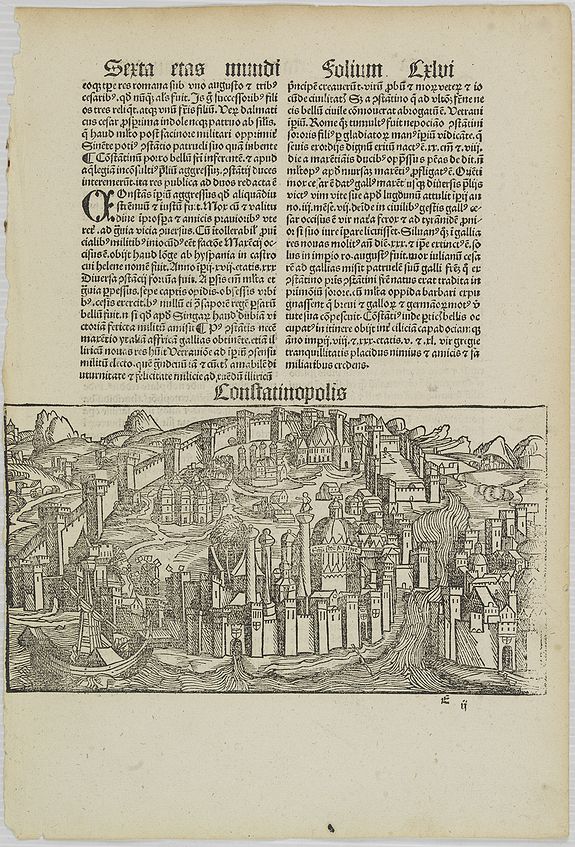
![11244/200:Silk Road [Constantinopolis expugnatio a turchis. Folio CCXLIX ]](/images/Lgimg/11244.jpg)
![31920/200:Silk RoadNo title. [China and Japan.]](/images/Lgimg/31920.jpg)