Nagasaki-e
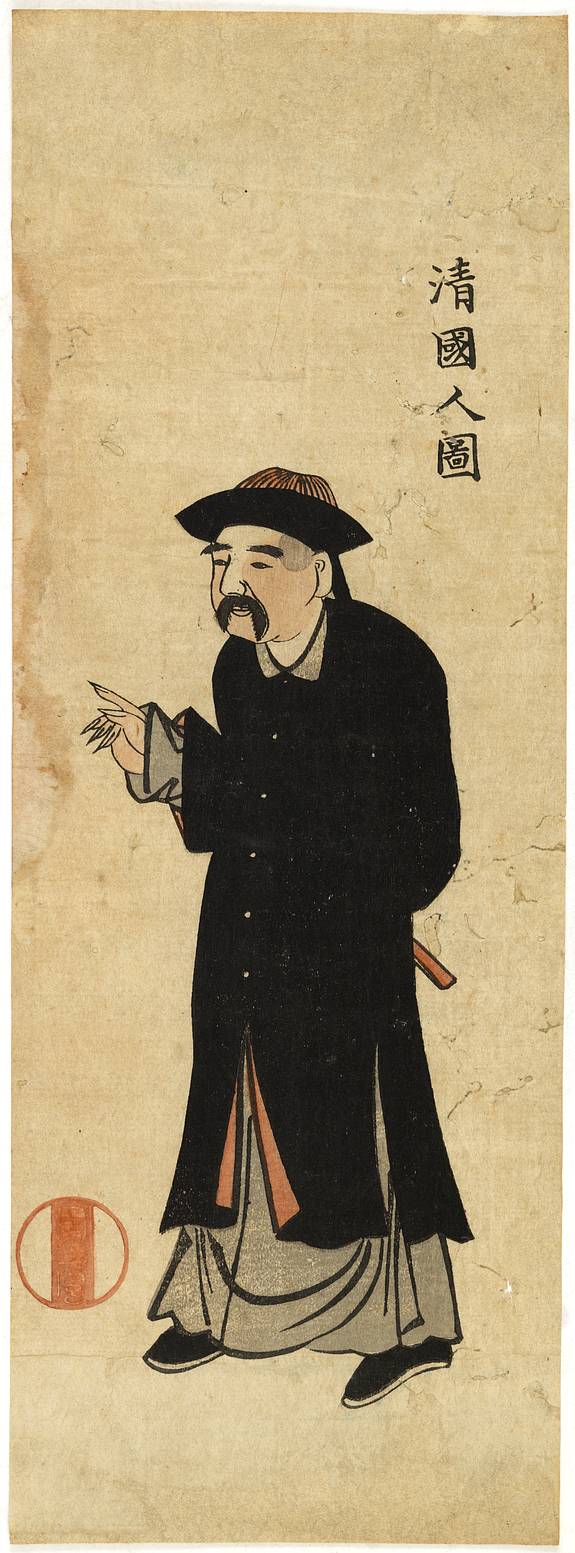
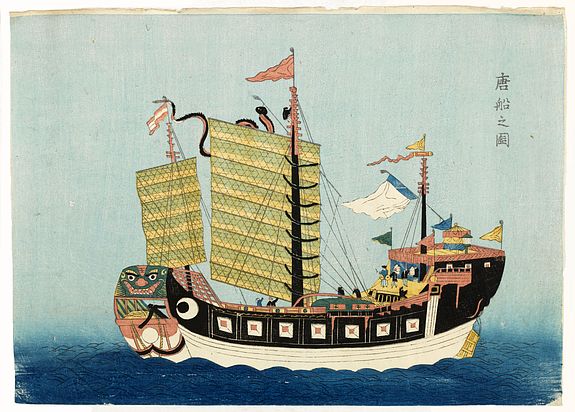
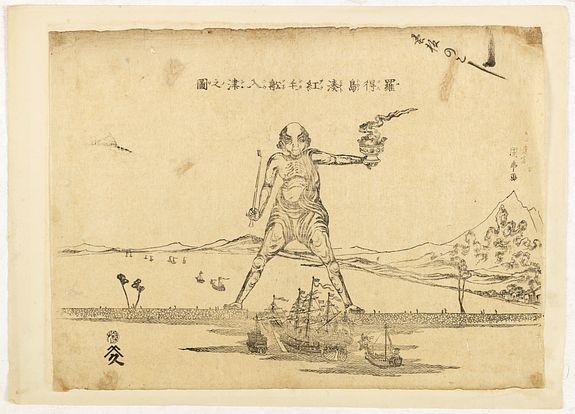
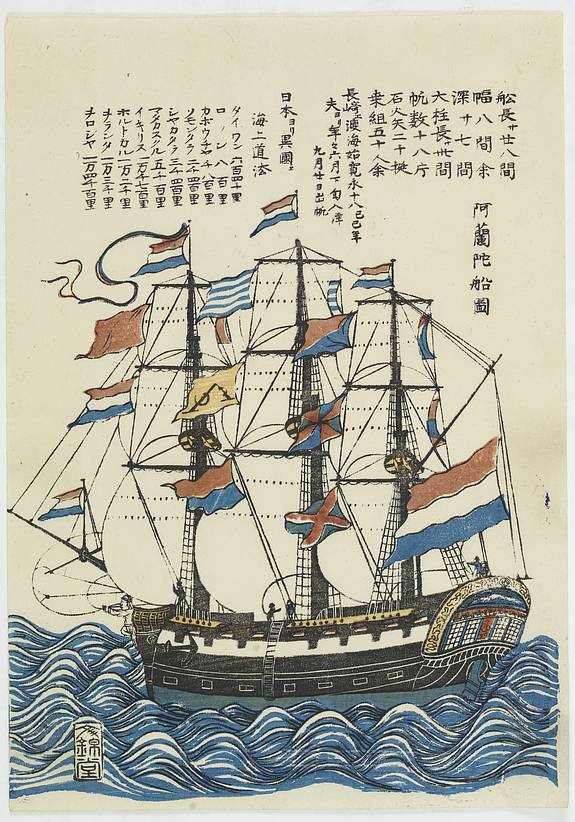
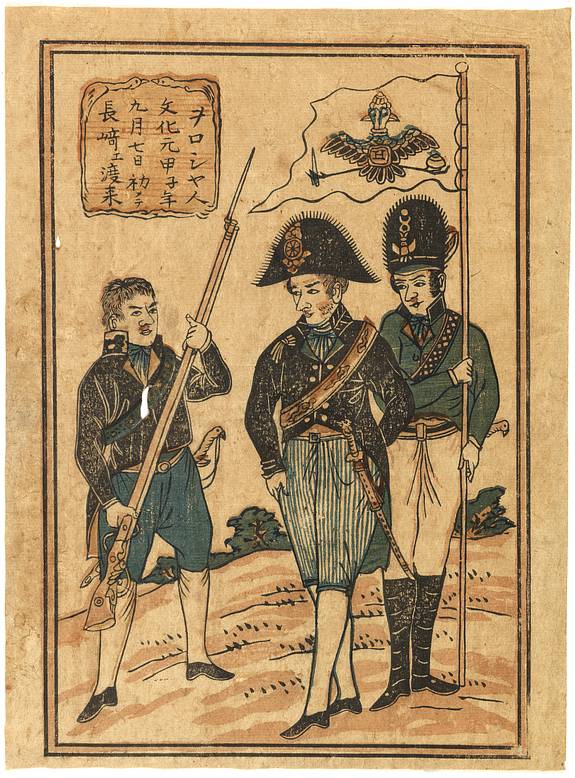
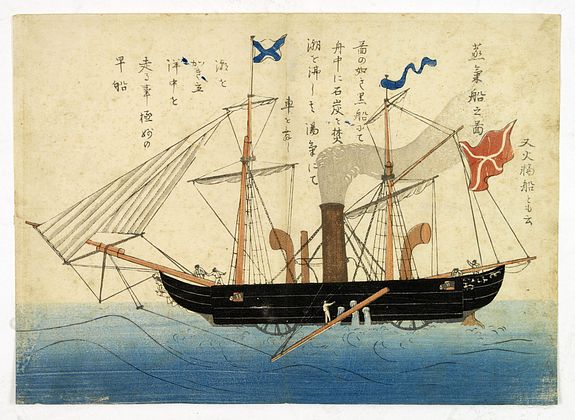
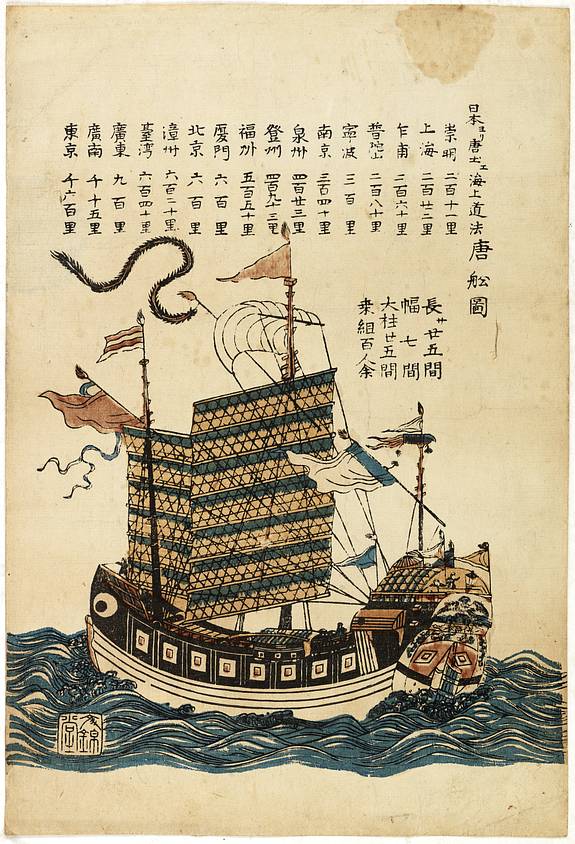
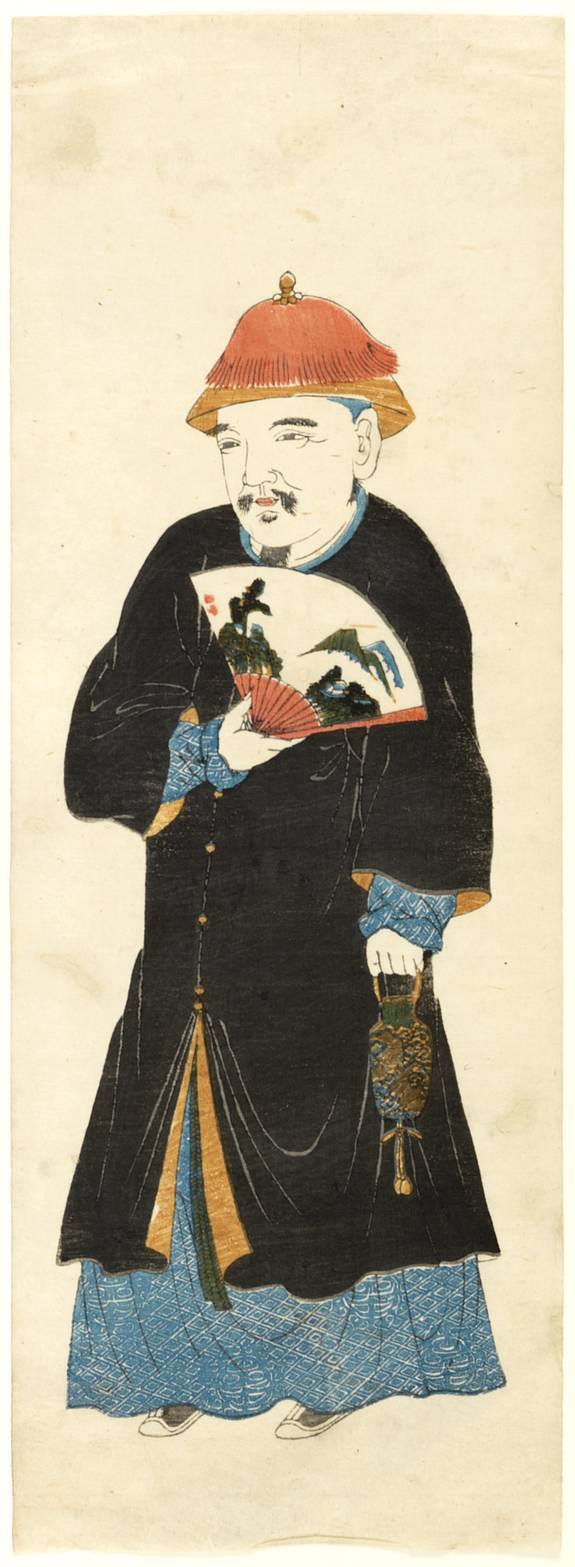
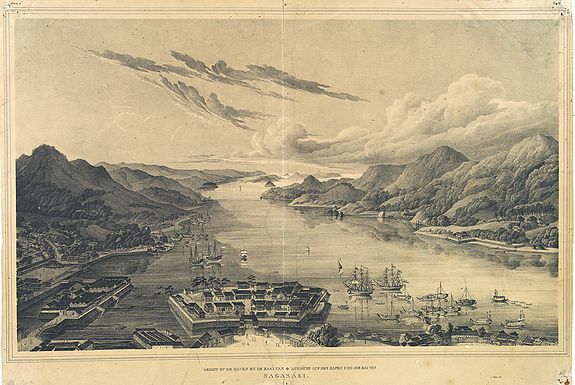
The port city of Nagasaki remained open to limited and officially sanctioned trade with small groups of Dutch and Chinese from 1641 to 1859, giving rise to the Nagasaki-e (Nagasaki School prints).1, 2 These prints often depicted foreign ships — the Chinese and Dutch vessels allowed to enter — as well as the people who came on them, their customs and mode of dress.
Artists used natural pigments such as vermilion, red lead and indigo (the full range of colours, using multiple blocks, had not yet been developed). Sold by specialised publishers or booksellers in Nagasaki, Edo and Osaka, they were popular with both traders and curious residents — demonstrating ‘that although the country’s policy was to resist cross-cultural interaction, these encounters were happening nonetheless’.
The genre declined in the late 1850s, when Yokohama replaced Nagasaki as a treaty port for foreign trade.
Nagasaki quickly became a tourist destination, mainly to find a glimpse of the red-haired barbarians. The publishers produced maps of Nagasaki and prints of foreigners for the tourist to take home. One Japanese print genre was Shunga. Westerners on shunga prints are rare, but do exist.
SHUNGA: THE EROTIC PRINTS OF JAPAN.
Shunga or as literally translated “Spring Pictures” are a genre of woodblock prints that depict the entire gamut of sensual and sexual pleasures. To fully understand the unabashed nature of shunga, it is helpful to understand the society which inspired and nurtured it—a pleasure-bent culture of Edo’s notorious demi-monde. In its heyday, this culture had engendered a fabulous city of eroticism unmatched by any in the West---the legendary Yoshiwara. Within the confines of its sumptuous quarters, courtesans of stunning beauty and exquisite sensibility elevated the gratification of physical desire to an art. The shunga print was both the natural outgrowth and the fullest expression of this hedonism, and as such, mirrored an endless range of physical passions.
Yet, although shunga fulfilled a major purpose in the Yoshiwara, its illustrations often serving to train inexperienced courtesans as well as to arouse prospective clients, it also played a central role in the education of newlyweds. In many families it was the custom to give brides shunga albums, or “pillow books” that were treasured by each generation and often passed down from mother to daughter. Aside from its practical usefulness, Japanese erotica was also valued for its beauty. The shunga print is technically and historically an integral part of ukiyo-e.
Virtually all the great masters of ukiyo-e felt that designing good shunga was vital to their artistic stature and considered its production to be a piece with the rest of their work. Most shunga were unsigned; therefore, the artist's name is always attributed.
![32191/505:NagasakiPrints Rakuda no zu [Camel]](/images/Lgimg/32191.jpg)
![32196/505:NagasakiPrints Gaikoku jinbutsu - Amerika, Furansu. [People from foreign lands - Americans, French ]](/images/Lgimg/32196.jpg)