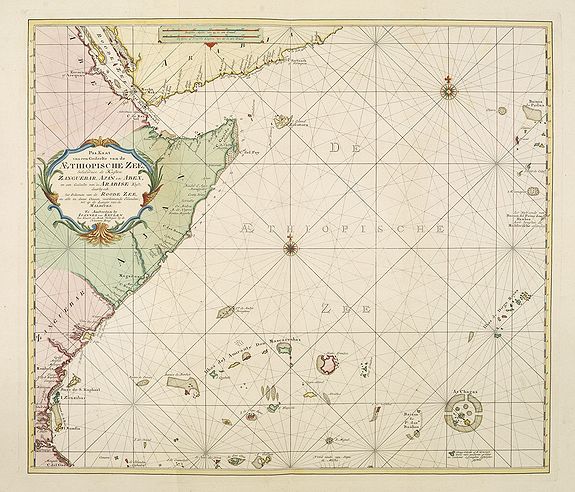
1753 VAN KEULEN, J. - Pas-Kaat vaneen gedeelte van de Aethiopische Zee behelsende de Kusten Zanguebar, Ajan en Abex, en een gedeelte van de Arabische Kust. . .
Pas-Kaat vaneen gedeelte van de Aethiopische Zee behelsende de Kusten Zanguebar, Ajan en Abex, en een gedeelte van de Arabische Kust. . .
| Maker: | VAN KEULEN, J. | |
| Date: | Amsterdam, 1753 | |
| Colored: | In attractive original colors. | |
| Size: | 505 x 890 mm / 19.9 x 35 inches | |
| Condition: | Paper slightly age-toned. Generally very good for such a chart. Two sheets joined. | |
Add this or any of your favorite items in one place.
If you want to save the items permanently, you have to sign in
or create an account first.

 Add/Remove


Description
A finely engraved and detailed chart of the most eastern tip of Africa, including Somalia, Djibouti, Yemen, Mauritius, and many other islands in the Indian Ocean.
Very rare: only included in 6th volume (so-called secret atlas) of Van Keulen's.
Latitude scale, compass rose and system of rhumb lines, soundings, anchorage's, etc. Many Dutch names and a wealth of cities and information appear in the chart. The trading posts of the different nations are marked with flags. Number 47. in lower left corner, joined with sheet 46.
COLLECTOR'S ITEM.
More about Van Keulen dynasty [+]
Johannes Van Keulen
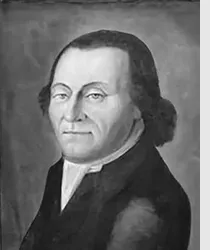 The van Keulen family operated a chart-making and publishing firm in Amsterdam for nearly 200 years. Johannes van Keulen founded it and registered his business as a "bookseller and cross-staff maker." Under his management, he began the Nieuwe Lichtende Zee-Faakel (New Shining Sea Torch) in 1681. It expanded to five volumes, then finally to six, adding material from the secret files of the East India Company.
In 1693, van Keulen acquired Hendrik Doncker's stock. In 1678, Johannes registered with the Amsterdam Booksellers Guild as a "bookseller and Cross-staff maker."
By this time, most Amsterdam chart makers and instrument makers, like Blaeu, Janssonius, Hondius, Goos, and Doncker, had either closed down or were past their prime. As a result, Johannes van Keulen could obtain copperplates, privileges, and stocks from many of his former competitors. Besides manuals and cross-staffs, Johannes produced his famed "ZeeAtlas" (Sea Atlas, 5 volumes), and "ZeeFakkel" (Sea pilot book, 5 volumes). ZeeFakkel was produced in numerous languages, including English, French, Italian, and Spanish. Gerard van Keulen, son of Johannes, born in 1678, took over from his father in 1714 and continued to expand the flourishing firm. Gerard produced hundreds of manuscript charts, now held in several European collections.
In 1726, Johannes van Keulen, Gerard's son, took over the business.
In 1743, Johannes was appointed "Official Chartmaker of the Dutch East Indies Company". The title appears to be nothing more than a formality, however, since the firm had supplied charts to the East Indies Company for many years, and the van Keulen family of Amsterdam had an interest in the East Indies Company. Still, van Keulen Chartmakers held the official title until the East Indies Company was dissolved in 1799. In 1753, Johannes finished his grandfather's work by publishing the sixth volume of "ZeeFakkel". This volume contained the previously kept 'secret' cartography of the East India Archipelago collected and used by the V.O.C. (THE DUTCH EAST INDIA COMPANY).
Jan de Marre, the examiner of the Amsterdam Chamber of the East India Company, provided van Keulen with the data for the ZeeFakkel's sixth volume, and de Marre is also believed to have influenced the van Keulen chart makers' decision to start producing the newly invented Hadley’s Octants in 1744. The company distributed these maps only internally and never sold them. Merchants had to return the maps after each journey to keep trade routes secret. Until van Keulen II printed the Atlas in 1753, the Dutch East India Company used costly, error-prone manuscript versions. Johannes II became the Dutch East India Company's official mapmaker in 1743, a title his family held until the company's dissolution in 1799.
After Johannes van Keulen's death (1770), his widow and their two sons, Cornellis Buys and Gerard Hulst van Keulen, ran the company. By then, they also owned an anchor factory, which they managed separately. In 1778, after brother Cornellis's death, Gerard Hulst van Keulen took leadership of the chart-making firm and added sextants to their inventory for sale. Gerard was one of the three original members of the "Dutch Commission for Longitude at Sea", installed by the Dutch Admiralty in 1787. In 1788, Gerard van Keulen published the first "Dutch Nautical Almanac", an annual publication that continued until 1885. When Gerard Hulst van Keulen died in 1801, his widow ran the firm until her death in 1810, when Johannes Hulst van Keulen became the last van Keulen to run it. In 1823, Jacob Swart entered the van Keulen firm's service, and in 1844, with the death of Johannes Hulst van Keulen, head of the van Keulen Chartmakers, the headship passed to Jacob Swart. When Jacob died in 1866, his son, Jacob Swart, Jr., succeeded him.
Under Jacob Jr’s reign, the firm lost all of its standing in the Nautical world, and the possessions of the firm were sold at auction in 1885, bringing 200 years of "DeGekroonde Lootsman" to an end.
FAQ - Guarantee - Shipping
This item is available for immediate purchase when a "Add to Cart" or "Inquire Now" button is shown.
Items are sold in the EU margin scheme
Payments are accepted in Euros or US Dollars.
Authenticity Guarantee
 We provide professional descriptions, condition report (based on 45 years experience in the map business)
Paulus Swaen warrants the authenticity of our items and a certificate of authenticity is provided for each acquired lot.
Condition and Coloring
We indicate the condition of each item and use our unnique HiBCoR grading system in which four key items determine a map's value: Historical Importance, Beauty, Condition/Coloring and Rarity.
Color Key
We offer many maps in their original black and white condition. We do not systematically color-up maps to make them more sellable to the general public or buyer.
Copper engraved or wood block maps are always hand colored. Maps were initially colored for aesthetic reasons and to improve readability. Nowadays, it is becoming a challenge to find maps in their original colors and are therefor more valuable.
We use the following color keys in our catalog:
Original colors; mean that the colors have been applied around the time the map was issued.
Original o/l colors; means the map has only the borders colored at the time of publication.
Colored; If the colors are applied recently or at the end of the 20th century.
Read more about coloring of maps [+]
Shipping fee
A flat shipping fee of $ 30 is added to each shipment by DHL within Europe and North America. This covers : International Priority shipping, Packing and Insurance (up to the invoice amount).
Shipments to Asia are $ 40 and rest of the world $50
We charge only one shipping fee when you have been successful on multiple items or when you want to combine gallery and auction purchases.
Read more about invoicing and shipping
FAQ
Please have a look for more information about buying in the BuyNow gallery
Many answers are likely to find in the general help section.
My Collection+

With My Collection+ you can collect all your favorite items in one place. It is free, and anyone can create his or her virtual collection.
Unless you are logged in, the item is only saved for this session. You have to be registed and logged-in if you want to save this item permanently to My Collection+. Read More[+]
Register here, it is free and you do not need a credit card.
Add this item to My Collection+ or click the following link to see My Collection+.
|
Digital Image Download Paulus Swaen maintains an archive of most of our high-resolution rare maps, prints, posters and medieval manuscript scans. We make them freely available for download and study. Read more about free image download |
Click the image for a free small image download. |
YOUR RIGHT TO CANCEL THE PURCHASE OF A LOT
In accordance with the EU Consumer Rights Directive and habitually reside in the European Union you have the right to cancel the contract for the purchase of a lot, without giving any reason.
The cancellation period will expire 14 calendar days from the day after the date on which you or a third party (other than the carrier and indicated by you) acquires, physical possession of the lot. To exercise the right to cancel you must inform Paulus Swaen Inc, of your decision to cancel this contract by a clear statement (e.g. a letter sent by post, or e-mail.
To meet the cancellation deadline, it is sufficient for you to send your communication concerning your exercise of the right to cancel before the cancellation period has expired.
Recently Viewed
Pas-Kaat vaneen gedeelte van de Aethiopische Zee behelsende de Kusten Zanguebar, Ajan en Abex, en een gedeelte van de Arabische Kust. . .
1753 VAN KEULEN, J. - Pas-Kaat vaneen gedeelte van de Aethiopische Zee behelsende de Kusten Zanguebar, Ajan en Abex, en een gedeelte van de Arabische Kust. . .
Date: Amsterdam, 1753
