Maria Sibylla Merian
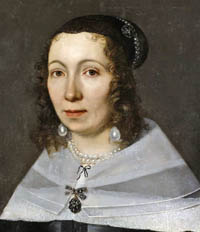 Maria Sibylla Merian was the daughter of the well-known Swiss engraver/publisher Matthaeus Merian. Her mother was Dutch, and after Matthaeus' early death she married the flower painter Jacob Marrell.
Maria Sibylla married the painter Johann Andreas Graff (1636-1701), and settled in Nuremberg where she had two daughters, Johanna Helena (1668-1723) and Dorothea (1678-1743), who would also become illustrators.
Separated from her husband a few years later, she declared herself a widow and moved to Amsterdam.
There she met Nicolaes Witsen (1641-1717), mayor of Amsterdam and director of the Dutch East India Company, who helped her finance a trip to Suriname, a Dutch colony in South America.
At the age of 52, Maria Sibylla traveled there with her daughter Dorothea to study insects in their natural habitat.
They arrived in South America in late summer 1699 and stayed until June 1701 studying and recording the plants and insects.
Returning to Europe in 1701 after two years of travel, she devoted herself to her major work, which she published at her own expense in 1705 under the title "Metamorphosis insectorum Surinamensium".
It was a large folio volume written in Latin and illustrated with 60 plates drawn by herself and engraved under her supervision by Jan Pieter Sluiter (1675-1713), Joseph Mulder (1659-1735) and Daniël Stopendaal (1672-1726).
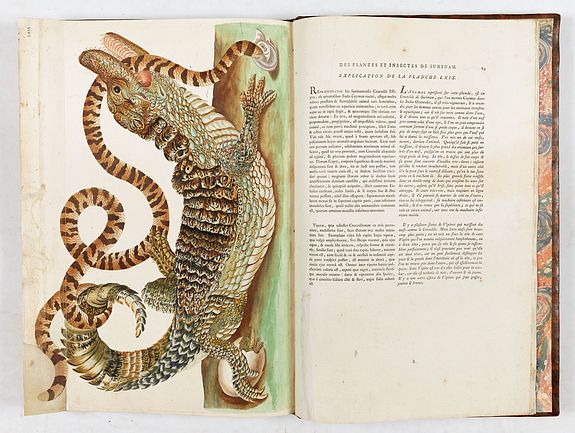
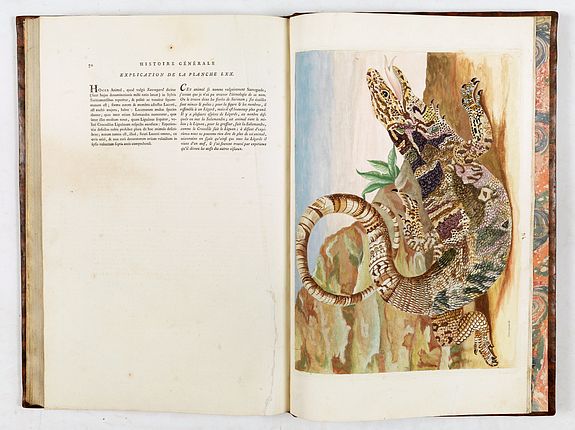
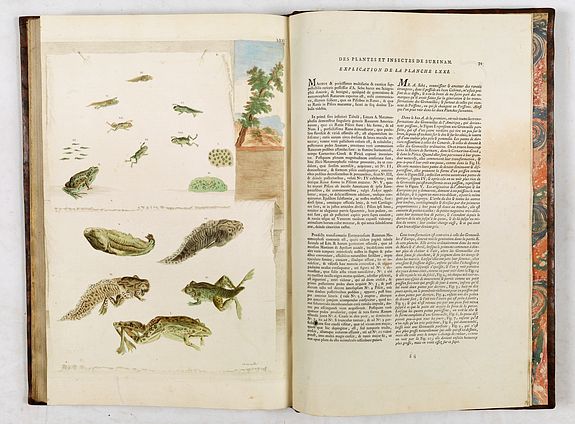
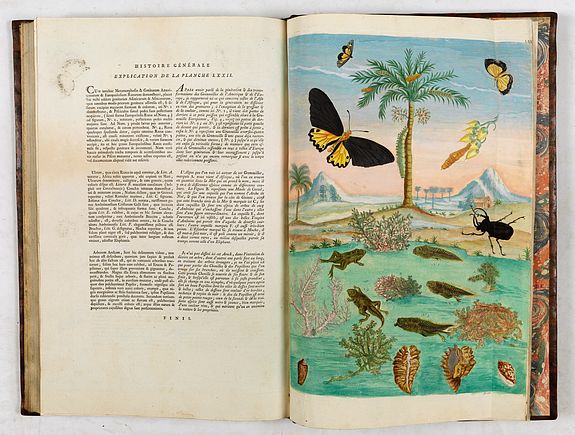
Later editions, including the below offered issue (...Tome Premier. Des Plantes de Surinam), were extended to include an additional 12 plates by Maria's eldest daughter Johanna.
Peter Dance writes of the work, that it was “easily the most magnificent work on insects so far produced... [combining] science and art in equal proportions... Her portrayals of living insects and other animals were imbued with a charm, a minuteness of observation and artistic sensibility that had not previously been seen in a natural history book” (The Art of Natural History [1978]).
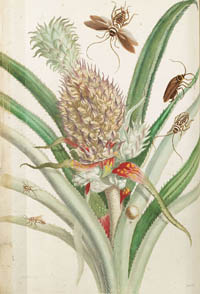
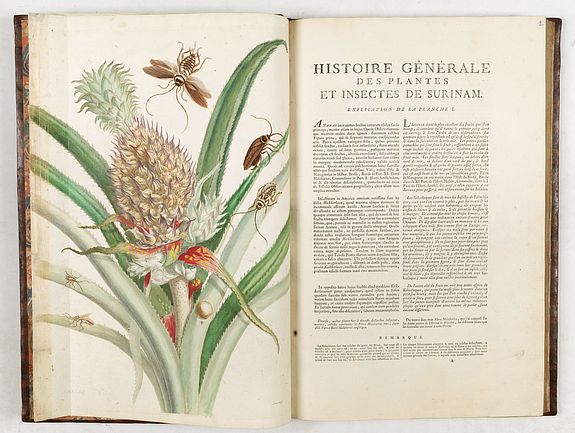
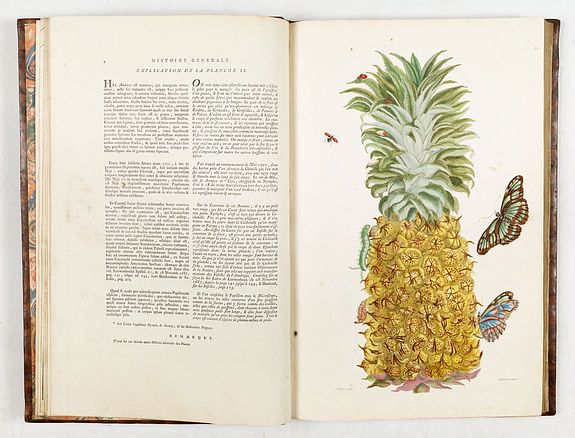
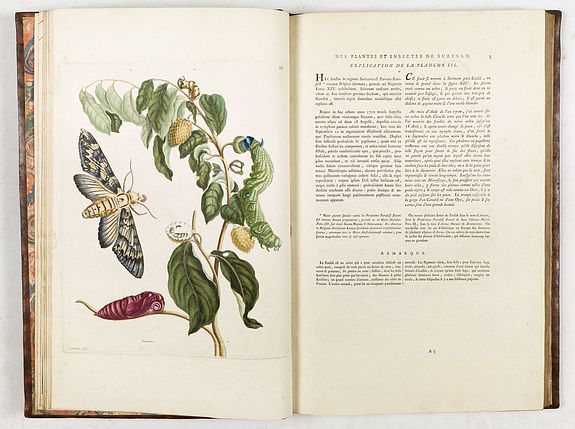
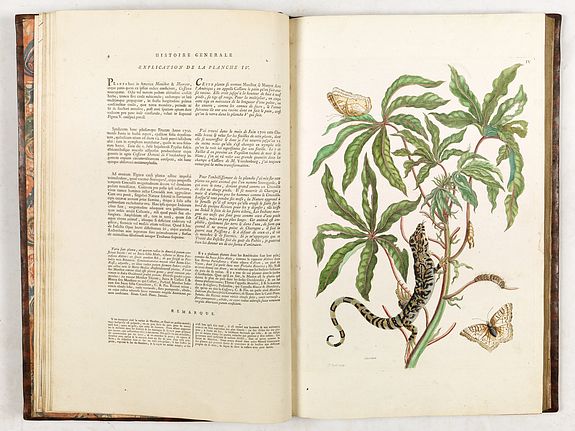
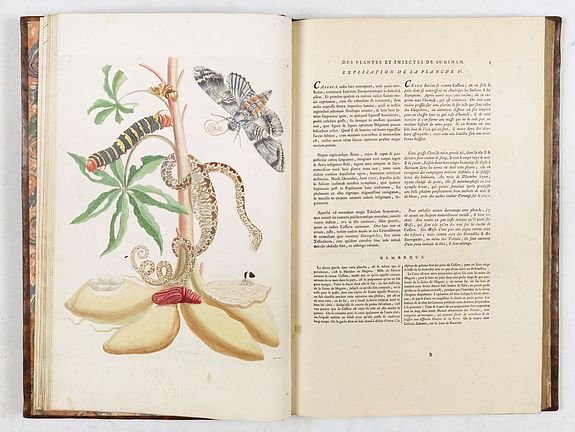
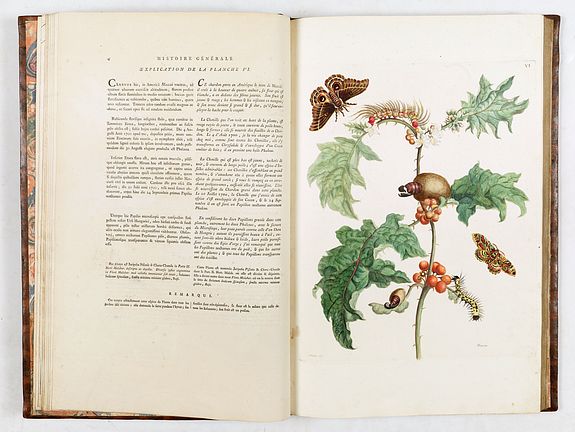
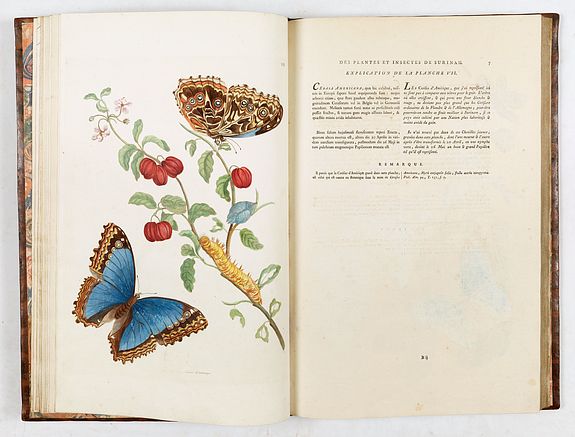
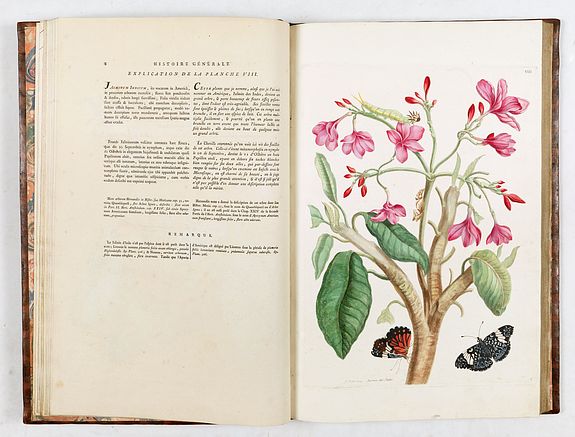
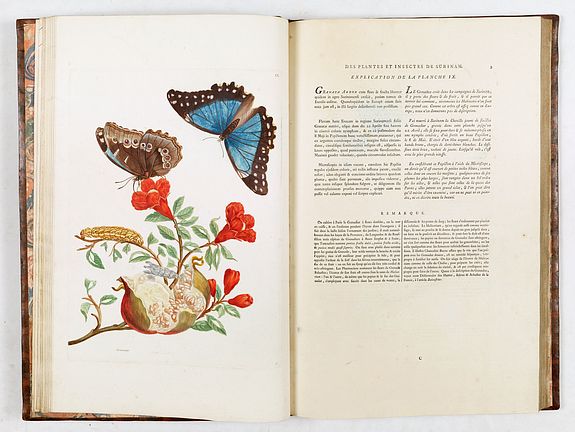
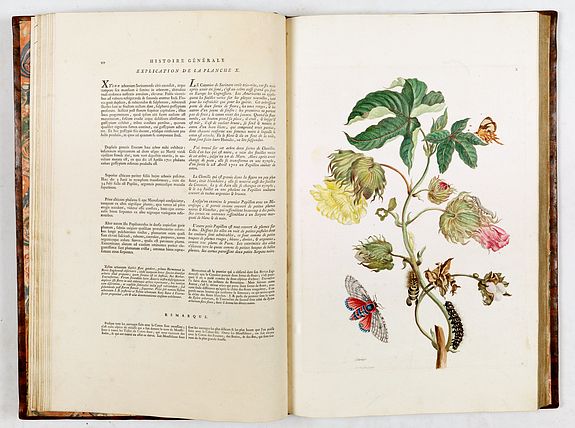
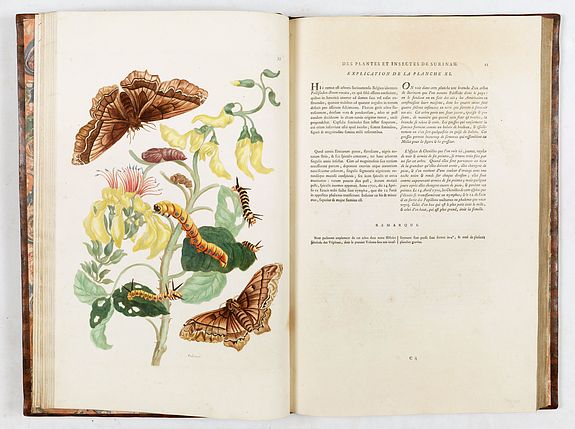
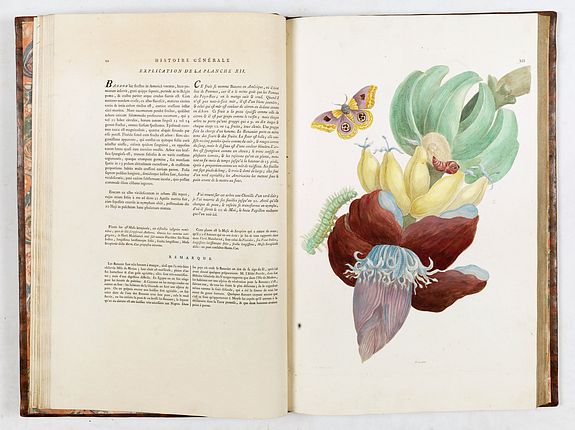
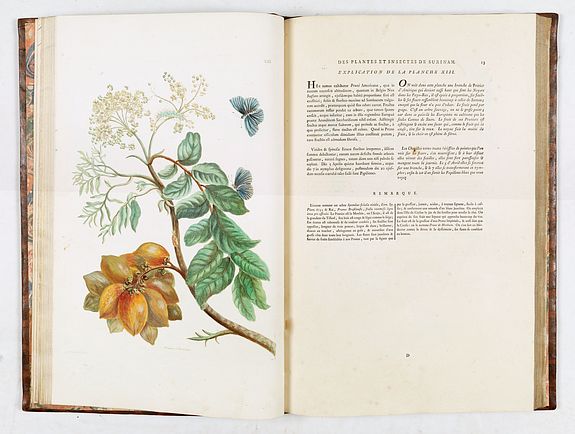
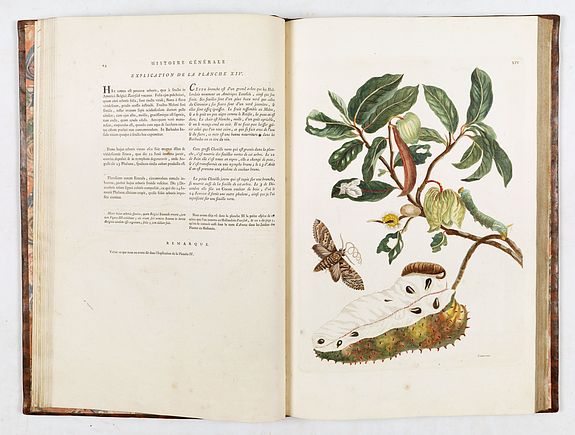
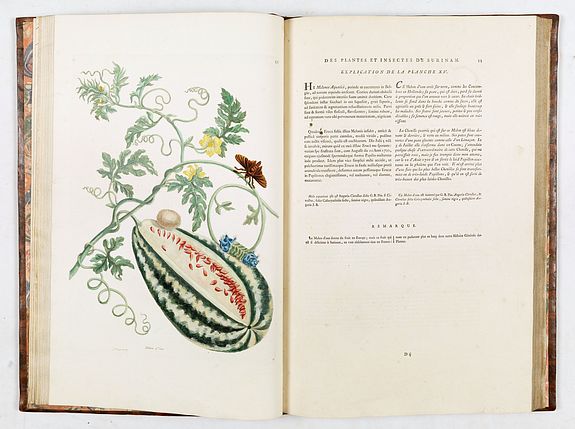
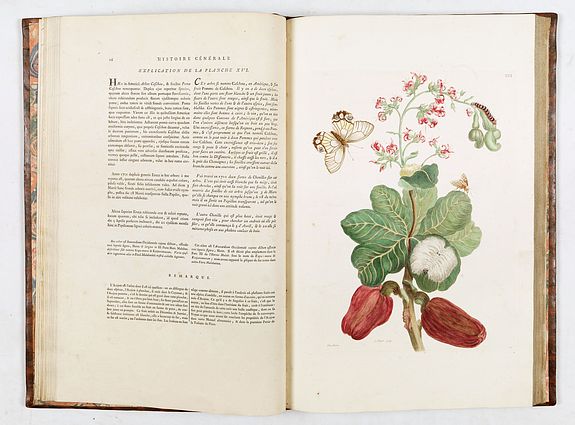
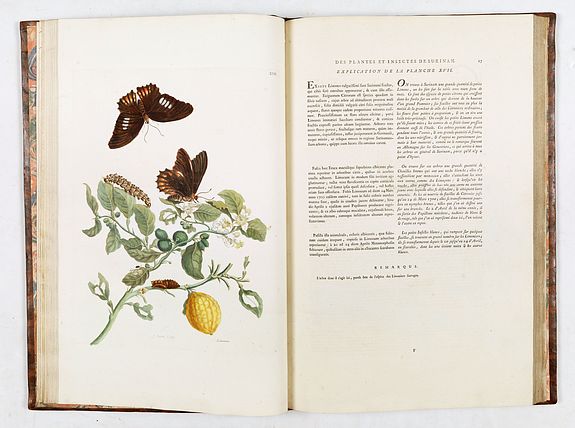
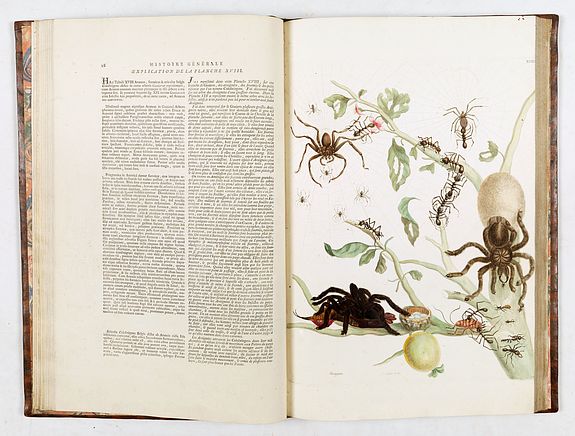
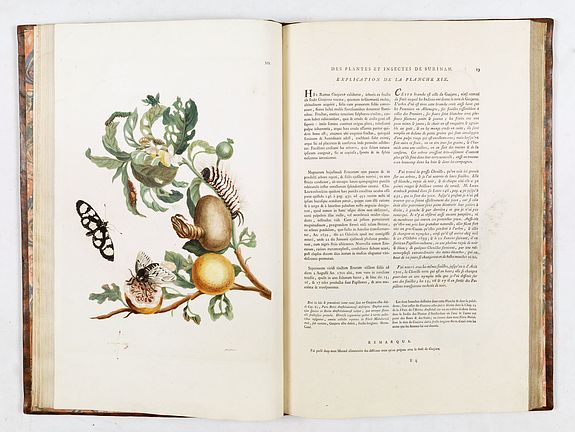
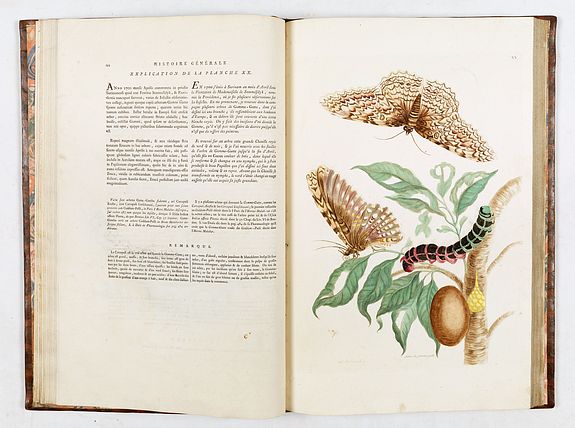
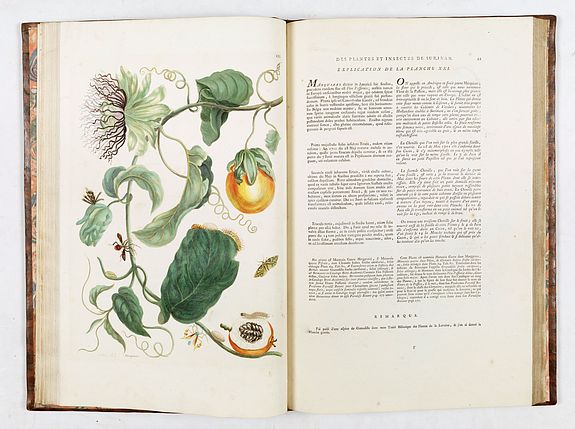
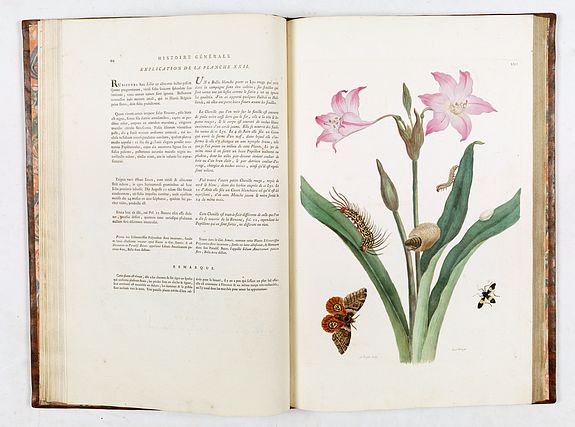
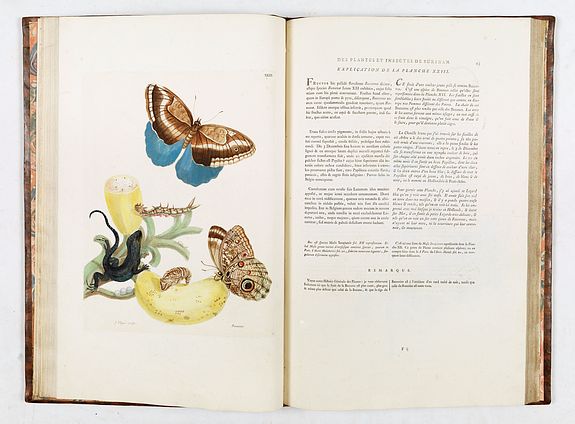
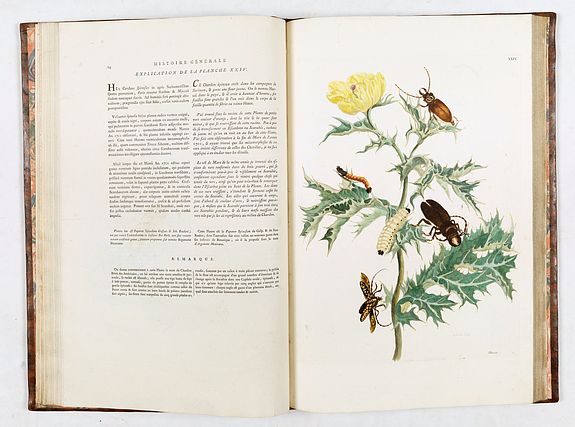
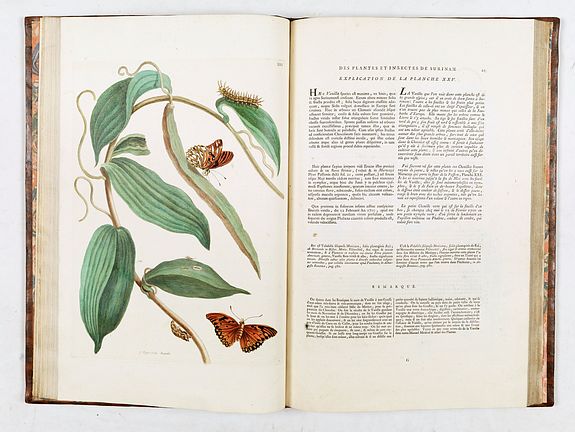
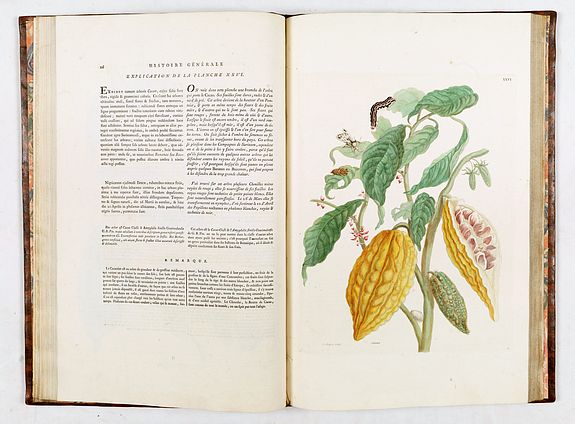
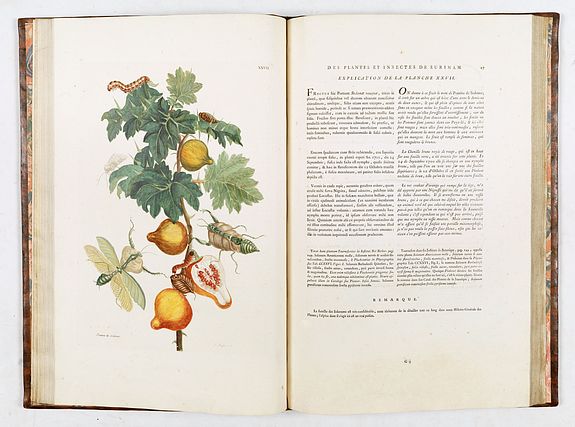
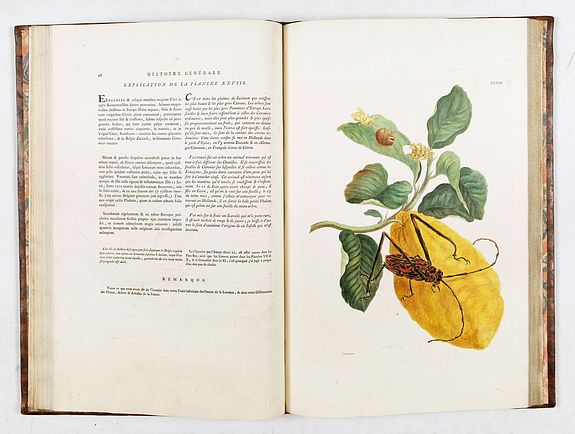
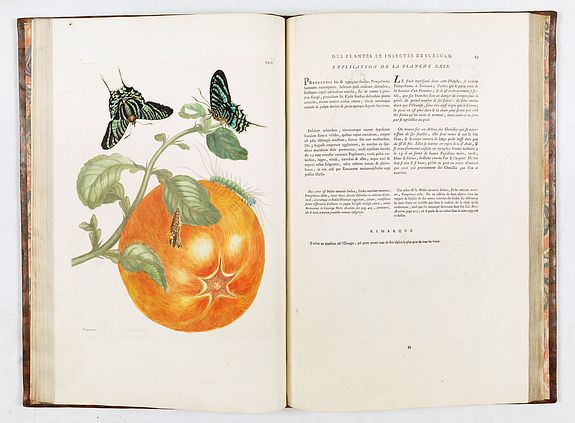
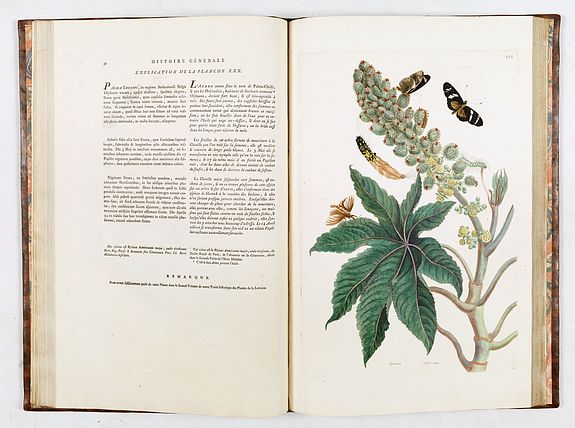
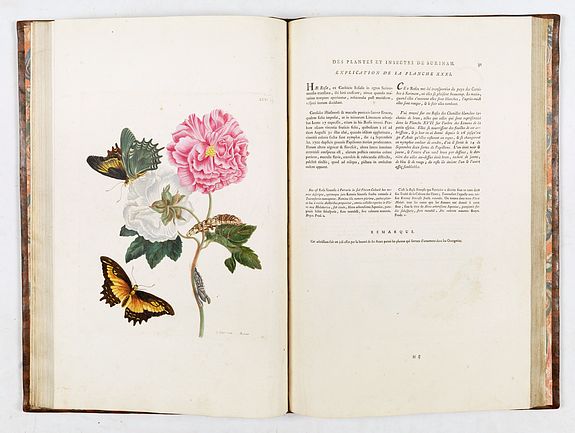
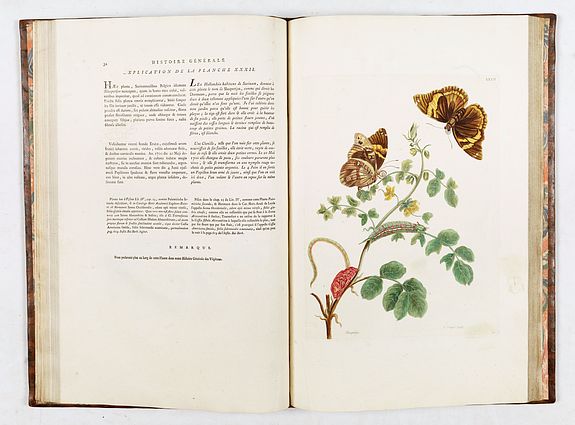
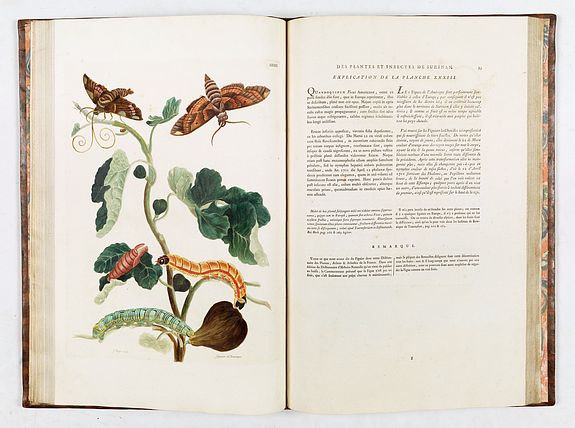
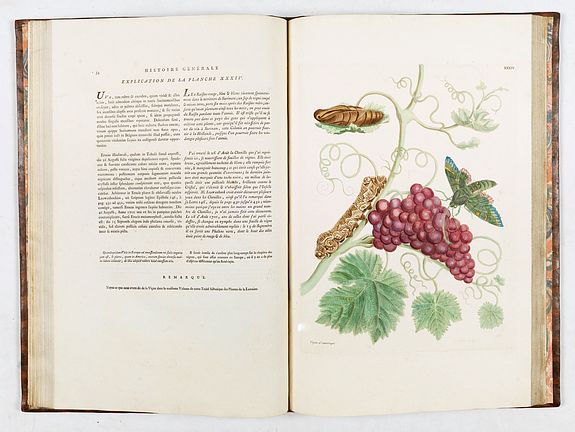
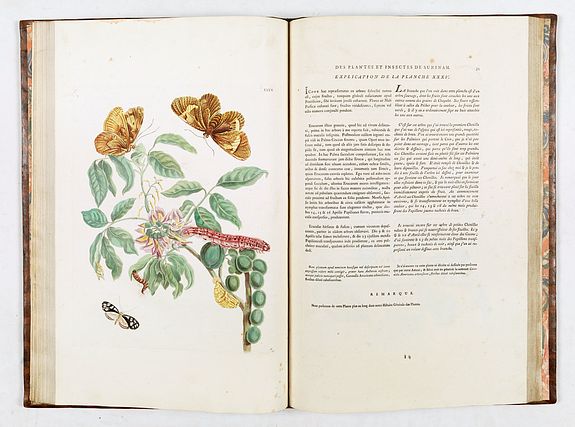
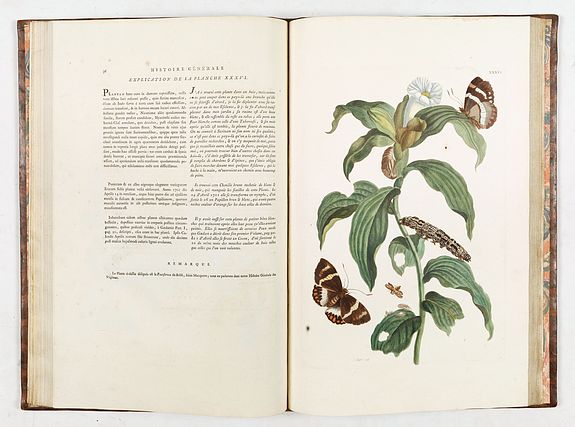
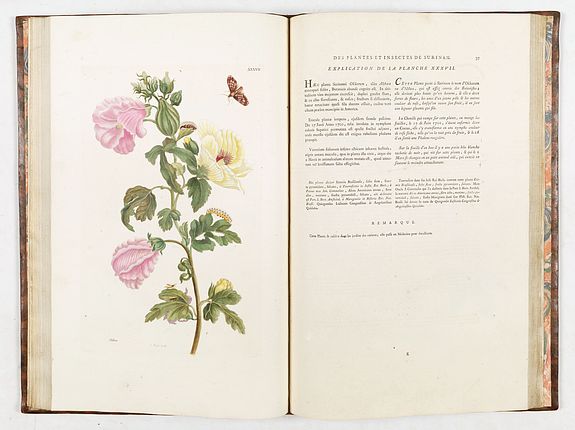
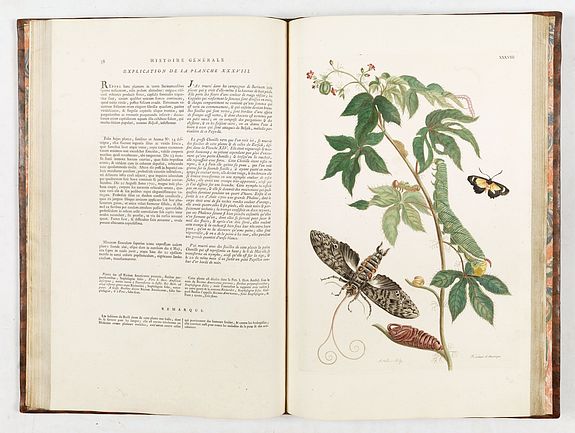
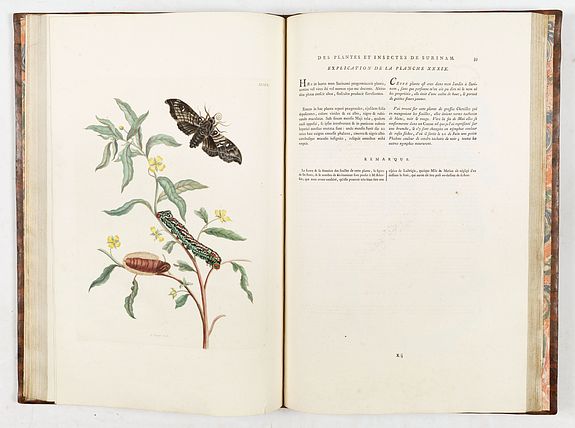
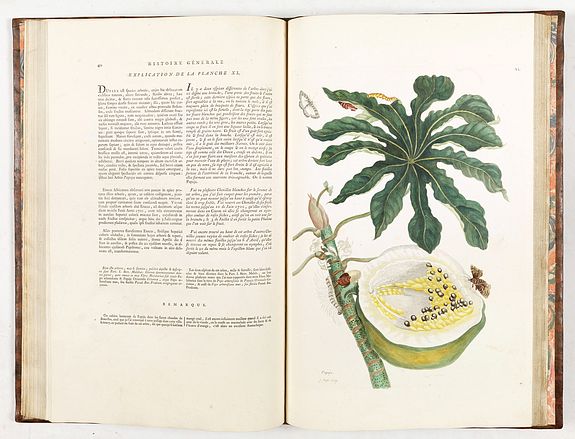
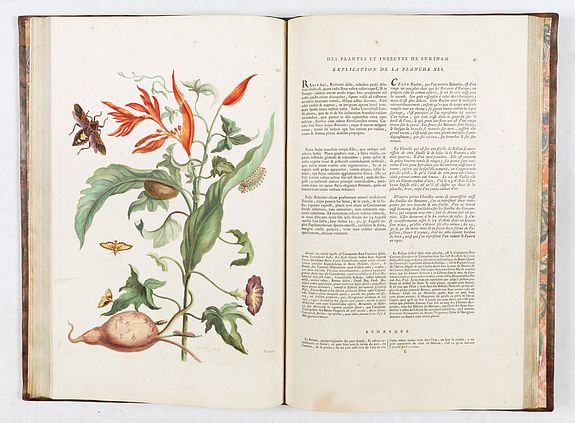
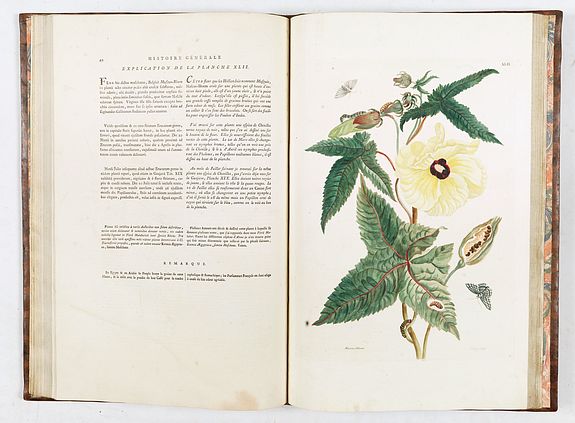
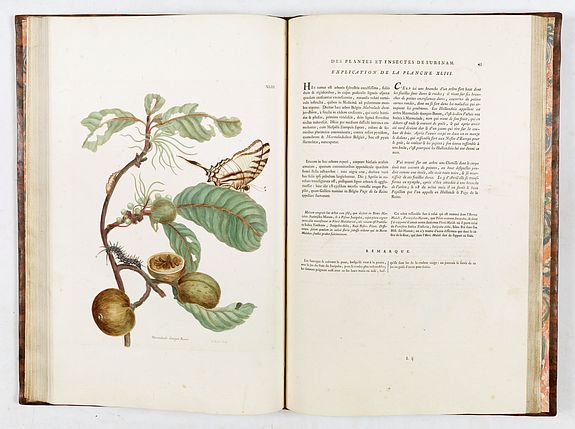
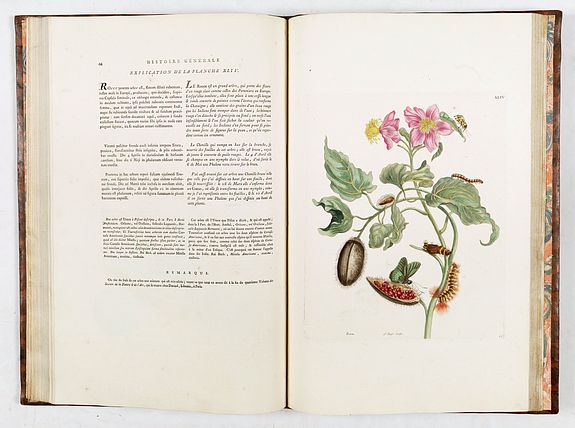
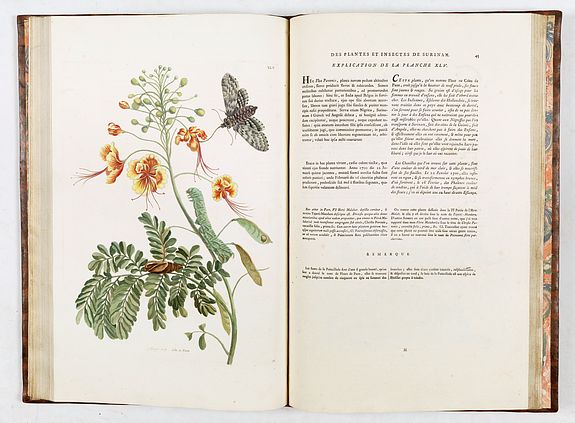
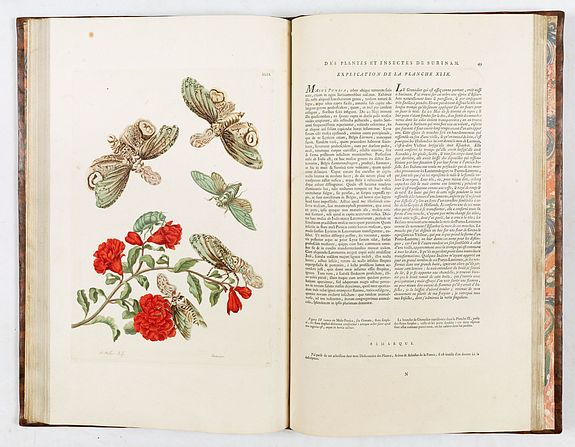
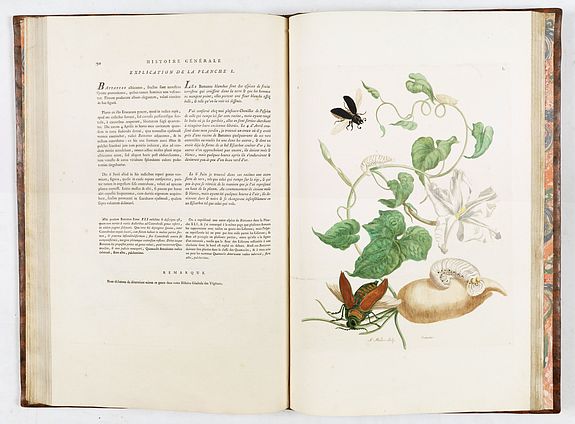
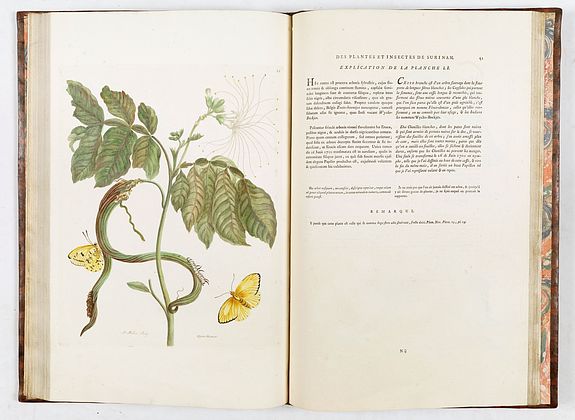
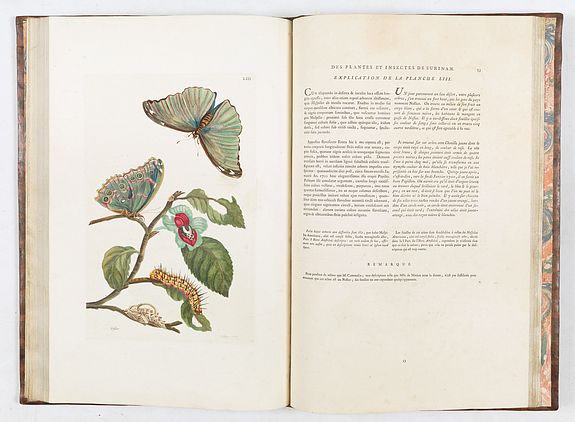
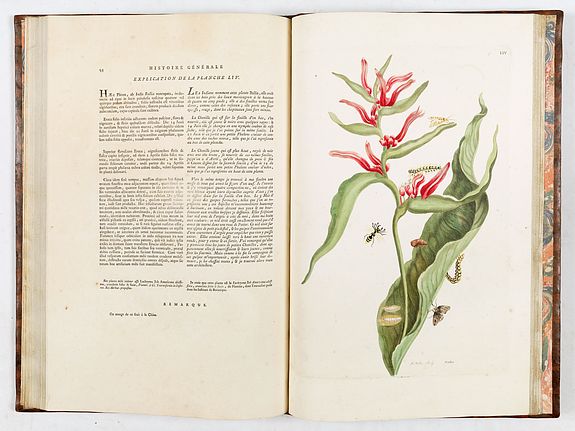
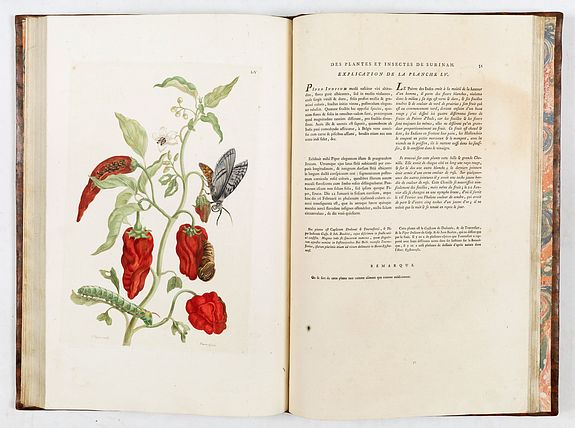
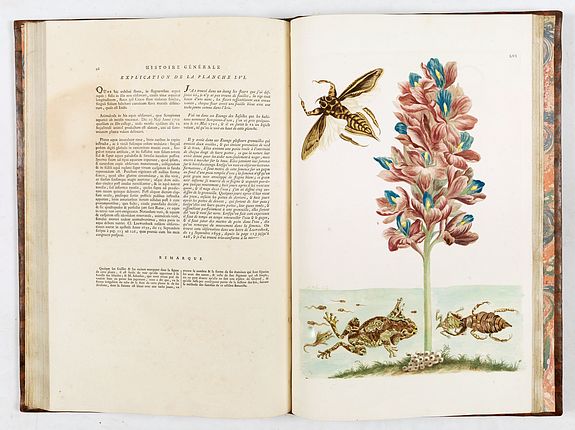
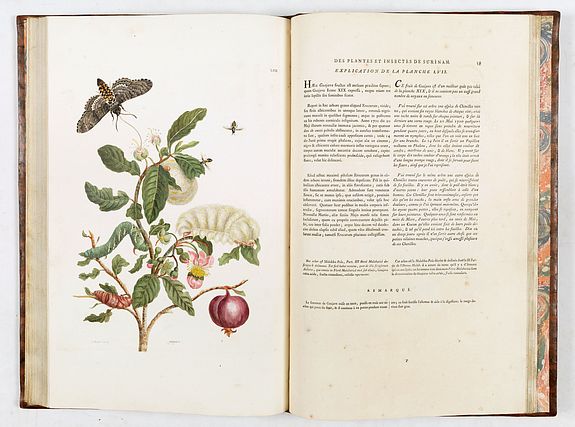
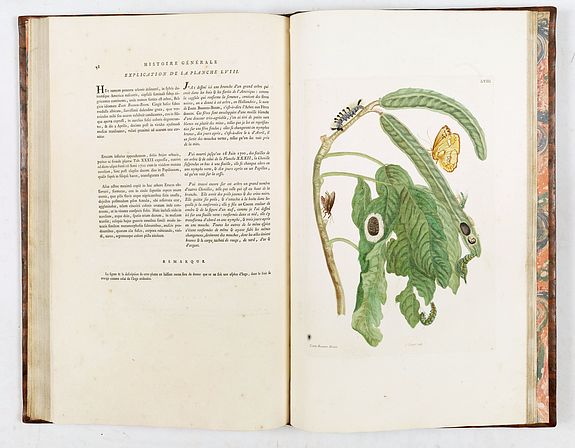
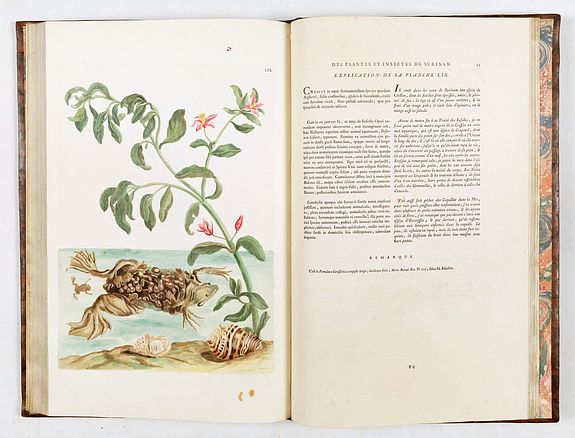
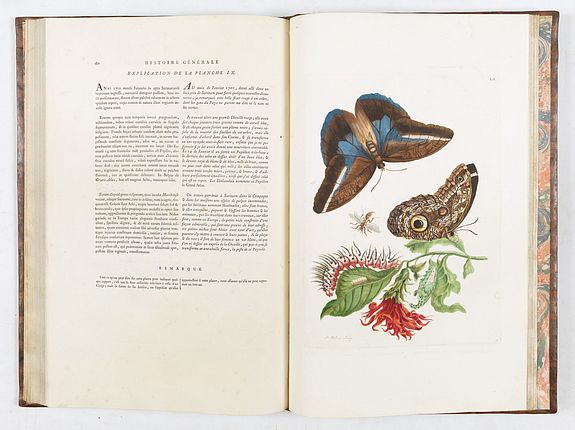
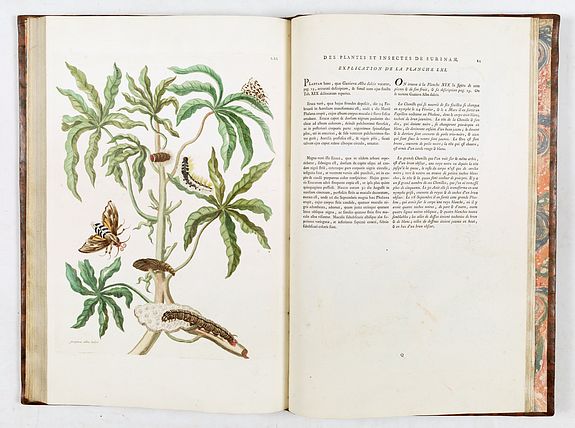
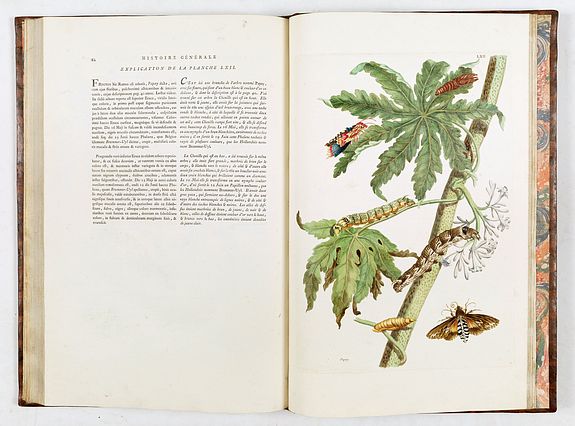
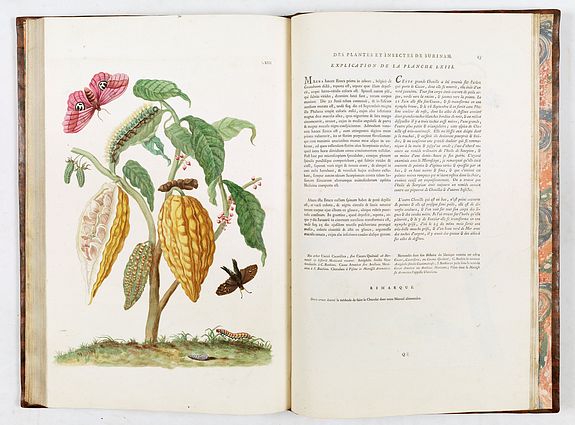
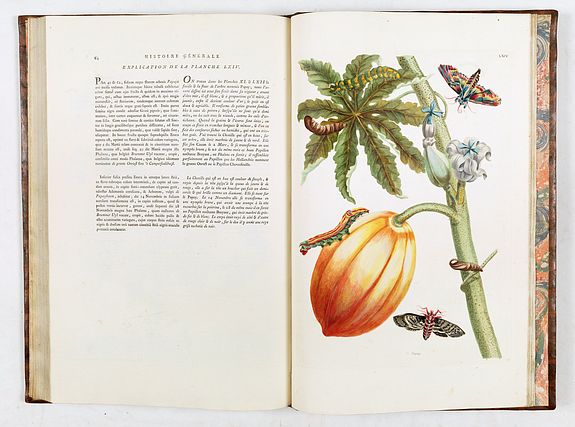
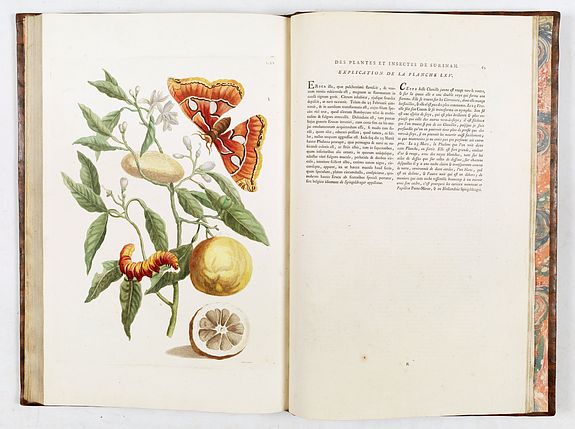
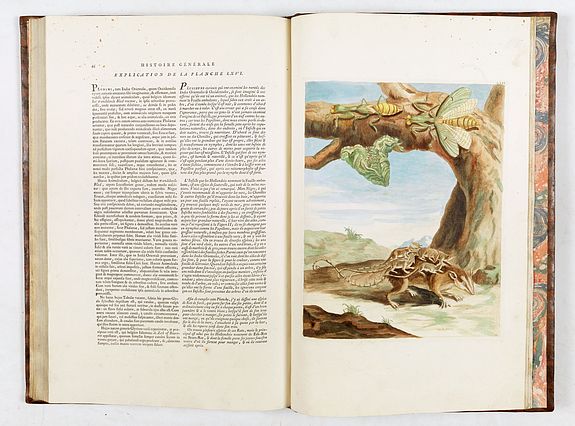
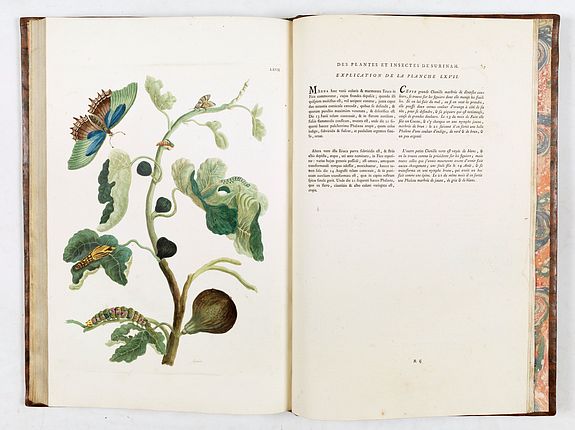
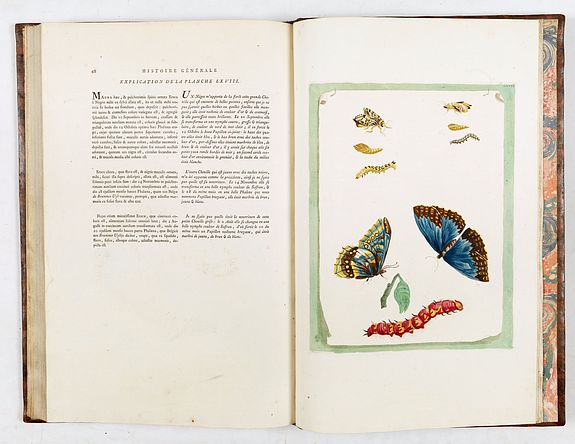
The composition is centered on the plant around which animal species evolve. "The insects are depicted with their various metamorphoses and their natural postures on the plants, flowers, and fruits on which they feed."
Several cockroaches are thus depicted on the pineapple, "which especially love sweet things, which is why they have an extraordinary inclination for pineapple."
The folio format adopted by Anna Maria Sibylla Merian allows, with rare exceptions, for the representation of plants and insects in their actual size.
Anna Maria Sibylla Merian made her mark on the history of botanical illustration at a time when women were rare in the field. She was one of the first naturalists to undertake an expedition to the New World, depicting and illustrating various species of insects and tropical plants then unknown to Europeans.
Her observations influenced generations of botanists, including Carl Linnaeus and René-Antoine Ferchault de Réaumur. Several species were even named in her honor: the spider Metellina merianae (1763), the lizard Salvator merianae (1839), and the frog Pseudi merianae (1841).
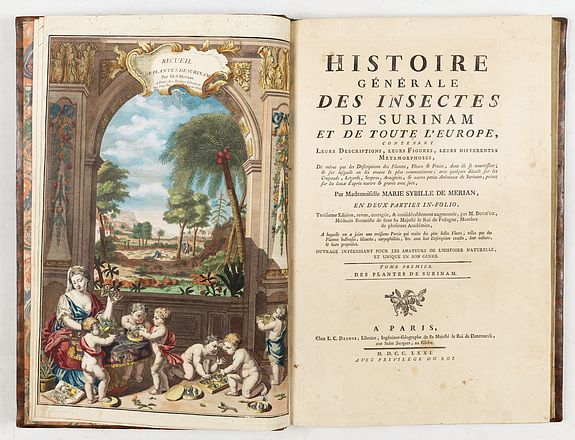
One of the most famous natural history works of the 18th century.
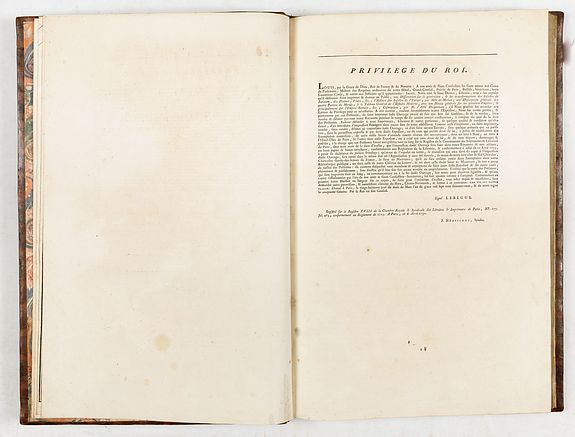
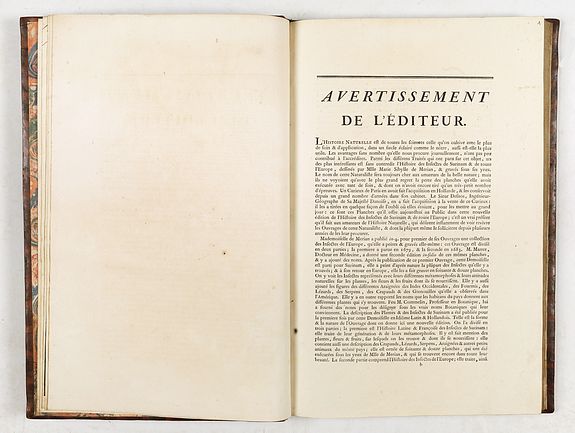
Histoire générale des insectes de Surinam et de toute l'Europe. . . Troisième édition revue, corrigée et considérablement augmentée par M. Buch'oz... à laquelle on a joint une troisième partie qui traite des plus belles fleurs… Tome Premier, Des plantes de Surinam. Paris, Chez L.C. Desnos, 1771.
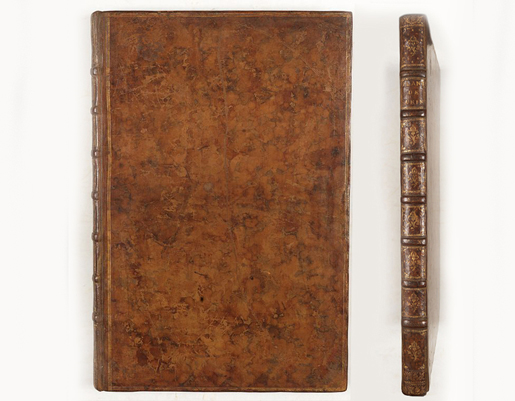
Folio (500 x 330mm) (Tome premier). Contemporary mottled calf, triple gilt fillet borders on covers, spine tooled gilt in 8 compartments, all edges gilt (original binding). Ex-libris of Jochaud-Verdière. Title-page, (5), 72 pp.
Illustrated with an engraved hand-colored allegorical title and 72 hand-colored engraved plates, one folding, by J. Mulder, P. Sluyter and A. Stopendaal, all after Merian, each with the French names of the plants depicted added to the image area.
Binding expertly restored. The three folding plates cut close and trimmed (restored), plate 69 with small loss to the folding engraved area (the viper’s tail), skilfully restored in facsimile.
The oversized plate 18 has been trimmed on the right edge.
Sold
One of the most famous natural history works of the 18th century. A beautiful hand-colored copy of the complete series of “Surinam” plates by M. S. Merian. This work was first published in 1705 in Latin and Dutch. This French translation is stated as 3rd edition. The plates to this French edition appear to have been purchased at auction by L.C. Desnos (the Paris publisher). Merian’s ‘’Surinaamsche Insecten’’ or in French ‘’Insectes de Surinam’’ is one of the most famous entomology books ever produced.
Provenance : Original binding with the bookplate of Jochaud de la Verdière, probably State Attorney in Saint-Marc and was a French Settler in Saint-Domingue.
The engraved exlibris showing a a Louis XVI console table bearing, within a rectangular cartouche, the inscription: Library / of Mr / Jochaud-Verdière, a heart-shaped shield containing the intertwined initials D.J.V. surmounted by a wreath of roses and surrounded by two garlands of the same flowers. (See Dr. G. Vialet, Bibliothèques et bibliophiles bretons anciens, page 108).
Reference : Blunt (1994) pp.142-145; cf. Dunthorne 205; cf. Great Flower Books (1990) p.119; cf. Hunt 467 and 524; cf. Nissen BBI 1341.